



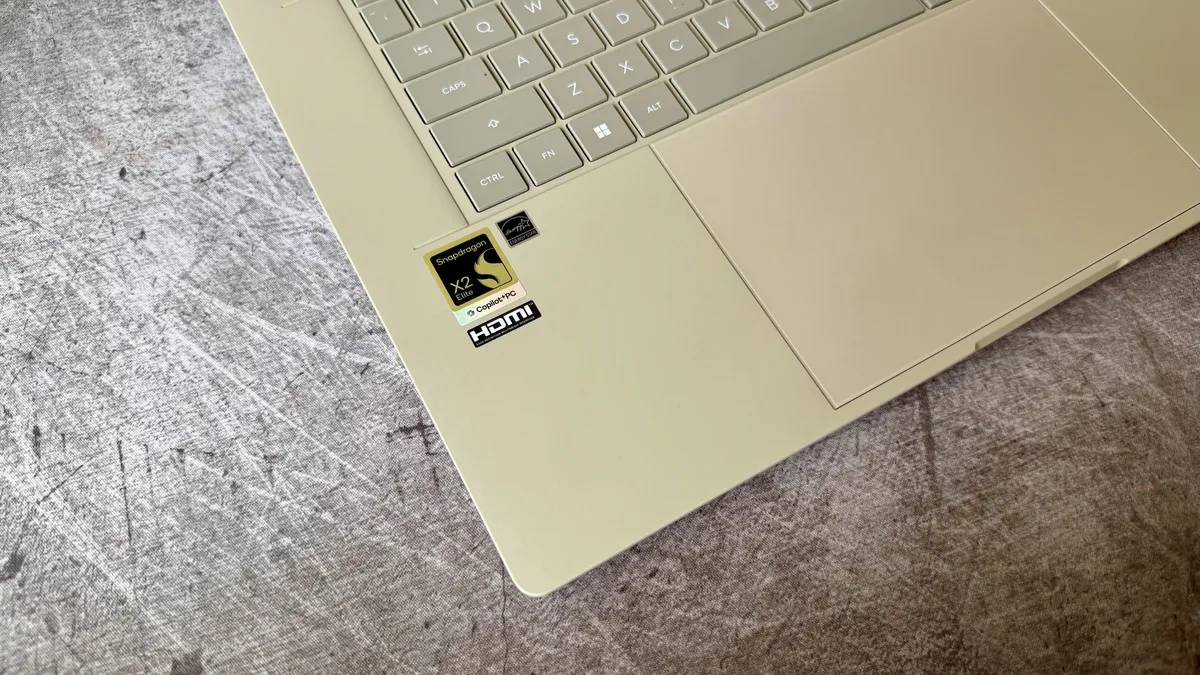
A new wave of AI-integrated personal computing is accelerating as the Asus Zenbook A16 enters the market positioning itself as a next-generation “AI laptop.” The development signals intensifying competition in the PC industry, with implications for productivity software, enterprise computing strategies, and consumer adoption of on-device artificial intelligence.
The Asus Zenbook A16 is being positioned as a premium AI-enabled laptop designed to leverage on-device intelligence for productivity, automation, and enhanced user experience. The device integrates AI-assisted features aimed at improving performance in content creation, workflow optimization, and system efficiency.
Key stakeholders include PC manufacturers, semiconductor providers, software developers, and enterprise users. The product enters a competitive landscape where multiple vendors are branding devices as “AI PCs,” though differentiation in real-world performance remains a key concern. The development reflects a broader industry push toward embedding AI capabilities directly into consumer and enterprise hardware ecosystems.
The personal computing industry is undergoing a transition driven by the integration of artificial intelligence at the hardware level. AI PCs are emerging as a new product category, combining traditional computing power with dedicated AI acceleration capabilities.
This development aligns with a broader trend across global markets where device manufacturers are seeking to differentiate products through embedded AI functionality. The shift is also influenced by advancements in local processing, reducing reliance on cloud-based AI services and improving latency, privacy, and energy efficiency.
Historically, PC innovation cycles have been driven by processor speed, storage, and portability. The current phase represents a structural shift toward intelligence-driven computing, where AI capabilities become a core feature rather than an add-on. This evolution is reshaping competitive dynamics across the global laptop market.
Industry analysts suggest that the Asus Zenbook A16 reflects a broader effort by PC manufacturers to redefine value in a saturated hardware market. Experts note that AI integration is becoming a key differentiator, particularly as consumers and enterprises seek productivity gains from embedded intelligence.
Analysts also highlight that many so-called AI laptops vary significantly in actual capability, with performance depending on hardware optimization and software ecosystem maturity. This creates a distinction between marketing-led “AI branding” and substantive AI functionality.
Technology observers argue that true differentiation will depend on how effectively devices integrate AI into everyday workflows rather than standalone features. The consensus view is that the AI PC market is still in an early phase, with standards and benchmarks yet to be fully established.
For businesses, AI-enabled laptops like the Asus Zenbook A16 could enhance productivity through automation and localized AI processing. Enterprises may begin reassessing hardware procurement strategies to prioritize AI-ready systems for workforce efficiency.
Investors are likely to monitor the emerging AI PC category as a potential growth segment within the broader personal computing market. However, differentiation challenges may impact long-term product segmentation and pricing strategies.
From a policy perspective, increased on-device AI processing raises considerations around data privacy, security standards, and regulatory oversight of embedded AI systems. Governments may need to evaluate frameworks governing AI-enabled consumer hardware.
Looking ahead, the success of the Asus Zenbook A16 will depend on real-world AI performance, software integration, and user adoption. Decision-makers should monitor how quickly AI PC standards evolve and whether consumers perceive tangible productivity benefits. The key uncertainty lies in whether AI laptops will become a mainstream computing category or remain a transitional innovation phase.
Source: CNET
Date: April 2026


