
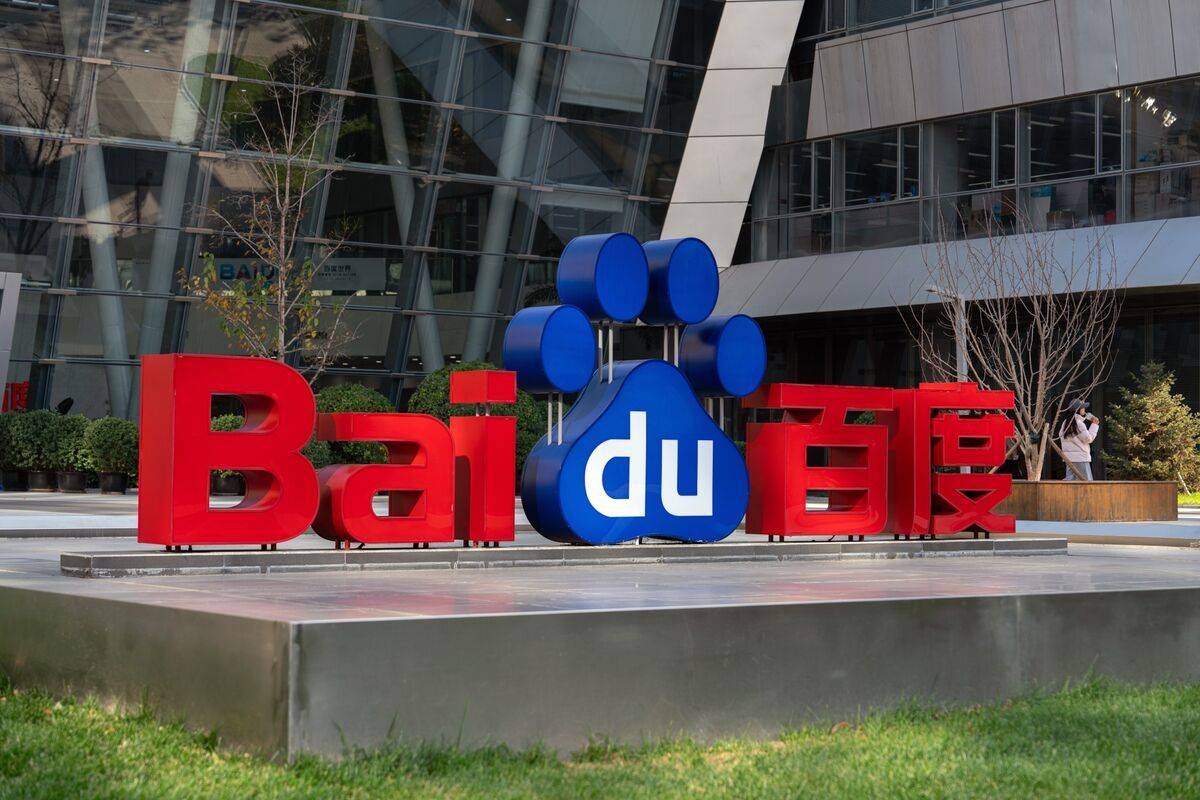
Baidu’s $11 Billion Plunge Raises China AI Concerns

Baidu experienced a sharp market capitalization decline following earnings and forward guidance that failed to meet heightened AI-driven expectations.

February 26, 2026
|

Shares of Baidu tumbled, wiping out roughly $11 billion in market value, as investors questioned whether China’s leading search and AI firm can translate artificial intelligence ambitions into sustainable growth. The selloff underscores mounting pressure on Chinese tech giants to deliver tangible returns from AI investments.

Baidu experienced a sharp market capitalization decline following earnings and forward guidance that failed to meet heightened AI-driven expectations. Investors reacted to concerns over monetization of its generative AI initiatives and cloud business performance. The company has heavily promoted its AI models and enterprise solutions as central to future growth, positioning itself as a domestic leader in China’s AI race. However, revenue growth metrics and competitive dynamics appear to have tempered investor enthusiasm. The $11 billion wipeout reflects broader market sensitivity to execution risks in the AI sector, particularly in China’s increasingly competitive and regulated technology landscape.

The development aligns with broader volatility across global AI-linked equities, where valuations have surged on high expectations for rapid commercialization. In China, the AI race carries additional geopolitical and regulatory complexities. Export controls on advanced semiconductors, intensified US-China tech rivalry, and domestic regulatory oversight have reshaped strategic priorities for Chinese firms. Baidu has long positioned itself as a pioneer in autonomous driving and AI research, seeking to diversify beyond its core search advertising business.

However, monetizing generative AI at scale remains an industry-wide challenge. Globally, investors have rewarded firms demonstrating clear revenue traction from AI services, while penalizing those perceived to be lagging in execution. Baidu’s selloff reflects the narrowing tolerance for AI narratives unsupported by near-term financial performance.

Market analysts suggest the decline highlights a recalibration of expectations rather than a rejection of AI’s long-term potential. Some equity strategists argue that investors are demanding clearer visibility into revenue streams tied directly to AI deployments. Technology sector observers note that competition within China’s AI ecosystem has intensified, compressing margins and accelerating product cycles. Geopolitical analysts emphasize that semiconductor supply constraints may limit the pace at which Chinese firms can scale advanced AI infrastructure.

Corporate leadership has reiterated commitment to AI innovation, emphasizing long-term strategic positioning despite short-term volatility. The episode illustrates how capital markets are increasingly scrutinizing AI execution metrics rather than aspirational projections.

For executives, the selloff signals that AI branding alone is insufficient to sustain elevated valuations. Companies must demonstrate disciplined capital allocation, monetization clarity, and competitive differentiation. Investors may rotate toward firms with proven AI revenue pipelines and operational scale. Policymakers in China could face renewed urgency to strengthen domestic semiconductor ecosystems and innovation incentives. The broader message to global markets is clear: AI enthusiasm must be matched by execution and measurable financial returns. Boardrooms worldwide are likely to reassess how AI investments are communicated to shareholders.

Attention will now turn to Baidu’s ability to accelerate AI commercialization and stabilize investor confidence. Markets will monitor competitive developments within China’s AI sector and evolving regulatory conditions. Geopolitical tensions and semiconductor access remain critical variables. While the AI opportunity remains substantial, Baidu’s recent rout underscores that capital markets are entering a more disciplined phase of AI evaluation.

Source: Bloomberg
Date: February 25, 2026

  • Featured tools
Neuron AI
Free

Neuron AI is an AI-driven content optimization platform that helps creators produce SEO-friendly content by combining semantic SEO, competitor analysis, and AI-assisted writing workflows.

#
SEO
Learn more
Figstack AI
Free

Figstack AI is an intelligent assistant for developers that explains code, generates docstrings, converts code between languages, and analyzes time complexity helping you work smarter, not harder.

#
Coding
Learn more

Learn more about future of AI

Join 80,000+ Ai enthusiast getting weekly updates on exciting AI tools.
Thank you! Your submission has been received!
Oops! Something went wrong while submitting the form.

Baidu’s $11 Billion Plunge Raises China AI Concerns

February 26, 2026

Baidu experienced a sharp market capitalization decline following earnings and forward guidance that failed to meet heightened AI-driven expectations.

Shares of Baidu tumbled, wiping out roughly $11 billion in market value, as investors questioned whether China’s leading search and AI firm can translate artificial intelligence ambitions into sustainable growth. The selloff underscores mounting pressure on Chinese tech giants to deliver tangible returns from AI investments.

Baidu experienced a sharp market capitalization decline following earnings and forward guidance that failed to meet heightened AI-driven expectations. Investors reacted to concerns over monetization of its generative AI initiatives and cloud business performance. The company has heavily promoted its AI models and enterprise solutions as central to future growth, positioning itself as a domestic leader in China’s AI race. However, revenue growth metrics and competitive dynamics appear to have tempered investor enthusiasm. The $11 billion wipeout reflects broader market sensitivity to execution risks in the AI sector, particularly in China’s increasingly competitive and regulated technology landscape.

The development aligns with broader volatility across global AI-linked equities, where valuations have surged on high expectations for rapid commercialization. In China, the AI race carries additional geopolitical and regulatory complexities. Export controls on advanced semiconductors, intensified US-China tech rivalry, and domestic regulatory oversight have reshaped strategic priorities for Chinese firms. Baidu has long positioned itself as a pioneer in autonomous driving and AI research, seeking to diversify beyond its core search advertising business.

However, monetizing generative AI at scale remains an industry-wide challenge. Globally, investors have rewarded firms demonstrating clear revenue traction from AI services, while penalizing those perceived to be lagging in execution. Baidu’s selloff reflects the narrowing tolerance for AI narratives unsupported by near-term financial performance.

Market analysts suggest the decline highlights a recalibration of expectations rather than a rejection of AI’s long-term potential. Some equity strategists argue that investors are demanding clearer visibility into revenue streams tied directly to AI deployments. Technology sector observers note that competition within China’s AI ecosystem has intensified, compressing margins and accelerating product cycles. Geopolitical analysts emphasize that semiconductor supply constraints may limit the pace at which Chinese firms can scale advanced AI infrastructure.

Corporate leadership has reiterated commitment to AI innovation, emphasizing long-term strategic positioning despite short-term volatility. The episode illustrates how capital markets are increasingly scrutinizing AI execution metrics rather than aspirational projections.

For executives, the selloff signals that AI branding alone is insufficient to sustain elevated valuations. Companies must demonstrate disciplined capital allocation, monetization clarity, and competitive differentiation. Investors may rotate toward firms with proven AI revenue pipelines and operational scale. Policymakers in China could face renewed urgency to strengthen domestic semiconductor ecosystems and innovation incentives. The broader message to global markets is clear: AI enthusiasm must be matched by execution and measurable financial returns. Boardrooms worldwide are likely to reassess how AI investments are communicated to shareholders.

Attention will now turn to Baidu’s ability to accelerate AI commercialization and stabilize investor confidence. Markets will monitor competitive developments within China’s AI sector and evolving regulatory conditions. Geopolitical tensions and semiconductor access remain critical variables. While the AI opportunity remains substantial, Baidu’s recent rout underscores that capital markets are entering a more disciplined phase of AI evaluation.

Source: Bloomberg
Date: February 25, 2026

Promote Your Tool

Copy Embed Code

Similar Blogs

February 26, 2026
|

Google, Samsung Outpace Apple with Advanced AI Features

Google introduced Gemini-powered AI features on its Pixel series, offering real-time language translation, personalized task management, and proactive suggestions based on user habits.
Read more
February 26, 2026
|

Perplexity Enters Autonomous AI Market, Challenges OpenClaw Agent

Perplexity officially introduced its managed AI agent platform this week, aiming to automate complex computer tasks and streamline enterprise workflows.
Read more
February 26, 2026
|

Micron and Sandisk Face 2026 AI Memory Stock Battle

Micron Technology has reported strong demand for DRAM and high-bandwidth memory, driven by AI server deployments and enterprise computing expansion.
Read more
February 26, 2026
|

AI Music Startups Seek Industry Acceptance After Early Backlash

Several AI music startups are shifting strategies from independent disruption to collaboration with record labels, music publishers, and streaming platforms.
Read more
February 26, 2026
|

Jamie Dimon Calls for Action on AI Job Disruption

During a keynote address, Dimon emphasized that businesses, governments, and educational institutions need proactive strategies to mitigate workforce disruption caused by AI automation.
Read more
February 26, 2026
|

OpenAI Poaches Meta Executive in Escalating AI Talent War

OpenAI recruited a prominent AI models executive who had most recently worked at Meta and earlier headed Apple’s models team. The executive played a significant role in large-scale model development and applied AI systems.
Read more