
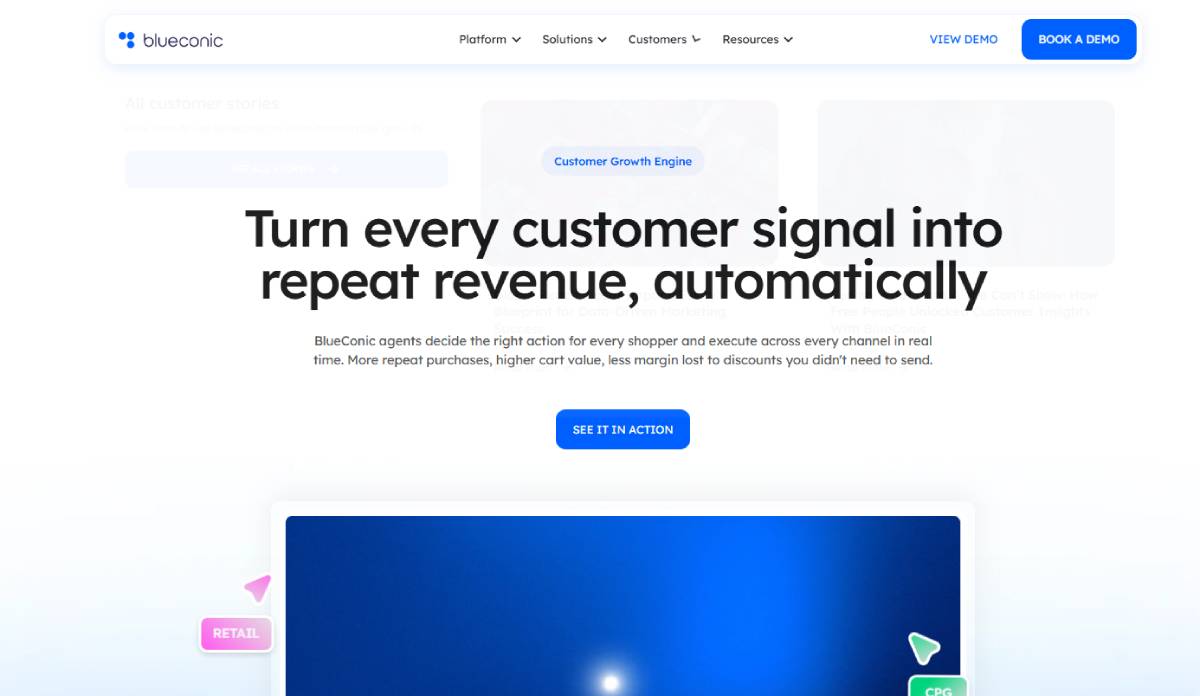
BlueConic Advances Customer Data Management

BlueConic provides a customer data platform designed to help organizations collect, unify and activate customer information from multiple sources.

August 11, 2026
|

BlueConic is advancing the customer data platform landscape with technology designed to help organizations unify, manage and activate customer information across digital channels. Its approach addresses a growing challenge for global brands: fragmented customer data that can limit personalization, marketing efficiency and the ability to build consistent experiences across increasingly complex digital journeys.

BlueConic provides a customer data platform designed to help organizations collect, unify and activate customer information from multiple sources. The platform can create persistent customer profiles by bringing together data that may otherwise remain distributed across marketing, digital and operational systems.

Its capabilities are aimed at supporting audience segmentation, personalization, analytics and marketing activation. By creating a more centralized view of customers, businesses can potentially improve the consistency and relevance of digital interactions.

The technology is particularly relevant to organizations managing large customer databases and multiple digital touchpoints. For marketing and technology executives, customer data infrastructure is increasingly becoming a strategic layer connecting insights with campaign execution and customer engagement.

The development aligns with a broader transformation in how businesses manage customer information. Organizations increasingly interact with consumers across websites, mobile applications, email, advertising platforms, commerce systems and other digital channels. Data generated across these touchpoints can become fragmented when systems operate independently.

Customer data platforms have emerged to address this fragmentation by creating unified customer profiles that can be used across marketing and engagement activities. This can allow businesses to better understand customer behavior and create more consistent experiences.

The shift is particularly important as privacy expectations and data regulations reshape digital marketing. Companies are increasingly seeking ways to rely on first-party customer information rather than depending exclusively on third-party data sources.

For CXOs, the strategic issue extends beyond marketing. A unified customer-data foundation can support better decision-making, more effective personalization and improved coordination between technology, marketing and customer-experience teams.

Customer-data specialists increasingly emphasize that data unification is becoming a prerequisite for effective personalization. Organizations can collect large volumes of information, but fragmented data can make it difficult to turn those records into actionable customer insights.

BlueConic's platform reflects this market direction by combining customer-profile management with segmentation, analytics and activation capabilities. The objective is to help organizations move from disconnected datasets toward a more unified understanding of individual customers and audiences.

For enterprise leaders, successful deployment depends on data quality and organizational alignment. A customer data platform can consolidate information, but businesses still need clear governance rules, consistent identifiers and well-defined activation strategies.

Privacy is another critical consideration. As organizations bring more customer information into unified profiles, they must establish appropriate controls for consent, access, retention and data usage.

The broader market is likely to favor platforms capable of combining real-time data management with privacy-conscious activation and measurable business outcomes. For businesses, unified customer data can support more targeted marketing, stronger personalization and better audience segmentation. Marketing teams may gain faster access to customer insights while reducing dependence on disconnected systems.

For executives, the technology can contribute to improved campaign efficiency and customer lifetime-value strategies. A centralized data foundation may also help organizations coordinate customer experiences across multiple channels.

Consumers may benefit from more relevant interactions, although personalization must be balanced against expectations around privacy and transparency. From a policy perspective, customer data platforms raise important questions around consent, data governance, security and regulatory compliance. Organizations operating across multiple markets may need to accommodate different privacy requirements and establish clear controls for customer information.

The strategic advantage will increasingly depend on whether businesses can activate data responsibly while demonstrating measurable improvements in customer engagement and commercial performance.

Customer data platforms are likely to become increasingly connected with artificial intelligence, real-time analytics and automated personalization. Future systems may use unified customer profiles to support predictive insights and more adaptive digital experiences.

Decision-makers should watch how platforms balance data accessibility with privacy, security and governance. The strongest solutions will help organizations turn fragmented customer information into actionable intelligence while maintaining customer trust and regulatory discipline.

Source: Crozdesk; BlueConic
Date: August 11, 2026

  • Featured tools
Outplay AI
Free

Outplay AI is a dynamic sales engagement platform combining AI-powered outreach, multi-channel automation, and performance tracking to help teams optimize conversion and pipeline generation.

#
Sales
Learn more
Figstack AI
Free

Figstack AI is an intelligent assistant for developers that explains code, generates docstrings, converts code between languages, and analyzes time complexity helping you work smarter, not harder.

#
Coding
Learn more

Learn more about future of AI

Join 80,000+ Ai enthusiast getting weekly updates on exciting AI tools.
Thank you! Your submission has been received!
Oops! Something went wrong while submitting the form.

BlueConic Advances Customer Data Management

August 11, 2026

BlueConic provides a customer data platform designed to help organizations collect, unify and activate customer information from multiple sources.

BlueConic is advancing the customer data platform landscape with technology designed to help organizations unify, manage and activate customer information across digital channels. Its approach addresses a growing challenge for global brands: fragmented customer data that can limit personalization, marketing efficiency and the ability to build consistent experiences across increasingly complex digital journeys.

BlueConic provides a customer data platform designed to help organizations collect, unify and activate customer information from multiple sources. The platform can create persistent customer profiles by bringing together data that may otherwise remain distributed across marketing, digital and operational systems.

Its capabilities are aimed at supporting audience segmentation, personalization, analytics and marketing activation. By creating a more centralized view of customers, businesses can potentially improve the consistency and relevance of digital interactions.

The technology is particularly relevant to organizations managing large customer databases and multiple digital touchpoints. For marketing and technology executives, customer data infrastructure is increasingly becoming a strategic layer connecting insights with campaign execution and customer engagement.

The development aligns with a broader transformation in how businesses manage customer information. Organizations increasingly interact with consumers across websites, mobile applications, email, advertising platforms, commerce systems and other digital channels. Data generated across these touchpoints can become fragmented when systems operate independently.

Customer data platforms have emerged to address this fragmentation by creating unified customer profiles that can be used across marketing and engagement activities. This can allow businesses to better understand customer behavior and create more consistent experiences.

The shift is particularly important as privacy expectations and data regulations reshape digital marketing. Companies are increasingly seeking ways to rely on first-party customer information rather than depending exclusively on third-party data sources.

For CXOs, the strategic issue extends beyond marketing. A unified customer-data foundation can support better decision-making, more effective personalization and improved coordination between technology, marketing and customer-experience teams.

Customer-data specialists increasingly emphasize that data unification is becoming a prerequisite for effective personalization. Organizations can collect large volumes of information, but fragmented data can make it difficult to turn those records into actionable customer insights.

BlueConic's platform reflects this market direction by combining customer-profile management with segmentation, analytics and activation capabilities. The objective is to help organizations move from disconnected datasets toward a more unified understanding of individual customers and audiences.

For enterprise leaders, successful deployment depends on data quality and organizational alignment. A customer data platform can consolidate information, but businesses still need clear governance rules, consistent identifiers and well-defined activation strategies.

Privacy is another critical consideration. As organizations bring more customer information into unified profiles, they must establish appropriate controls for consent, access, retention and data usage.

The broader market is likely to favor platforms capable of combining real-time data management with privacy-conscious activation and measurable business outcomes. For businesses, unified customer data can support more targeted marketing, stronger personalization and better audience segmentation. Marketing teams may gain faster access to customer insights while reducing dependence on disconnected systems.

For executives, the technology can contribute to improved campaign efficiency and customer lifetime-value strategies. A centralized data foundation may also help organizations coordinate customer experiences across multiple channels.

Consumers may benefit from more relevant interactions, although personalization must be balanced against expectations around privacy and transparency. From a policy perspective, customer data platforms raise important questions around consent, data governance, security and regulatory compliance. Organizations operating across multiple markets may need to accommodate different privacy requirements and establish clear controls for customer information.

The strategic advantage will increasingly depend on whether businesses can activate data responsibly while demonstrating measurable improvements in customer engagement and commercial performance.

Customer data platforms are likely to become increasingly connected with artificial intelligence, real-time analytics and automated personalization. Future systems may use unified customer profiles to support predictive insights and more adaptive digital experiences.

Decision-makers should watch how platforms balance data accessibility with privacy, security and governance. The strongest solutions will help organizations turn fragmented customer information into actionable intelligence while maintaining customer trust and regulatory discipline.

Source: Crozdesk; BlueConic
Date: August 11, 2026

Promote Your Tool

Copy Embed Code

Similar Blogs

August 11, 2026
|

uBrand Advances Digital Asset Management

uBrand provides a digital platform designed to help organizations manage brand-related content and assets within a centralized environment.
Read more
August 11, 2026
|

Jamf Now Simplifies Apple Device Management

Jamf Now is designed to simplify mobile device management for organizations using Apple hardware.
Read more
August 11, 2026
|

Connecteam Advances Digital Workforce Management

Connecteam provides a workforce-management platform designed to support businesses with employees who spend much of their working time away from traditional desks.
Read more
August 11, 2026
|

ADP Vantage Advances Enterprise Workforce Management

ADP Vantage HCM is positioned as an enterprise human capital management solution designed to support organizations with complex workforce requirements.
Read more
August 11, 2026
|

OnceHub Advances Automated Business Scheduling

OnceHub provides scheduling and appointment-management capabilities designed to help organizations automate the process of arranging meetings and customer appointments.
Read more
August 11, 2026
|

BlueConic Advances Customer Data Management

BlueConic provides a customer data platform designed to help organizations collect, unify and activate customer information from multiple sources.
Read more