
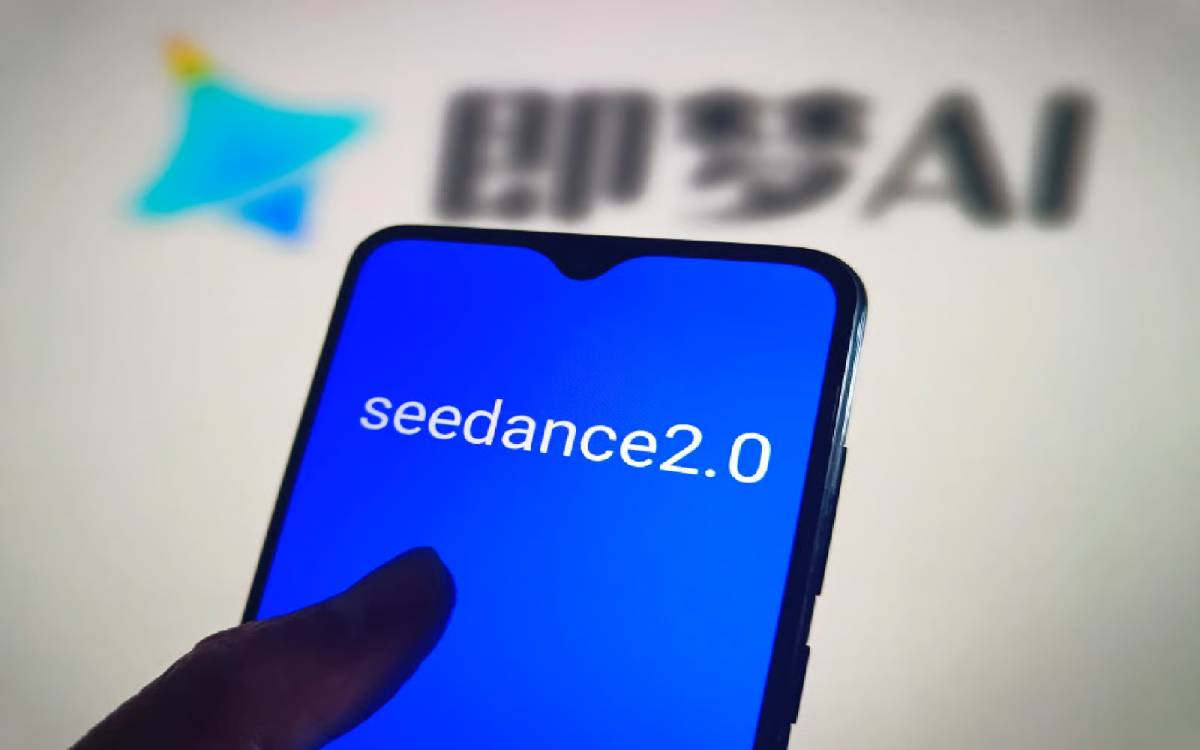
China Seedance 2.0 Jolts Hollywood, Signals AI Shift

Chinese developers unveiled Seedance 2.0, an advanced generative AI system capable of producing high quality video content that rivals professional studio output.

February 20, 2026
|

A major escalation in the global AI race has emerged from China, where Seedance 2.0 is reportedly delivering video generation capabilities advanced enough to unsettle Hollywood studios. The breakthrough highlights intensifying technological rivalry and raises fresh questions about regulation, intellectual property, and geopolitical competition.

Chinese developers unveiled Seedance 2.0, an advanced generative AI system capable of producing high quality video content that rivals professional studio output.

The model’s performance has reportedly drawn attention from US entertainment executives concerned about cost disruption and copyright exposure. The development comes amid broader US China tech tensions and expanding export controls affecting semiconductor access.

Chinese tech firms continue to accelerate AI model releases despite regulatory scrutiny at home. Observers say Seedance 2.0 represents a leap in multimodal generation, intensifying competition not only in software but also in creative industries traditionally dominated by Western studios.

The development aligns with a broader global trend where generative AI is rapidly transforming media production, advertising, gaming, and digital entertainment. Hollywood has already grappled with AI driven scriptwriting, image generation, and digital actor replication.

China’s AI ecosystem has matured significantly over the past five years, supported by strong state backing, vast datasets, and a competitive domestic tech sector. Despite US restrictions on advanced chip exports, Chinese firms have continued innovating in model architecture and optimisation techniques.

The rise of powerful video generation tools signals a shift in creative economics. High end visual effects and content production, once dependent on costly studios and specialised teams, could become more automated. For executives, the convergence of AI and media is reshaping intellectual property strategies and cross border content flows.

Industry analysts suggest Seedance 2.0 reflects China’s determination to compete head on with Western AI leaders in advanced multimodal systems. Some experts argue that Hollywood’s concern is less about technology quality and more about speed of iteration and cost compression.

Media executives have long warned that AI generated content may blur authorship lines and complicate copyright enforcement. Technology policy specialists note that regulatory responses differ sharply between Washington and Beijing, creating asymmetric innovation environments.

Market strategists indicate that AI driven creative tools could unlock new business models, particularly in streaming, gaming, and advertising. However, legal uncertainty around training data and content ownership remains a significant risk factor.

Overall, experts view Seedance 2.0 as symbolic of a shifting balance in digital innovation power. For entertainment companies, advanced video AI could dramatically reduce production costs while increasing competitive pressure. Studios may need to accelerate AI integration to defend margins and maintain relevance.

Investors are likely to monitor Chinese AI firms for signals of export potential and domestic monetisation. Meanwhile, US companies may push for stronger intellectual property safeguards and clearer regulatory boundaries.

From a policy perspective, the emergence of powerful video generation systems could intensify US China technology tensions. Governments may revisit export controls, copyright enforcement mechanisms, and AI safety frameworks to manage cross border impact.

Decision makers should watch for regulatory responses in both China and the United States, particularly around content governance and intellectual property protection. Adoption rates within creative industries will offer early indicators of economic disruption.

Seedance 2.0 signals that the AI race is no longer confined to code and cloud, it is reshaping global cultural and commercial power dynamics.

Source: CNN
Date: February 20, 2026

  • Featured tools
Figstack AI
Free

Figstack AI is an intelligent assistant for developers that explains code, generates docstrings, converts code between languages, and analyzes time complexity helping you work smarter, not harder.

#
Coding
Learn more
Writesonic AI
Free

Writesonic AI is a versatile AI writing platform designed for marketers, entrepreneurs, and content creators. It helps users create blog posts, ad copies, product descriptions, social media posts, and more with ease. With advanced AI models and user-friendly tools, Writesonic streamlines content production and saves time for busy professionals.

#
Copywriting
Learn more

Learn more about future of AI

Join 80,000+ Ai enthusiast getting weekly updates on exciting AI tools.
Thank you! Your submission has been received!
Oops! Something went wrong while submitting the form.

China Seedance 2.0 Jolts Hollywood, Signals AI Shift

February 20, 2026

Chinese developers unveiled Seedance 2.0, an advanced generative AI system capable of producing high quality video content that rivals professional studio output.

A major escalation in the global AI race has emerged from China, where Seedance 2.0 is reportedly delivering video generation capabilities advanced enough to unsettle Hollywood studios. The breakthrough highlights intensifying technological rivalry and raises fresh questions about regulation, intellectual property, and geopolitical competition.

Chinese developers unveiled Seedance 2.0, an advanced generative AI system capable of producing high quality video content that rivals professional studio output.

The model’s performance has reportedly drawn attention from US entertainment executives concerned about cost disruption and copyright exposure. The development comes amid broader US China tech tensions and expanding export controls affecting semiconductor access.

Chinese tech firms continue to accelerate AI model releases despite regulatory scrutiny at home. Observers say Seedance 2.0 represents a leap in multimodal generation, intensifying competition not only in software but also in creative industries traditionally dominated by Western studios.

The development aligns with a broader global trend where generative AI is rapidly transforming media production, advertising, gaming, and digital entertainment. Hollywood has already grappled with AI driven scriptwriting, image generation, and digital actor replication.

China’s AI ecosystem has matured significantly over the past five years, supported by strong state backing, vast datasets, and a competitive domestic tech sector. Despite US restrictions on advanced chip exports, Chinese firms have continued innovating in model architecture and optimisation techniques.

The rise of powerful video generation tools signals a shift in creative economics. High end visual effects and content production, once dependent on costly studios and specialised teams, could become more automated. For executives, the convergence of AI and media is reshaping intellectual property strategies and cross border content flows.

Industry analysts suggest Seedance 2.0 reflects China’s determination to compete head on with Western AI leaders in advanced multimodal systems. Some experts argue that Hollywood’s concern is less about technology quality and more about speed of iteration and cost compression.

Media executives have long warned that AI generated content may blur authorship lines and complicate copyright enforcement. Technology policy specialists note that regulatory responses differ sharply between Washington and Beijing, creating asymmetric innovation environments.

Market strategists indicate that AI driven creative tools could unlock new business models, particularly in streaming, gaming, and advertising. However, legal uncertainty around training data and content ownership remains a significant risk factor.

Overall, experts view Seedance 2.0 as symbolic of a shifting balance in digital innovation power. For entertainment companies, advanced video AI could dramatically reduce production costs while increasing competitive pressure. Studios may need to accelerate AI integration to defend margins and maintain relevance.

Investors are likely to monitor Chinese AI firms for signals of export potential and domestic monetisation. Meanwhile, US companies may push for stronger intellectual property safeguards and clearer regulatory boundaries.

From a policy perspective, the emergence of powerful video generation systems could intensify US China technology tensions. Governments may revisit export controls, copyright enforcement mechanisms, and AI safety frameworks to manage cross border impact.

Decision makers should watch for regulatory responses in both China and the United States, particularly around content governance and intellectual property protection. Adoption rates within creative industries will offer early indicators of economic disruption.

Seedance 2.0 signals that the AI race is no longer confined to code and cloud, it is reshaping global cultural and commercial power dynamics.

Source: CNN
Date: February 20, 2026

Promote Your Tool

Copy Embed Code

Similar Blogs

February 20, 2026
|

Sea and Google Forge AI Alliance for Southeast Asia

Sea Limited, parent of Shopee, has announced a partnership with Google to co develop AI powered solutions aimed at improving customer experience, operational efficiency, and digital engagement across its platforms.
Read more
February 20, 2026
|

AI Fuels Surge in Trade Secret Theft Alarms

Recent investigations and litigation trends indicate a marked increase in trade secret disputes, particularly in technology, advanced manufacturing, pharmaceuticals, and AI driven sectors.
Read more
February 20, 2026
|

Nvidia Expands India Startup Bet, Strengthens AI Supply Chain

Nvidia is expanding programs aimed at supporting early stage AI startups in India through access to compute resources, technical mentorship, and ecosystem partnerships.
Read more
February 20, 2026
|

Pentagon Presses Anthropic to Expand Military AI Role

The Chief Technology Officer of the United States Department of Defense publicly encouraged Anthropic to “cross the Rubicon” and engage more directly in military AI use cases.
Read more
February 20, 2026
|

China Seedance 2.0 Jolts Hollywood, Signals AI Shift

Chinese developers unveiled Seedance 2.0, an advanced generative AI system capable of producing high quality video content that rivals professional studio output.
Read more
February 20, 2026
|

Google Unveils Gemini 3.1 Pro in Enterprise AI Race

Google introduced Gemini 3.1 Pro, positioning it as a performance upgrade designed for complex reasoning, coding, and enterprise scale applications.
Read more