



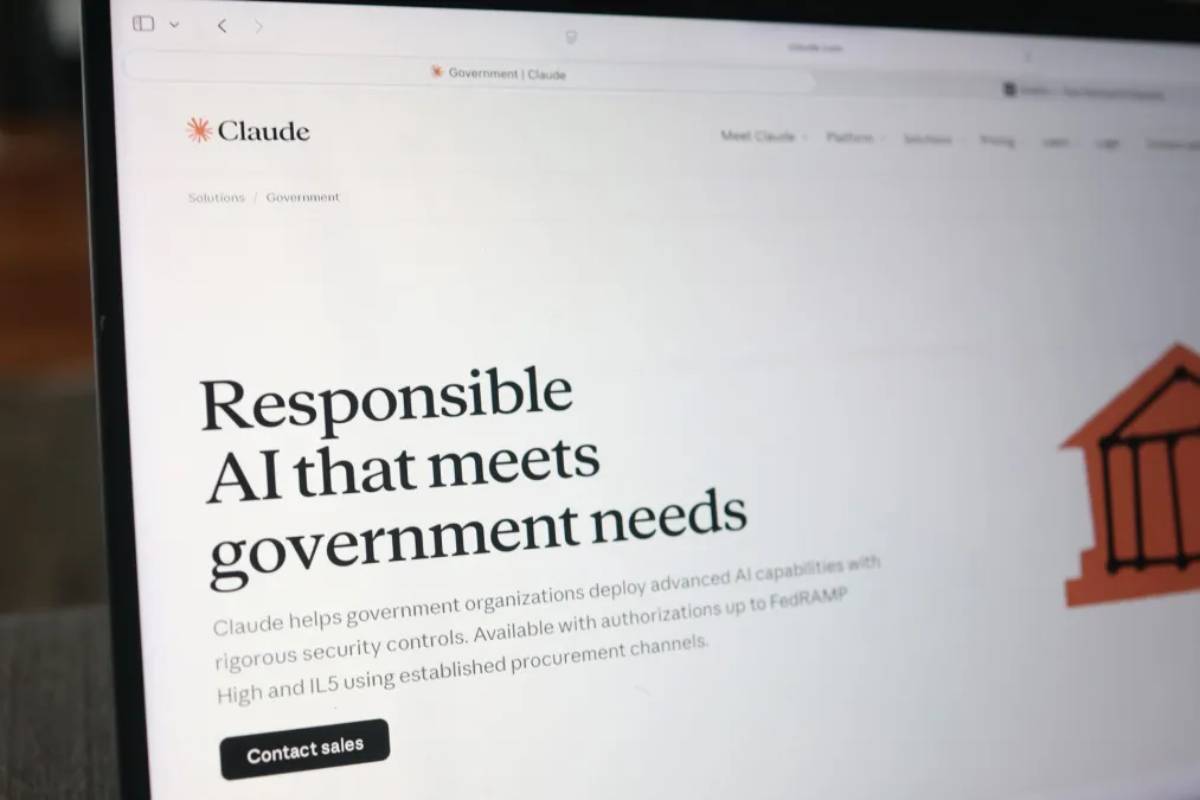
A sharp policy signal emerged from Washington as the Pentagon’s technology leadership urged Anthropic to broaden its involvement in military AI applications. The appeal highlights mounting pressure on frontier AI firms to align with national security priorities, even as ethical boundaries and corporate principles remain under scrutiny.
The Chief Technology Officer of the United States Department of Defense publicly encouraged Anthropic to “cross the Rubicon” and engage more directly in military AI use cases.
The remarks reflect ongoing discussions between US defense officials and leading AI developers regarding model deployment in defense planning, logistics, and potentially operational systems. The comments reportedly come amid internal debate within Anthropic over the ethical implications of military contracts.
The exchange underscores the Pentagon’s broader strategy to integrate cutting edge AI into defense capabilities, while navigating corporate resistance rooted in safety commitments and public perception concerns.
The development aligns with a broader global trend where governments are racing to secure AI capabilities for defense and strategic advantage. The United States, China, and other major powers increasingly view AI as a decisive factor in future military readiness.
Silicon Valley’s relationship with defense agencies has evolved over the past decade. While companies such as OpenAI and others have engaged in policy dialogue, several AI firms have faced internal employee pushback over military contracts.
Anthropic has positioned itself as a safety focused AI company, emphasizing responsible deployment and guardrails. The Pentagon’s appeal illustrates the tension between national security imperatives and corporate ethical frameworks. For policymakers and executives, the debate highlights how AI innovation now sits at the intersection of commercial strategy and geopolitical competition.
Defense officials argue that collaboration with leading AI firms is essential to maintain technological superiority. They contend that adversaries are rapidly integrating AI into intelligence and operational systems, raising the stakes for US readiness.
Industry analysts note that Anthropic’s cautious stance reflects broader reputational risks for AI firms associated with lethal or surveillance applications. At the same time, defense contracts offer significant revenue streams and long term strategic partnerships.
Policy experts observe that the phrase “cross the Rubicon” signals a call for decisive commitment rather than incremental engagement. Corporate governance specialists suggest that boards of AI companies may face increasing scrutiny from investors and stakeholders regarding defense collaboration decisions.
The debate reflects a structural shift in how frontier AI companies define their societal role.
For AI companies, the Pentagon’s appeal underscores growing pressure to clarify positions on defense engagement. Firms may need to establish transparent ethical guidelines while evaluating commercial and geopolitical risks.
Investors could interpret defense partnerships as stable revenue opportunities, but also as potential sources of reputational volatility. Companies declining military collaboration may risk losing influence in government policy discussions.
From a policy perspective, the episode could accelerate efforts to formalize public private AI partnerships. Governments may introduce incentives or frameworks designed to encourage participation while addressing ethical concerns.
Global competitors are likely watching closely as the US defines its AI defense integration strategy.
The coming months may reveal whether Anthropic expands its military engagement or reinforces existing guardrails. Decision makers should monitor formal contract announcements, policy frameworks, and internal governance updates.
As AI becomes central to defense strategy, the line between commercial innovation and national security obligation will continue to narrow.
Source: DefenseScoop
Date: February 19, 2026


