
Cursor Redefines AI Coding Workflows

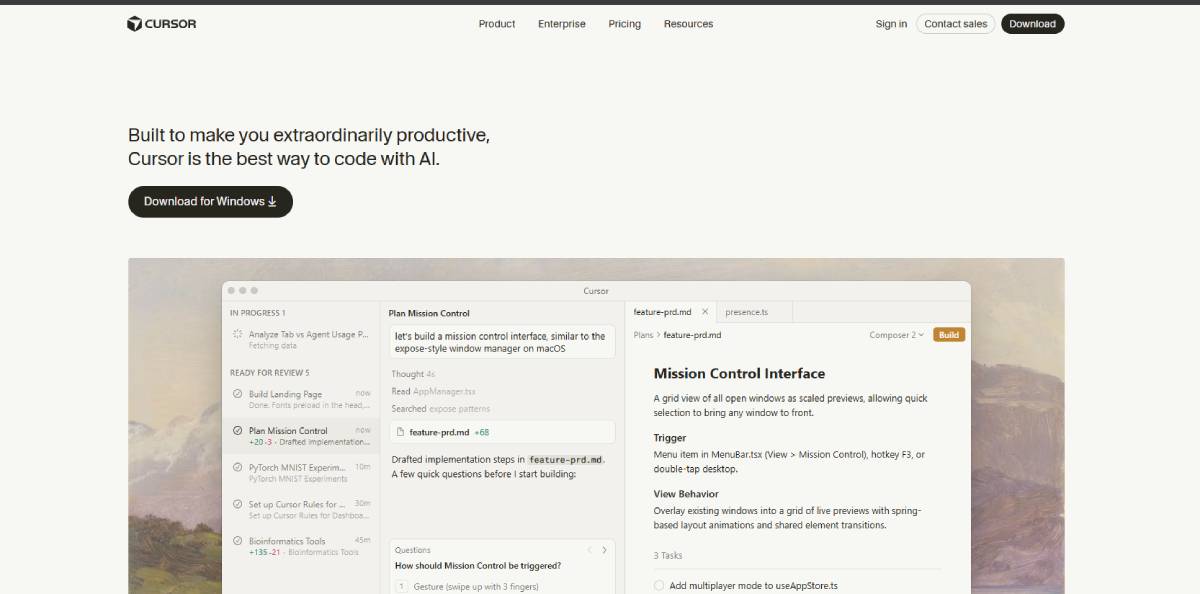
Cursor integrates advanced AI capabilities directly into the coding environment, enabling developers to generate, refactor, and debug code using natural language prompts.

April 14, 2026
|

A notable shift is unfolding as Cursor positions itself as a leading AI-native development environment, transforming how engineers write, debug, and deploy software. The development signals a structural change in software engineering workflows, with implications for global developer productivity, enterprise technology stacks, and the future of AI-assisted programming.

Cursor integrates advanced AI capabilities directly into the coding environment, enabling developers to generate, refactor, and debug code using natural language prompts. The platform is designed to reduce development time and streamline complex software engineering tasks.

The tool is gaining adoption among individual developers and engineering teams seeking productivity gains in fast-paced software environments. Key stakeholders include software engineers, enterprise development teams, technology companies, and cloud infrastructure providers. The platform reflects intensifying competition in AI-powered developer tools, where integration depth, model accuracy, and workflow efficiency are becoming critical differentiators in enterprise software ecosystems.

The development aligns with a broader trend across global markets where AI is fundamentally reshaping software engineering practices. Traditional coding workflows are increasingly being augmented by AI copilots and automated development environments that reduce manual effort and accelerate iteration cycles.

Companies such as Microsoft with GitHub Copilot and Google with AI-assisted development tools have already established strong positions in this evolving category. Historically, software development has relied on manual coding, debugging, and testing cycles. AI-native platforms now compress these workflows, enabling faster prototyping and deployment.

This shift is also driven by the increasing complexity of modern software systems, where AI assistance helps manage large codebases, reduce errors, and improve developer efficiency across distributed engineering teams.

Industry analysts suggest that AI-native coding platforms like Cursor could significantly reshape developer productivity benchmarks across the software industry. Experts highlight that natural language-based coding is lowering barriers for non-traditional developers while accelerating output for experienced engineers.

Software engineering leaders note that AI integration is becoming a standard expectation in modern development environments, particularly for enterprises operating at scale. However, some experts caution that over-reliance on AI-generated code may introduce risks related to code quality, security vulnerabilities, and reduced foundational understanding among junior developers.

While official positioning emphasizes speed and productivity, analysts stress the need for robust validation, testing frameworks, and human oversight to ensure reliability in mission-critical systems.

For global executives, this shift could redefine software development economics, significantly reducing time-to-market for digital products. Enterprises may increasingly adopt AI-first development environments to improve efficiency and reduce engineering costs.

Investors are likely to view AI coding platforms as a core growth area within enterprise software infrastructure. Policymakers may also consider implications for workforce transformation, particularly regarding skill requirements and the future role of junior developers in AI-augmented environments.

The evolution signals a broader restructuring of the software engineering value chain, where productivity is increasingly driven by AI-assisted systems. Looking ahead, AI-driven development environments are expected to become standard across enterprise and startup ecosystems. Decision-makers will monitor adoption rates, security implications, and developer dependency on AI systems.

The key uncertainty remains how organizations balance accelerated productivity with code integrity, governance, and long-term engineering skill development.

Source: Cursor
Date: April 2026

  • Featured tools
Copy Ai
Free

Copy AI is one of the most popular AI writing tools designed to help professionals create high-quality content quickly. Whether you are a product manager drafting feature descriptions or a marketer creating ad copy, Copy AI can save hours of work while maintaining creativity and tone.

#
Copywriting
Learn more
Scalenut AI
Free

Scalenut AI is an all-in-one SEO content platform that combines AI-driven writing, keyword research, competitor insights, and optimization tools to help you plan, create, and rank content.

#
SEO
Learn more

Learn more about future of AI

Join 80,000+ Ai enthusiast getting weekly updates on exciting AI tools.
Thank you! Your submission has been received!
Oops! Something went wrong while submitting the form.

Cursor Redefines AI Coding Workflows

April 14, 2026

Cursor integrates advanced AI capabilities directly into the coding environment, enabling developers to generate, refactor, and debug code using natural language prompts.

A notable shift is unfolding as Cursor positions itself as a leading AI-native development environment, transforming how engineers write, debug, and deploy software. The development signals a structural change in software engineering workflows, with implications for global developer productivity, enterprise technology stacks, and the future of AI-assisted programming.

Cursor integrates advanced AI capabilities directly into the coding environment, enabling developers to generate, refactor, and debug code using natural language prompts. The platform is designed to reduce development time and streamline complex software engineering tasks.

The tool is gaining adoption among individual developers and engineering teams seeking productivity gains in fast-paced software environments. Key stakeholders include software engineers, enterprise development teams, technology companies, and cloud infrastructure providers. The platform reflects intensifying competition in AI-powered developer tools, where integration depth, model accuracy, and workflow efficiency are becoming critical differentiators in enterprise software ecosystems.

The development aligns with a broader trend across global markets where AI is fundamentally reshaping software engineering practices. Traditional coding workflows are increasingly being augmented by AI copilots and automated development environments that reduce manual effort and accelerate iteration cycles.

Companies such as Microsoft with GitHub Copilot and Google with AI-assisted development tools have already established strong positions in this evolving category. Historically, software development has relied on manual coding, debugging, and testing cycles. AI-native platforms now compress these workflows, enabling faster prototyping and deployment.

This shift is also driven by the increasing complexity of modern software systems, where AI assistance helps manage large codebases, reduce errors, and improve developer efficiency across distributed engineering teams.

Industry analysts suggest that AI-native coding platforms like Cursor could significantly reshape developer productivity benchmarks across the software industry. Experts highlight that natural language-based coding is lowering barriers for non-traditional developers while accelerating output for experienced engineers.

Software engineering leaders note that AI integration is becoming a standard expectation in modern development environments, particularly for enterprises operating at scale. However, some experts caution that over-reliance on AI-generated code may introduce risks related to code quality, security vulnerabilities, and reduced foundational understanding among junior developers.

While official positioning emphasizes speed and productivity, analysts stress the need for robust validation, testing frameworks, and human oversight to ensure reliability in mission-critical systems.

For global executives, this shift could redefine software development economics, significantly reducing time-to-market for digital products. Enterprises may increasingly adopt AI-first development environments to improve efficiency and reduce engineering costs.

Investors are likely to view AI coding platforms as a core growth area within enterprise software infrastructure. Policymakers may also consider implications for workforce transformation, particularly regarding skill requirements and the future role of junior developers in AI-augmented environments.

The evolution signals a broader restructuring of the software engineering value chain, where productivity is increasingly driven by AI-assisted systems. Looking ahead, AI-driven development environments are expected to become standard across enterprise and startup ecosystems. Decision-makers will monitor adoption rates, security implications, and developer dependency on AI systems.

The key uncertainty remains how organizations balance accelerated productivity with code integrity, governance, and long-term engineering skill development.

Source: Cursor
Date: April 2026

Promote Your Tool

Copy Embed Code

Similar Blogs

April 14, 2026
|

Memory Costs Pressure Microsoft Surface Pricing

Microsoft’s Surface lineup is experiencing pricing adjustments driven by increased memory (RAM) costs, affecting both Surface Pro and Surface Laptop models.
Read more
April 14, 2026
|

AI Avatar Cloning Enters Creator Economy

The new AI avatar capability allows creators to generate digital replicas that can appear in videos, effectively enabling scalable content production without continuous on-camera presence. These avatars can mimic speech patterns, gestures, and presentation styles, streamlining video creation workflows.
Read more
April 14, 2026
|

Huawei Expands Foldable Smartphone Lead

Huawei’s latest foldable smartphone introduces a wider, tablet-like display format designed to enhance multitasking, productivity, and media consumption. The device expands the company’s foldable portfolio.
Read more
April 14, 2026
|

Google Cuts Pixel 10A Price Amid Android Rivalry

The Pixel 10A, positioned as a midrange smartphone within Google’s hardware lineup, is currently being offered at a discounted price point of $50 off.
Read more
April 14, 2026
|

AT&T Design Legacy Revisited via Western Electric 500

The Western Electric 500 telephone, developed under AT&T’s Bell System ecosystem, became one of the most widely used landline devices in history.
Read more
April 14, 2026
|

Microsoft Tests Autonomous Copilot AI Agents

Microsoft is reportedly experimenting with “OpenClaw-like” AI agents designed to extend Copilot’s functionality beyond simple assistance into autonomous task execution.
Read more