



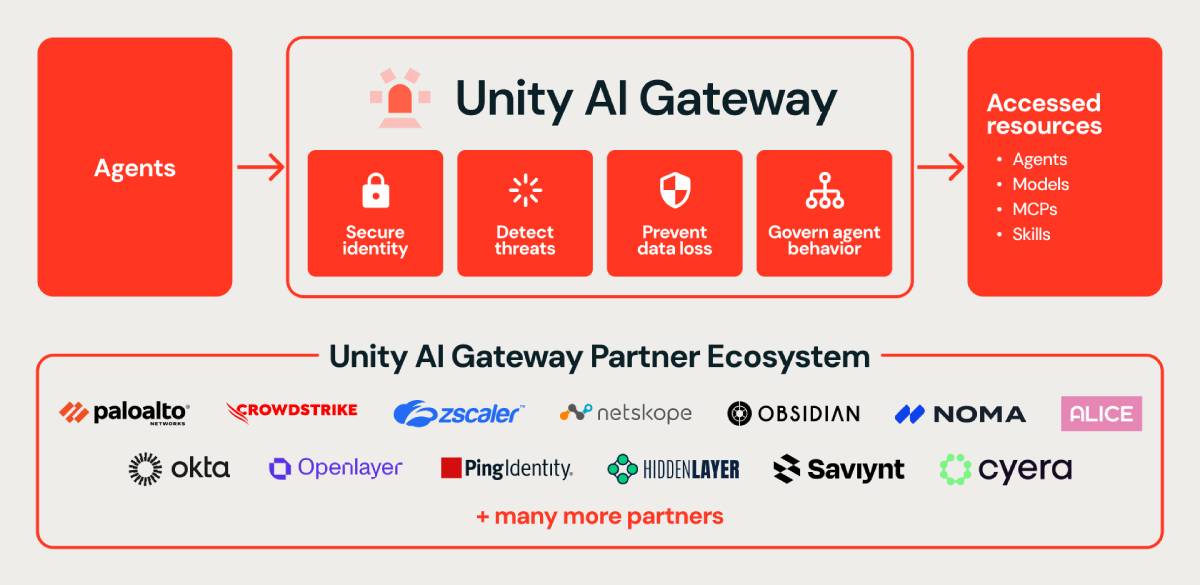
A significant development in enterprise artificial intelligence governance has emerged as Databricks introduces an open ecosystem approach through its Unity AI Gateway, aimed at standardizing how organizations manage, monitor, and secure AI systems. The initiative signals a strategic shift toward unified governance frameworks, with implications for global enterprises, cloud providers, regulators, and data-driven industries increasingly reliant on AI infrastructure.
Databricks has unveiled enhancements to its Unity AI Gateway designed to create a centralized and open governance layer for AI systems across enterprise environments. The platform aims to provide organizations with consistent control over model access, data usage, compliance monitoring, and AI lifecycle management.
The initiative focuses on enabling interoperability across multiple AI models and tools, allowing enterprises to manage diverse AI workloads within a unified governance structure. This includes improving visibility into model behavior, enforcing policy controls, and supporting auditability across AI deployments.
Key stakeholders include enterprise customers, cloud service providers, AI model developers, and data governance teams. The rollout reflects growing enterprise demand for standardized AI oversight as organizations increasingly deploy multiple models across hybrid and multi-cloud environments.
The development aligns with a broader trend across global markets where AI adoption is rapidly expanding across regulated industries such as finance, healthcare, manufacturing, and public services. As enterprises scale AI usage, governance complexity has increased significantly due to fragmented tools, multiple model providers, and inconsistent compliance frameworks.
Historically, enterprise data platforms have evolved from siloed systems to integrated cloud ecosystems. The current phase extends this evolution into AI governance, where organizations must ensure that machine learning models and generative AI systems operate within defined security, privacy, and regulatory boundaries.
Geopolitically, increasing attention on data sovereignty and AI regulation in regions such as the United States, European Union, and Asia has created pressure for standardized governance solutions. Companies are seeking platforms that can adapt to evolving compliance requirements while maintaining operational flexibility.
Databricks’ approach reflects a broader industry movement toward open ecosystems, where interoperability and portability are prioritized over vendor lock-in. This is particularly relevant as enterprises deploy AI across multiple vendors, including proprietary and open-source models.
Industry analysts suggest that unified AI governance platforms are becoming a critical layer in enterprise AI architecture. Experts argue that without centralized oversight, organizations risk inconsistencies in model behavior, compliance gaps, and increased exposure to data security vulnerabilities.
Databricks leadership emphasizes that the Unity AI Gateway is designed to provide organizations with an open and extensible governance framework that supports multiple AI providers rather than restricting enterprises to a single ecosystem. The goal is to enable consistent policy enforcement while maintaining flexibility in model selection.
Technology strategists highlight that enterprise demand is shifting from isolated AI experimentation toward production-scale deployment, where governance, observability, and auditability are essential requirements.
Analysts also note that competition is intensifying among cloud and data platform providers to define the standard for AI governance infrastructure, with major players investing heavily in control planes for enterprise AI systems.
For global executives, the shift could redefine how organizations structure AI operations, particularly in regulated sectors where compliance and transparency are critical. Businesses may increasingly adopt unified governance platforms to reduce operational risk and improve scalability.
Investors are likely to view AI governance infrastructure as a foundational layer of the broader AI economy, with long-term growth potential driven by enterprise adoption. Companies offering interoperability and compliance-focused solutions may gain competitive advantage.
From a policy perspective, regulators may benefit from standardized governance frameworks that improve auditability and oversight of AI systems. Enterprises, in turn, may face evolving requirements to demonstrate consistent AI accountability across jurisdictions.
The evolution of AI governance platforms is expected to accelerate as enterprises scale multi-model deployments and regulatory frameworks mature. Decision-makers should watch for increased standardization efforts, ecosystem partnerships, and integration between AI infrastructure providers. While interoperability remains a key challenge, the direction of the market is clearly toward unified control and open governance. Organizations that adopt early governance frameworks will be better positioned to manage complexity at scale.
Source: Databricks Blog
Date: June 18, 2026


