
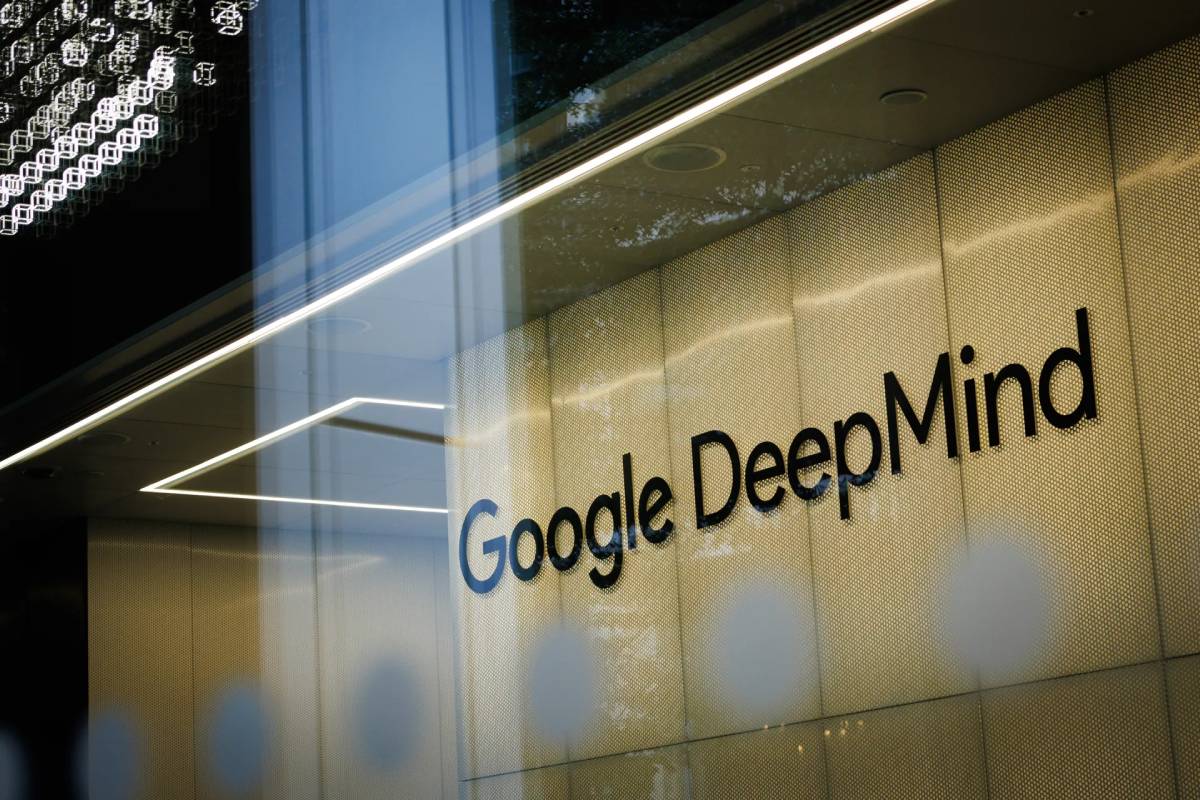
DeepMind Workers Unionize Over Military AI Ethics

Employees at Google DeepMind have reportedly voted in favor of forming a union, citing unease over the company’s involvement in military and defense-linked AI contracts.

May 6, 2026
|

A vote by workers at Google DeepMind to pursue unionization over concerns tied to military-related AI applications has intensified scrutiny of how advanced AI is deployed. The move underscores growing ethical tensions inside frontier AI labs and raises broader questions about governance, corporate accountability, and defense-sector partnerships shaping global AI competition.

Employees at Google DeepMind have reportedly voted in favor of forming a union, citing unease over the company’s involvement in military and defense-linked AI contracts. The development follows internal debates about responsible AI deployment and transparency in decision-making. Workers argue that ethical oversight has not kept pace with rapidly expanding commercial and government partnerships.

The unionization effort places Alphabet, DeepMind’s parent company, at the center of a broader labor and governance debate in the AI sector. It also comes as governments deepen collaboration with leading AI firms for national security applications, accelerating industry-wide tensions between innovation, ethics, and defense priorities.

The move reflects a wider structural shift in the AI industry, where frontier model developers are increasingly embedded in geopolitical and defense ecosystems. Over the past two years, governments in the US, UK, and allied regions have expanded procurement and testing partnerships with AI firms to strengthen cybersecurity, intelligence analysis, and autonomous systems.

At the same time, internal dissent within tech firms has grown around dual-use technologies systems that can serve both civilian and military purposes. Previous employee-led protests at major technology companies have highlighted concerns about surveillance, autonomous weapons, and algorithmic decision-making in conflict scenarios.

DeepMind, acquired by Google in 2014, has historically positioned itself as an ethics-forward AI research lab. However, its integration into Alphabet’s broader commercial and strategic AI portfolio has intensified scrutiny over how research priorities align with enterprise and defense applications.

Industry analysts note that the vote reflects a “maturing phase” in AI labor dynamics, where employees are increasingly willing to challenge strategic direction on ethical grounds. Some governance experts argue that AI firms are entering a period similar to early biotech and nuclear research industries, where internal oversight mechanisms evolve alongside public accountability pressures.

Legal scholars suggest that unionization in AI labs could reshape how product decisions are reviewed, particularly in sensitive domains such as defense contracting and surveillance technologies. Meanwhile, policy observers highlight that governments may face increasing pressure to formalize ethical standards for AI procurement.

While DeepMind has not issued detailed public remarks on the union vote itself, industry observers expect internal review processes and stakeholder engagement frameworks to come under renewed scrutiny in the coming months.

For global technology firms, the development signals rising internal governance risks in high-value AI operations. Companies may need to reassess how they structure ethical oversight, employee consultation, and transparency in defense-related projects.

Investors are also likely to monitor whether labor tensions could impact execution timelines for commercial AI deployment. For policymakers, the situation adds urgency to defining clearer regulatory boundaries around dual-use AI systems.

More broadly, the episode underscores a structural challenge: balancing rapid commercialization of AI with workforce expectations around ethical accountability and societal impact.

The next phase will depend on whether DeepMind formally recognizes the union and how Alphabet responds to employee demands. Regulators and policymakers may also examine whether AI labor governance should be standardized across the sector. As AI becomes increasingly central to national security frameworks, similar disputes are likely to emerge across other major labs globally.

Source: Wired
Date: May 2026

  • Featured tools
Writesonic AI
Free

Writesonic AI is a versatile AI writing platform designed for marketers, entrepreneurs, and content creators. It helps users create blog posts, ad copies, product descriptions, social media posts, and more with ease. With advanced AI models and user-friendly tools, Writesonic streamlines content production and saves time for busy professionals.

#
Copywriting
Learn more
Scalenut AI
Free

Scalenut AI is an all-in-one SEO content platform that combines AI-driven writing, keyword research, competitor insights, and optimization tools to help you plan, create, and rank content.

#
SEO
Learn more

Learn more about future of AI

Join 80,000+ Ai enthusiast getting weekly updates on exciting AI tools.
Thank you! Your submission has been received!
Oops! Something went wrong while submitting the form.

DeepMind Workers Unionize Over Military AI Ethics

May 6, 2026

Employees at Google DeepMind have reportedly voted in favor of forming a union, citing unease over the company’s involvement in military and defense-linked AI contracts.

A vote by workers at Google DeepMind to pursue unionization over concerns tied to military-related AI applications has intensified scrutiny of how advanced AI is deployed. The move underscores growing ethical tensions inside frontier AI labs and raises broader questions about governance, corporate accountability, and defense-sector partnerships shaping global AI competition.

Employees at Google DeepMind have reportedly voted in favor of forming a union, citing unease over the company’s involvement in military and defense-linked AI contracts. The development follows internal debates about responsible AI deployment and transparency in decision-making. Workers argue that ethical oversight has not kept pace with rapidly expanding commercial and government partnerships.

The unionization effort places Alphabet, DeepMind’s parent company, at the center of a broader labor and governance debate in the AI sector. It also comes as governments deepen collaboration with leading AI firms for national security applications, accelerating industry-wide tensions between innovation, ethics, and defense priorities.

The move reflects a wider structural shift in the AI industry, where frontier model developers are increasingly embedded in geopolitical and defense ecosystems. Over the past two years, governments in the US, UK, and allied regions have expanded procurement and testing partnerships with AI firms to strengthen cybersecurity, intelligence analysis, and autonomous systems.

At the same time, internal dissent within tech firms has grown around dual-use technologies systems that can serve both civilian and military purposes. Previous employee-led protests at major technology companies have highlighted concerns about surveillance, autonomous weapons, and algorithmic decision-making in conflict scenarios.

DeepMind, acquired by Google in 2014, has historically positioned itself as an ethics-forward AI research lab. However, its integration into Alphabet’s broader commercial and strategic AI portfolio has intensified scrutiny over how research priorities align with enterprise and defense applications.

Industry analysts note that the vote reflects a “maturing phase” in AI labor dynamics, where employees are increasingly willing to challenge strategic direction on ethical grounds. Some governance experts argue that AI firms are entering a period similar to early biotech and nuclear research industries, where internal oversight mechanisms evolve alongside public accountability pressures.

Legal scholars suggest that unionization in AI labs could reshape how product decisions are reviewed, particularly in sensitive domains such as defense contracting and surveillance technologies. Meanwhile, policy observers highlight that governments may face increasing pressure to formalize ethical standards for AI procurement.

While DeepMind has not issued detailed public remarks on the union vote itself, industry observers expect internal review processes and stakeholder engagement frameworks to come under renewed scrutiny in the coming months.

For global technology firms, the development signals rising internal governance risks in high-value AI operations. Companies may need to reassess how they structure ethical oversight, employee consultation, and transparency in defense-related projects.

Investors are also likely to monitor whether labor tensions could impact execution timelines for commercial AI deployment. For policymakers, the situation adds urgency to defining clearer regulatory boundaries around dual-use AI systems.

More broadly, the episode underscores a structural challenge: balancing rapid commercialization of AI with workforce expectations around ethical accountability and societal impact.

The next phase will depend on whether DeepMind formally recognizes the union and how Alphabet responds to employee demands. Regulators and policymakers may also examine whether AI labor governance should be standardized across the sector. As AI becomes increasingly central to national security frameworks, similar disputes are likely to emerge across other major labs globally.

Source: Wired
Date: May 2026

Promote Your Tool

Copy Embed Code

Similar Blogs

May 6, 2026
|

OpenAI Targets AI Smartphone Device Push

The report suggests OpenAI is evaluating a hardware strategy centered on AI-native smartphones designed to deeply integrate generative AI into everyday device usage.
Read more
May 6, 2026
|

ChatGPT GPT-5.5 Instant Improves Natural Responses

The GPT-5.5 Instant model is expected to focus on reducing overly verbose or repetitive answers while improving conversational flow and contextual relevance.
Read more
May 6, 2026
|

Etsy Integrates Shopping App Into ChatGPT

Etsy’s latest integration allows users to browse and discover products directly inside ChatGPT, streamlining the shopping experience from query to product selection.
Read more
May 6, 2026
|

Apple Cuts Magic Mouse Price Amid Competition Shift

The Apple Magic Mouse is available at nearly a 20% discount through select retail channels, marking a notable price reduction for one of Apple’s flagship peripherals.
Read more
May 6, 2026
|

MacOS Windows Simplify Wi-Fi Password Access

Both MacOS and Windows operating systems allow users to retrieve saved Wi-Fi passwords through built-in settings menus, eliminating the need for third-party tools or network resets.
Read more
May 6, 2026
|

Google Upgrades Home Gemini Smart Assistant

The latest update integrates Gemini AI more deeply into Google Home, allowing the system to interpret and execute more complex, multi-layered commands.
Read more