
Etsy Integrates Shopping App Into ChatGPT

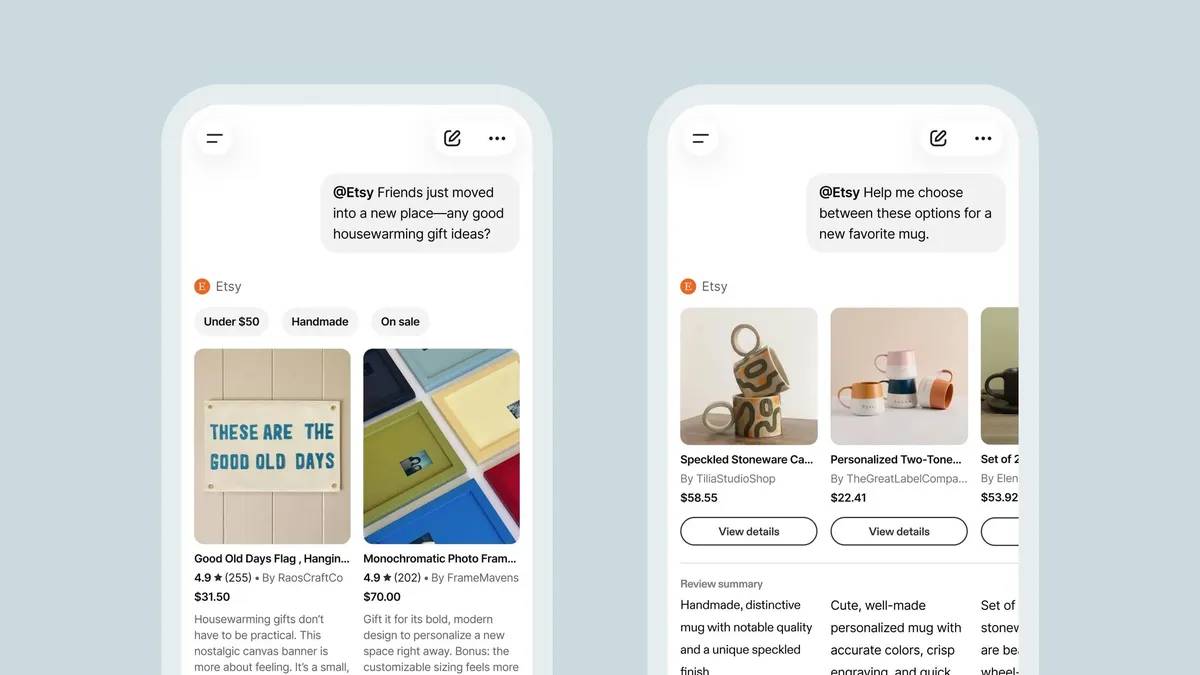
Etsy’s latest integration allows users to browse and discover products directly inside ChatGPT, streamlining the shopping experience from query to product selection.

May 6, 2026
|
Image Source: CNET

Etsy has introduced its shopping app within ChatGPT, marking a renewed attempt to embed e-commerce directly into conversational AI platforms. The move underscores growing competition among digital marketplaces to own AI-driven discovery and transaction flows. The integration is expected to reshape how users search, evaluate, and purchase handmade and niche goods globally.

Etsy’s latest integration allows users to browse and discover products directly inside ChatGPT, streamlining the shopping experience from query to product selection. The rollout follows earlier challenges in achieving seamless AI-based commerce integration but signals renewed confidence in conversational shopping.

The initiative involves collaboration between Etsy and OpenAI, aiming to reduce friction in product discovery and improve personalization through AI prompts. While financial terms were not disclosed, the move aligns with broader industry efforts to embed commerce into AI assistants. The development could influence transaction volumes, seller visibility, and platform competition across global e-commerce ecosystems.

The integration reflects a wider shift in digital commerce, where AI assistants are increasingly becoming discovery engines rather than just informational tools. Platforms like Amazon, Google, and Shopify are also investing heavily in AI-powered shopping experiences, anticipating reduced reliance on traditional search and app-based browsing.

Etsy’s move comes amid intensifying competition in niche e-commerce, where differentiation depends on personalization and user engagement. Previous attempts to merge AI and commerce have faced friction due to accuracy, trust, and conversion challenges. However, advances in large language models and recommendation systems are now improving contextual relevance.

Globally, the convergence of AI and retail is reshaping consumer behavior, with conversational interfaces expected to become a primary gateway for product discovery. This positions AI platforms as intermediaries in the retail value chain, raising strategic implications for digital marketplaces.

Industry analysts view Etsy’s integration as a calculated attempt to reclaim momentum in a rapidly evolving AI commerce landscape. Experts suggest that embedding shopping inside conversational interfaces could significantly reduce customer acquisition costs while increasing engagement time.

However, analysts also caution that AI-driven commerce introduces risks around recommendation bias, product misrepresentation, and fragmented seller competition. Some industry observers argue that platforms like Etsy must balance automation with trust signals to maintain buyer confidence.

While official commentary from Etsy emphasizes improved discovery and user experience, technology strategists highlight that the success of such integrations will depend on conversion efficiency and AI accuracy. Broader market sentiment indicates that this move could pressure competitors to accelerate their own AI commerce strategies across retail ecosystems.

For businesses, this integration signals a shift toward AI-mediated consumer funnels, where visibility is increasingly determined by algorithmic recommendation rather than traditional search ranking. Retailers may need to optimize product data for AI systems rather than just SEO-based discovery.

Investors will closely monitor whether AI-driven commerce improves conversion rates and platform monetization. For consumers, the change could simplify purchasing but also reduce transparency in product selection pathways.

From a policy perspective, regulators may begin scrutinizing how AI systems rank, recommend, and monetize products. This could raise questions about fairness, disclosure, and competition in AI-powered marketplaces, particularly as digital assistants gain influence over purchasing decisions.

The success of Etsy’s ChatGPT integration will depend on user adoption, recommendation accuracy, and conversion performance. Future iterations may expand into more dynamic personalization and real-time purchasing flows. However, challenges around trust, pricing transparency, and platform dependency remain unresolved. Industry watchers expect competing marketplaces to accelerate similar integrations, potentially redefining how digital retail ecosystems operate in an AI-first environment.

Source: CNET
Date: May 2026

  • Featured tools
Surfer AI
Free

Surfer AI is an AI-powered content creation assistant built into the Surfer SEO platform, designed to generate SEO-optimized articles from prompts, leveraging data from search results to inform tone, structure, and relevance.

#
SEO
Learn more
Beautiful AI
Free

Beautiful AI is an AI-powered presentation platform that automates slide design and formatting, enabling users to create polished, on-brand presentations quickly.

#
Presentation
Learn more

Learn more about future of AI

Join 80,000+ Ai enthusiast getting weekly updates on exciting AI tools.
Thank you! Your submission has been received!
Oops! Something went wrong while submitting the form.

Etsy Integrates Shopping App Into ChatGPT

May 6, 2026

Etsy’s latest integration allows users to browse and discover products directly inside ChatGPT, streamlining the shopping experience from query to product selection.

Image Source: CNET

Etsy has introduced its shopping app within ChatGPT, marking a renewed attempt to embed e-commerce directly into conversational AI platforms. The move underscores growing competition among digital marketplaces to own AI-driven discovery and transaction flows. The integration is expected to reshape how users search, evaluate, and purchase handmade and niche goods globally.

Etsy’s latest integration allows users to browse and discover products directly inside ChatGPT, streamlining the shopping experience from query to product selection. The rollout follows earlier challenges in achieving seamless AI-based commerce integration but signals renewed confidence in conversational shopping.

The initiative involves collaboration between Etsy and OpenAI, aiming to reduce friction in product discovery and improve personalization through AI prompts. While financial terms were not disclosed, the move aligns with broader industry efforts to embed commerce into AI assistants. The development could influence transaction volumes, seller visibility, and platform competition across global e-commerce ecosystems.

The integration reflects a wider shift in digital commerce, where AI assistants are increasingly becoming discovery engines rather than just informational tools. Platforms like Amazon, Google, and Shopify are also investing heavily in AI-powered shopping experiences, anticipating reduced reliance on traditional search and app-based browsing.

Etsy’s move comes amid intensifying competition in niche e-commerce, where differentiation depends on personalization and user engagement. Previous attempts to merge AI and commerce have faced friction due to accuracy, trust, and conversion challenges. However, advances in large language models and recommendation systems are now improving contextual relevance.

Globally, the convergence of AI and retail is reshaping consumer behavior, with conversational interfaces expected to become a primary gateway for product discovery. This positions AI platforms as intermediaries in the retail value chain, raising strategic implications for digital marketplaces.

Industry analysts view Etsy’s integration as a calculated attempt to reclaim momentum in a rapidly evolving AI commerce landscape. Experts suggest that embedding shopping inside conversational interfaces could significantly reduce customer acquisition costs while increasing engagement time.

However, analysts also caution that AI-driven commerce introduces risks around recommendation bias, product misrepresentation, and fragmented seller competition. Some industry observers argue that platforms like Etsy must balance automation with trust signals to maintain buyer confidence.

While official commentary from Etsy emphasizes improved discovery and user experience, technology strategists highlight that the success of such integrations will depend on conversion efficiency and AI accuracy. Broader market sentiment indicates that this move could pressure competitors to accelerate their own AI commerce strategies across retail ecosystems.

For businesses, this integration signals a shift toward AI-mediated consumer funnels, where visibility is increasingly determined by algorithmic recommendation rather than traditional search ranking. Retailers may need to optimize product data for AI systems rather than just SEO-based discovery.

Investors will closely monitor whether AI-driven commerce improves conversion rates and platform monetization. For consumers, the change could simplify purchasing but also reduce transparency in product selection pathways.

From a policy perspective, regulators may begin scrutinizing how AI systems rank, recommend, and monetize products. This could raise questions about fairness, disclosure, and competition in AI-powered marketplaces, particularly as digital assistants gain influence over purchasing decisions.

The success of Etsy’s ChatGPT integration will depend on user adoption, recommendation accuracy, and conversion performance. Future iterations may expand into more dynamic personalization and real-time purchasing flows. However, challenges around trust, pricing transparency, and platform dependency remain unresolved. Industry watchers expect competing marketplaces to accelerate similar integrations, potentially redefining how digital retail ecosystems operate in an AI-first environment.

Source: CNET
Date: May 2026

Promote Your Tool

Copy Embed Code

Similar Blogs

May 6, 2026
|

OpenAI Targets AI Smartphone Device Push

The report suggests OpenAI is evaluating a hardware strategy centered on AI-native smartphones designed to deeply integrate generative AI into everyday device usage.
Read more
May 6, 2026
|

ChatGPT GPT-5.5 Instant Improves Natural Responses

The GPT-5.5 Instant model is expected to focus on reducing overly verbose or repetitive answers while improving conversational flow and contextual relevance.
Read more
May 6, 2026
|

Etsy Integrates Shopping App Into ChatGPT

Etsy’s latest integration allows users to browse and discover products directly inside ChatGPT, streamlining the shopping experience from query to product selection.
Read more
May 6, 2026
|

Apple Cuts Magic Mouse Price Amid Competition Shift

The Apple Magic Mouse is available at nearly a 20% discount through select retail channels, marking a notable price reduction for one of Apple’s flagship peripherals.
Read more
May 6, 2026
|

MacOS Windows Simplify Wi-Fi Password Access

Both MacOS and Windows operating systems allow users to retrieve saved Wi-Fi passwords through built-in settings menus, eliminating the need for third-party tools or network resets.
Read more
May 6, 2026
|

Google Upgrades Home Gemini Smart Assistant

The latest update integrates Gemini AI more deeply into Google Home, allowing the system to interpret and execute more complex, multi-layered commands.
Read more