



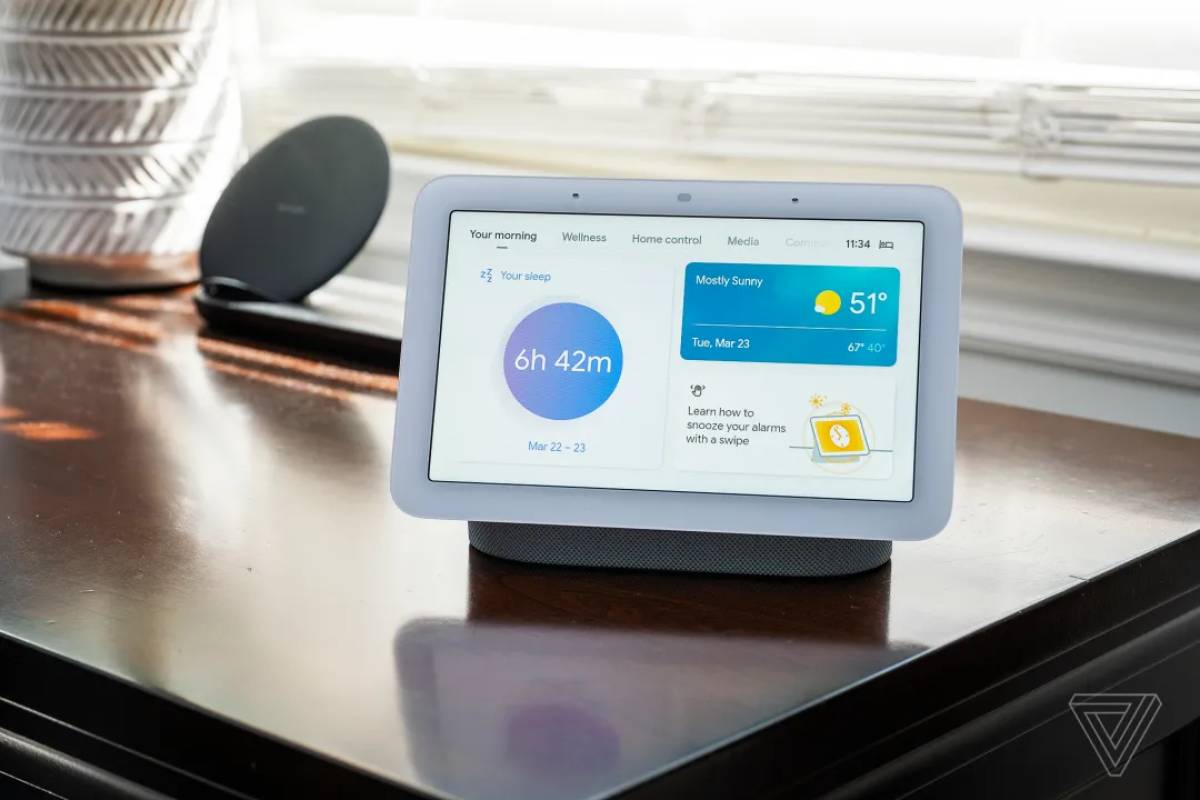
Google is expanding its Gemini AI capabilities within the Google Home ecosystem, enabling more advanced and multi-step user requests. The upgrade signals a shift toward agent-like smart assistants that can manage complex household and productivity tasks, intensifying competition in the global smart home and AI assistant market.
The latest update integrates Gemini AI more deeply into Google Home, allowing the system to interpret and execute more complex, multi-layered commands. This includes coordinating multiple smart devices, handling contextual follow-ups, and managing sequential tasks rather than isolated instructions.
The rollout is part of Google’s broader strategy to position Gemini as a central intelligence layer across its ecosystem, spanning mobile, cloud, and home devices. The enhancement is expected to be introduced through phased software updates across supported Google Home devices and Nest hardware.
The move places Google in direct competition with other AI-driven home assistant platforms. Smart home ecosystems have evolved from basic voice-controlled devices into integrated AI platforms capable of managing connected environments. Early generations of assistants focused on simple commands such as playing music or setting reminders, but user expectations have rapidly expanded toward contextual reasoning and automation.
Google has been steadily transitioning its assistant infrastructure toward Gemini-powered systems, reflecting a broader industry pivot to large language model-based interfaces. This shift is also driven by increased competition from AI-first ecosystems, where assistants are expected to function as autonomous agents rather than reactive tools.
Globally, tech firms are racing to embed generative AI into consumer environments, including homes, vehicles, and wearable devices. This reflects a larger economic trend where AI becomes the interface layer for digital ecosystems, replacing traditional app-based interactions.
Industry analysts suggest that embedding generative AI into smart home systems represents a foundational shift in how consumers interact with connected devices. Instead of isolated commands, assistants are moving toward intent-based execution models that can interpret broader user goals.
Technology strategists highlight that this evolution increases both utility and complexity, particularly in areas such as privacy, data processing, and device interoperability. Experts note that the ability to handle multi-step reasoning positions AI assistants closer to “home operating systems” rather than simple voice tools.
Market observers also point out that this upgrade strengthens Google’s competitive positioning against rival ecosystems that are similarly integrating large language models into consumer hardware platforms.
For technology companies, the upgrade underscores a strategic shift toward AI-first ecosystem design, where assistants become central control layers across devices and services. This could accelerate hardware-software integration strategies across the smart home industry.
For consumers, the development may improve convenience but also raises questions around data usage, inference accuracy, and automation control. Businesses in the IoT and consumer electronics sectors may need to reassess product compatibility and platform dependencies.
From a policy standpoint, regulators are increasingly focused on how AI systems operate within private environments, particularly regarding data privacy and behavioral inference.
Future iterations of Gemini-powered Home systems are likely to expand toward fully autonomous home management, including predictive automation and cross-device orchestration. The key variables ahead will be reliability, user trust, and regulatory clarity around AI-driven household decision systems. Competition in the smart assistant market is expected to intensify as AI becomes the default interface layer.
Source: The Verge
Date: May 2026


