
DJI Upgrades Osmo Pocket 4 for Creators

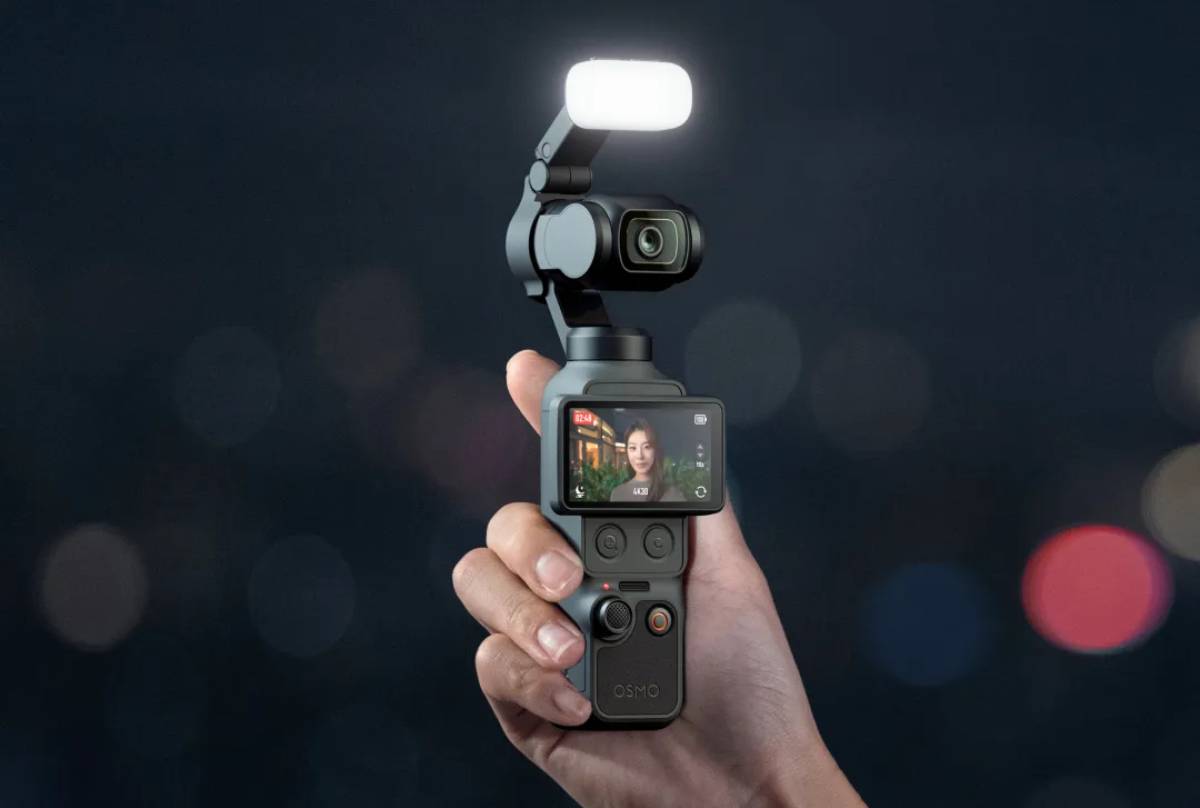
The Osmo Pocket 4 introduces upgraded imaging capabilities, including improved 4K slow-motion capture, enhanced stabilization, and refined computational photography features.

April 17, 2026
|
Image Source: The Verge/DJI

A major development unfolded as DJI unveiled the Osmo Pocket 4, a compact stabilized camera designed to significantly enhance slow-motion video and photo capture. The launch signals intensifying competition in the handheld imaging market, with implications for the global creator economy, consumer electronics segment, and AI-enhanced visual production tools.

The Osmo Pocket 4 introduces upgraded imaging capabilities, including improved 4K slow-motion capture, enhanced stabilization, and refined computational photography features. Built on DJI’s established gimbal technology, the device targets content creators, mobile filmmakers, and professional vloggers seeking high-quality production in compact form factors.

The rollout reflects a strategic push to consolidate DJI’s dominance in portable imaging hardware amid rising competition from smartphone manufacturers and niche camera startups. Key stakeholders include digital content platforms, independent creators, and consumer electronics retailers.

The timing aligns with surging demand for short-form video content across platforms, reinforcing the importance of high-performance mobile production tools in the global creator ecosystem.

The development aligns with a broader trend across global markets where the creator economy is rapidly evolving into a multi-billion-dollar ecosystem driven by short-form video platforms and AI-enhanced content production.

Companies such as GoPro and smartphone leaders like Apple have increasingly integrated advanced imaging systems to capture market share in mobile photography and video production.

Historically, professional-grade video capture required expensive equipment and specialized skills. However, the democratization of content creation tools has shifted demand toward compact, AI-assisted devices capable of delivering cinematic quality on the go.

This transition is also tied to broader AI platforms and tools that enhance image processing, stabilization, and automated editing. As a result, hardware innovation is now tightly coupled with software intelligence in shaping the future of digital storytelling.

Industry analysts view the Osmo Pocket 4 as a continuation of DJI’s strategy to dominate the compact imaging segment by integrating advanced computational features into portable hardware. Experts suggest that improvements in stabilization and slow-motion capture could significantly elevate content quality for independent creators and small production teams.

Market observers note that demand for high-quality mobile video tools is accelerating due to the growth of social media monetization and influencer-driven content ecosystems. However, some analysts caution that smartphone manufacturers are rapidly closing the gap by embedding increasingly sophisticated camera systems powered by AI frameworks and imaging chips. From an industry standpoint, the competition is no longer limited to hardware alone but extends into AI-driven software ecosystems and editing platforms that enhance post-production workflows.

For global executives, the shift could redefine product strategies across consumer electronics, media production, and digital platforms. Companies may need to reassess investments in AI-enhanced imaging tools and integrated content ecosystems to remain competitive.

Investors are likely to view the creator economy as a sustained growth sector, driven by increasing demand for high-quality visual content and mobile production devices. From a policy perspective, the rise of AI-assisted imaging tools raises questions around digital authenticity, content manipulation, and media verification standards.

Consumers will benefit from more accessible professional-grade tools, accelerating the democratization of content creation across global markets. Looking ahead, competition in the compact camera segment is expected to intensify as hardware manufacturers integrate deeper AI capabilities. Decision-makers should monitor advancements in mobile imaging, platform-driven content monetization, and ecosystem integration.

The key uncertainty lies in whether standalone devices can maintain differentiation against rapidly evolving smartphone camera systems powered by advanced AI platforms and tools.

Source: The Verge
Date: April 16, 2026

  • Featured tools
Ai Fiesta
Paid

AI Fiesta is an all-in-one productivity platform that gives users access to multiple leading AI models through a single interface. It includes features like prompt enhancement, image generation, audio transcription and side-by-side model comparison.

#
Copywriting
#
Art Generator
Learn more
Figstack AI
Free

Figstack AI is an intelligent assistant for developers that explains code, generates docstrings, converts code between languages, and analyzes time complexity helping you work smarter, not harder.

#
Coding
Learn more

Learn more about future of AI

Join 80,000+ Ai enthusiast getting weekly updates on exciting AI tools.
Thank you! Your submission has been received!
Oops! Something went wrong while submitting the form.

DJI Upgrades Osmo Pocket 4 for Creators

April 17, 2026

The Osmo Pocket 4 introduces upgraded imaging capabilities, including improved 4K slow-motion capture, enhanced stabilization, and refined computational photography features.

Image Source: The Verge/DJI

A major development unfolded as DJI unveiled the Osmo Pocket 4, a compact stabilized camera designed to significantly enhance slow-motion video and photo capture. The launch signals intensifying competition in the handheld imaging market, with implications for the global creator economy, consumer electronics segment, and AI-enhanced visual production tools.

The Osmo Pocket 4 introduces upgraded imaging capabilities, including improved 4K slow-motion capture, enhanced stabilization, and refined computational photography features. Built on DJI’s established gimbal technology, the device targets content creators, mobile filmmakers, and professional vloggers seeking high-quality production in compact form factors.

The rollout reflects a strategic push to consolidate DJI’s dominance in portable imaging hardware amid rising competition from smartphone manufacturers and niche camera startups. Key stakeholders include digital content platforms, independent creators, and consumer electronics retailers.

The timing aligns with surging demand for short-form video content across platforms, reinforcing the importance of high-performance mobile production tools in the global creator ecosystem.

The development aligns with a broader trend across global markets where the creator economy is rapidly evolving into a multi-billion-dollar ecosystem driven by short-form video platforms and AI-enhanced content production.

Companies such as GoPro and smartphone leaders like Apple have increasingly integrated advanced imaging systems to capture market share in mobile photography and video production.

Historically, professional-grade video capture required expensive equipment and specialized skills. However, the democratization of content creation tools has shifted demand toward compact, AI-assisted devices capable of delivering cinematic quality on the go.

This transition is also tied to broader AI platforms and tools that enhance image processing, stabilization, and automated editing. As a result, hardware innovation is now tightly coupled with software intelligence in shaping the future of digital storytelling.

Industry analysts view the Osmo Pocket 4 as a continuation of DJI’s strategy to dominate the compact imaging segment by integrating advanced computational features into portable hardware. Experts suggest that improvements in stabilization and slow-motion capture could significantly elevate content quality for independent creators and small production teams.

Market observers note that demand for high-quality mobile video tools is accelerating due to the growth of social media monetization and influencer-driven content ecosystems. However, some analysts caution that smartphone manufacturers are rapidly closing the gap by embedding increasingly sophisticated camera systems powered by AI frameworks and imaging chips. From an industry standpoint, the competition is no longer limited to hardware alone but extends into AI-driven software ecosystems and editing platforms that enhance post-production workflows.

For global executives, the shift could redefine product strategies across consumer electronics, media production, and digital platforms. Companies may need to reassess investments in AI-enhanced imaging tools and integrated content ecosystems to remain competitive.

Investors are likely to view the creator economy as a sustained growth sector, driven by increasing demand for high-quality visual content and mobile production devices. From a policy perspective, the rise of AI-assisted imaging tools raises questions around digital authenticity, content manipulation, and media verification standards.

Consumers will benefit from more accessible professional-grade tools, accelerating the democratization of content creation across global markets. Looking ahead, competition in the compact camera segment is expected to intensify as hardware manufacturers integrate deeper AI capabilities. Decision-makers should monitor advancements in mobile imaging, platform-driven content monetization, and ecosystem integration.

The key uncertainty lies in whether standalone devices can maintain differentiation against rapidly evolving smartphone camera systems powered by advanced AI platforms and tools.

Source: The Verge
Date: April 16, 2026

Promote Your Tool

Copy Embed Code

Similar Blogs

June 25, 2026
|

OQ Tech Boosts Satellite Position

The European financing package will support OQ Technology’s expansion of its low Earth orbit (LEO) satellite constellation aimed at providing direct-to-device connectivity.
Read more
June 25, 2026
|

Women Led Startups Show Funding Gap

The startup ecosystem has seen a steady increase in women-founded and women-led companies, particularly in sectors such as digital services, healthtech, fintech, and sustainability-driven innovation.
Read more
June 25, 2026
|

AI Healthcare Unlocks Transformation Potential

AI applications in healthcare are expanding across multiple domains, including clinical decision support, medical imaging, drug discovery, and patient management systems.
Read more
June 25, 2026
|

Helical Raises $10M for AI Drug Lab

The funding round will enable Helical to scale its virtual AI lab infrastructure, which simulates complex biological processes for drug discovery.
Read more
June 25, 2026
|

Digital Healthtech Faces Investor Pressure

The guidance highlights that digital health startups must now demonstrate stronger clinical validation, data security standards, and measurable patient outcomes to secure investor confidence.
Read more
June 25, 2026
|

Luxembourg Space Strategy Turns Decade

Over the past ten years, Luxembourg has systematically developed its space sector through targeted investments, policy frameworks, and partnerships with private space companies.
Read more