



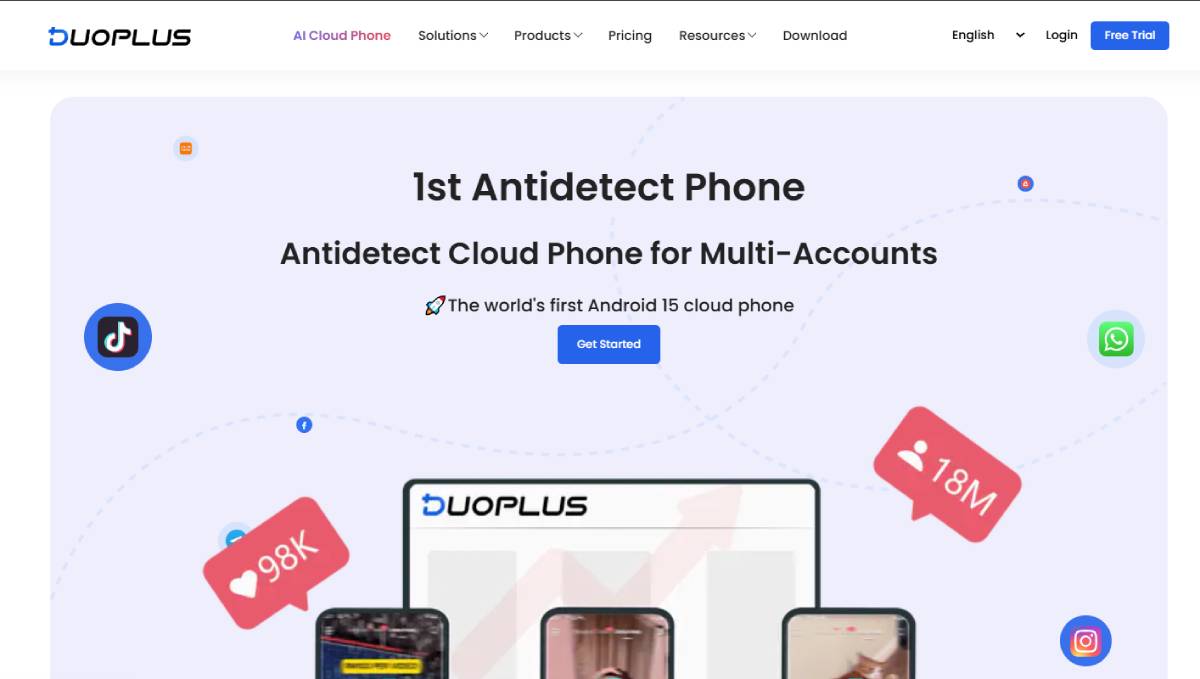
DuoPlus Cloud Phone is emerging as a cloud-based mobile infrastructure platform designed to help businesses manage virtual Android devices, applications and automated workflows remotely. Its approach reflects a wider enterprise shift toward scalable mobile operations, enabling organizations to centralize device management, automate repetitive tasks and support digital activities without relying entirely on physical smartphones.
DuoPlus Cloud Phone brings multiple virtual Android environments into a centralized cloud platform, allowing users to operate and manage mobile devices remotely. Its capabilities focus on application management, multi-device control, automation and remote access.
The platform is particularly relevant to businesses handling large numbers of mobile accounts or repetitive mobile workflows. By moving device environments into the cloud, organizations can potentially simplify deployment and operational management while reducing dependence on physical hardware.
The development also reflects growing interest in combining cloud infrastructure with automation technologies to make mobile operations more scalable and easier to coordinate across distributed teams and markets.
The rise of cloud phone technology comes amid a broader transformation in how businesses manage mobile-first operations. Companies increasingly rely on smartphones and mobile applications for marketing, commerce, customer engagement, testing and digital services, creating new challenges around device management and operational scale.
Traditional approaches often require organizations to purchase, configure and maintain large numbers of physical devices. Cloud-based alternatives can centralize these environments and allow teams to manage mobile resources remotely.
This trend also coincides with the rapid adoption of AI, robotic process automation and cloud infrastructure. Together, these technologies are creating opportunities to automate workflows that previously required extensive manual intervention.
For executives, the strategic importance extends beyond convenience. Centralized mobile infrastructure can influence operating costs, workforce productivity, scalability and the ability to coordinate digital operations across multiple markets.
Industry observers increasingly view cloud-based mobile infrastructure as an extension of the broader cloud computing model. Instead of treating smartphones as isolated physical assets, businesses can manage virtual mobile environments as centralized digital resources.
DuoPlus Cloud Phone's positioning around remote access and automation aligns with this evolution. For organizations operating numerous mobile environments, centralized management can potentially improve consistency while reducing the administrative burden associated with physical devices.
Technology leaders are also likely to assess how cloud phones integrate with existing automation strategies. The combination of virtual devices, workflow automation and application management could be particularly relevant to organizations with repetitive mobile processes.
However, experts would also emphasize governance. Businesses deploying automated mobile environments must consider cybersecurity, data privacy, access controls and compliance with the terms and policies of the applications and platforms they use.
For businesses, cloud phone infrastructure could offer a more flexible way to scale mobile operations while limiting reliance on physical hardware. Marketing teams, e-commerce organizations, application developers and distributed digital teams may benefit from centralized access and management.
For investors and technology executives, the broader opportunity lies in the convergence of cloud computing, mobile infrastructure and automation. As businesses become increasingly dependent on digital channels, efficient management of mobile environments could become an important operational capability.
From a policy perspective, organizations must ensure that automated mobile activities comply with privacy requirements, cybersecurity standards and third-party platform rules. Strong governance will become increasingly important as companies expand automated operations across markets.
The next phase of cloud phone development is likely to focus on deeper automation, AI-assisted workflows, stronger APIs, improved scalability and enhanced security. Businesses will increasingly evaluate these platforms not simply on their ability to replicate mobile devices, but on reliability, governance and measurable operational value. The competitive advantage will ultimately belong to organizations that combine mobile automation with disciplined security and compliance.
Source: Crozdesk
Date: August 13, 2026


