
Framework Adds External GPU, Blurring Laptop Desktop Line

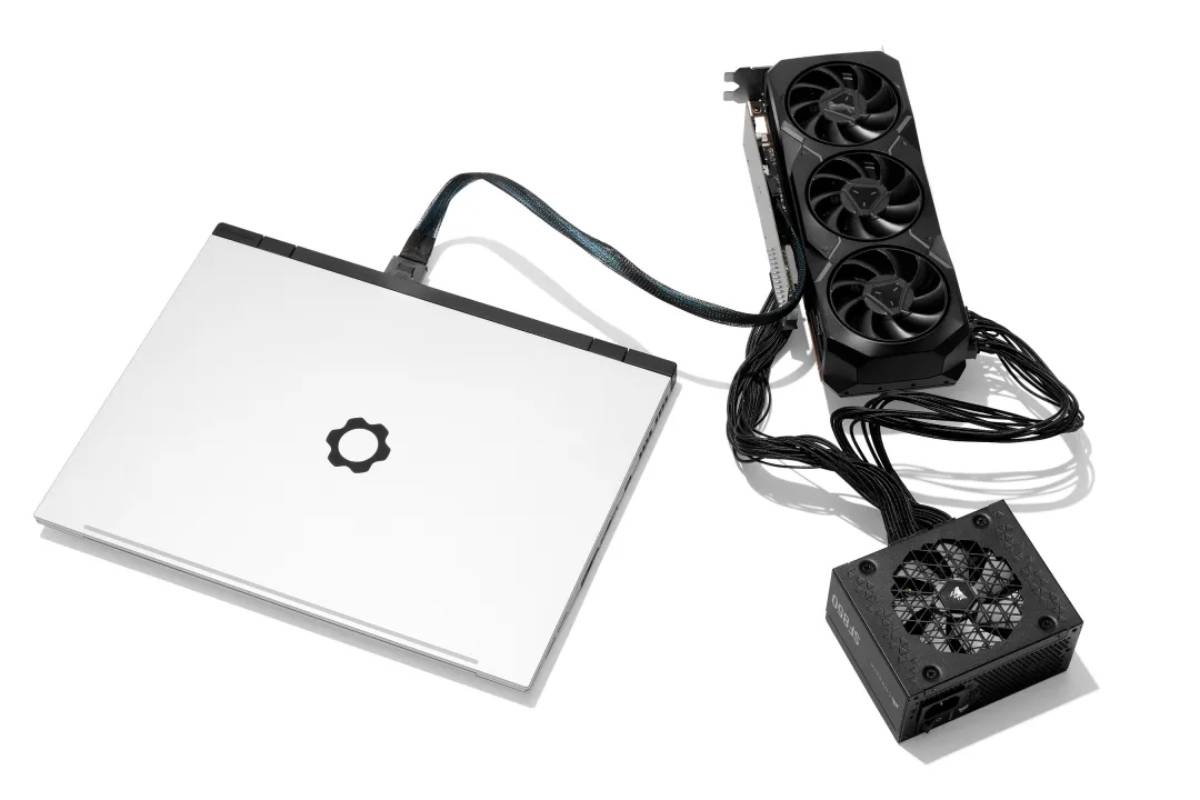
Framework’s new eGPU solution allows users to connect high-performance graphics units to its laptops, significantly enhancing processing power for gaming, AI workloads, and creative applications.

April 22, 2026
|
Image Source:  The Verge

Framework has introduced its first external GPU (eGPU) expansion system, enabling its laptops to deliver desktop-class performance. The move signals a shift in modular computing architecture, with implications for hardware flexibility, consumer computing trends, and the future of customizable personal devices.

Framework’s new eGPU solution allows users to connect high-performance graphics units to its laptops, significantly enhancing processing power for gaming, AI workloads, and creative applications. The system is designed around modular expansion principles, enabling users to upgrade performance without replacing entire devices.

Key stakeholders include PC manufacturers, GPU vendors, developers, and high-performance computing users. The rollout reflects ongoing innovation in modular hardware ecosystems.

Economically, the development challenges traditional upgrade cycles in the PC industry by extending device lifespans while offering desktop-level capabilities in portable systems, potentially reshaping consumer purchasing behavior and hardware upgrade markets.

The development reflects a broader trend in the personal computing industry toward modular and repairable hardware systems. Traditional laptops have historically limited users to fixed performance configurations, requiring full device replacement for upgrades.

Framework has positioned itself as a leader in modular computing, offering users the ability to replace and upgrade components such as memory, storage, and ports. The introduction of eGPU support extends this philosophy into high-performance graphics and compute workloads.

This shift aligns with growing demand for sustainable electronics, reduced e-waste, and customizable computing solutions. It also coincides with rising requirements for GPU-intensive applications such as artificial intelligence, 3D rendering, and advanced gaming, where flexibility and scalability are increasingly important for both professionals and consumers.

Industry analysts view Framework’s eGPU expansion as a significant step toward redefining laptop computing architectures. Experts suggest that modular GPU integration could bridge the gap between portable devices and workstation-grade performance, offering a compelling alternative to traditional desktop setups.

Technology observers note that this approach could pressure established PC manufacturers to reconsider upgradeability strategies, particularly as consumers become more conscious of sustainability and long-term device value.

However, experts also caution that adoption may depend on cost efficiency, compatibility standards, and thermal performance. GPU manufacturers and system integrators will play a critical role in determining ecosystem viability. Overall, analysts see this as an early signal of a broader shift toward modular high-performance computing platforms.

For global executives, Framework’s approach highlights a growing demand for flexible, upgradeable computing systems in both consumer and enterprise markets. Businesses may benefit from longer device lifecycles and reduced hardware replacement costs.

Investors are likely to watch modular PC manufacturers closely as sustainability and customization become key market differentiators. From a policy perspective, modular hardware designs could support e-waste reduction initiatives and circular economy goals. However, regulatory frameworks may need to adapt to evolving definitions of device classification, repairability standards, and electronic component interoperability in increasingly modular ecosystems.

Looking ahead, the success of external GPU integration will depend on performance consistency, pricing, and ecosystem support from hardware partners. Decision-makers should monitor adoption among developers, gamers, and enterprise users.

As computing shifts toward modular architectures, the boundary between laptops and desktops may continue to blur reshaping how performance, portability, and upgradeability are defined in personal computing.

Source: The Verge
Date: April 2026

  • Featured tools
Hostinger Website Builder
Paid

Hostinger Website Builder is a drag-and-drop website creator bundled with hosting and AI-powered tools, designed for businesses, blogs and small shops with minimal technical effort.It makes launching a site fast and affordable, with templates, responsive design and built-in hosting all in one.

#
Productivity
#
Startup Tools
#
Ecommerce
Learn more
Writesonic AI
Free

Writesonic AI is a versatile AI writing platform designed for marketers, entrepreneurs, and content creators. It helps users create blog posts, ad copies, product descriptions, social media posts, and more with ease. With advanced AI models and user-friendly tools, Writesonic streamlines content production and saves time for busy professionals.

#
Copywriting
Learn more

Learn more about future of AI

Join 80,000+ Ai enthusiast getting weekly updates on exciting AI tools.
Thank you! Your submission has been received!
Oops! Something went wrong while submitting the form.

Framework Adds External GPU, Blurring Laptop Desktop Line

April 22, 2026

Framework’s new eGPU solution allows users to connect high-performance graphics units to its laptops, significantly enhancing processing power for gaming, AI workloads, and creative applications.

Image Source:  The Verge

Framework has introduced its first external GPU (eGPU) expansion system, enabling its laptops to deliver desktop-class performance. The move signals a shift in modular computing architecture, with implications for hardware flexibility, consumer computing trends, and the future of customizable personal devices.

Framework’s new eGPU solution allows users to connect high-performance graphics units to its laptops, significantly enhancing processing power for gaming, AI workloads, and creative applications. The system is designed around modular expansion principles, enabling users to upgrade performance without replacing entire devices.

Key stakeholders include PC manufacturers, GPU vendors, developers, and high-performance computing users. The rollout reflects ongoing innovation in modular hardware ecosystems.

Economically, the development challenges traditional upgrade cycles in the PC industry by extending device lifespans while offering desktop-level capabilities in portable systems, potentially reshaping consumer purchasing behavior and hardware upgrade markets.

The development reflects a broader trend in the personal computing industry toward modular and repairable hardware systems. Traditional laptops have historically limited users to fixed performance configurations, requiring full device replacement for upgrades.

Framework has positioned itself as a leader in modular computing, offering users the ability to replace and upgrade components such as memory, storage, and ports. The introduction of eGPU support extends this philosophy into high-performance graphics and compute workloads.

This shift aligns with growing demand for sustainable electronics, reduced e-waste, and customizable computing solutions. It also coincides with rising requirements for GPU-intensive applications such as artificial intelligence, 3D rendering, and advanced gaming, where flexibility and scalability are increasingly important for both professionals and consumers.

Industry analysts view Framework’s eGPU expansion as a significant step toward redefining laptop computing architectures. Experts suggest that modular GPU integration could bridge the gap between portable devices and workstation-grade performance, offering a compelling alternative to traditional desktop setups.

Technology observers note that this approach could pressure established PC manufacturers to reconsider upgradeability strategies, particularly as consumers become more conscious of sustainability and long-term device value.

However, experts also caution that adoption may depend on cost efficiency, compatibility standards, and thermal performance. GPU manufacturers and system integrators will play a critical role in determining ecosystem viability. Overall, analysts see this as an early signal of a broader shift toward modular high-performance computing platforms.

For global executives, Framework’s approach highlights a growing demand for flexible, upgradeable computing systems in both consumer and enterprise markets. Businesses may benefit from longer device lifecycles and reduced hardware replacement costs.

Investors are likely to watch modular PC manufacturers closely as sustainability and customization become key market differentiators. From a policy perspective, modular hardware designs could support e-waste reduction initiatives and circular economy goals. However, regulatory frameworks may need to adapt to evolving definitions of device classification, repairability standards, and electronic component interoperability in increasingly modular ecosystems.

Looking ahead, the success of external GPU integration will depend on performance consistency, pricing, and ecosystem support from hardware partners. Decision-makers should monitor adoption among developers, gamers, and enterprise users.

As computing shifts toward modular architectures, the boundary between laptops and desktops may continue to blur reshaping how performance, portability, and upgradeability are defined in personal computing.

Source: The Verge
Date: April 2026

Promote Your Tool

Copy Embed Code

Similar Blogs

June 24, 2026
|

Denmark Launches €7M AI Lab

The Danish government has committed €7 million to establish a national AI Lab focused on accelerating real-world AI adoption.
Read more
June 24, 2026
|

Avrea Emerges With CI/CD Bet

Avrea has raised $4.7 million in pre-seed funding to modernize continuous integration and continuous deployment (CI/CD) systems for environments dominated by AI-generated code.
Read more
June 24, 2026
|

Atech Backs Lovable Hardware Moment

Atech is advocating a new approach to hardware development where AI tools streamline design, prototyping, and iteration cycles.
Read more
June 24, 2026
|

A16z Backs Endra Engineering Automation

Endra’s $50 million Series A round, led by Andreessen Horowitz, marks one of the largest early-stage investments in AI-driven engineering design tools in Europe.
Read more
June 24, 2026
|

Netcompany Expands Smart Airport Play

Netcompany’s acquisition of full control over Smarter Airports marks a strategic expansion into intelligent aviation infrastructure systems. The platform, integrated with AIRHART technology, is already being deployed at major hubs.
Read more
June 24, 2026
|

Swiss VC Market Enters Maturity Phase

The Swiss venture landscape is showing increased exit momentum through acquisitions and secondary sales, indicating healthier liquidity cycles for early-stage investors.
Read more