
Free AI Detectors Fuel Academic Integrity Tech

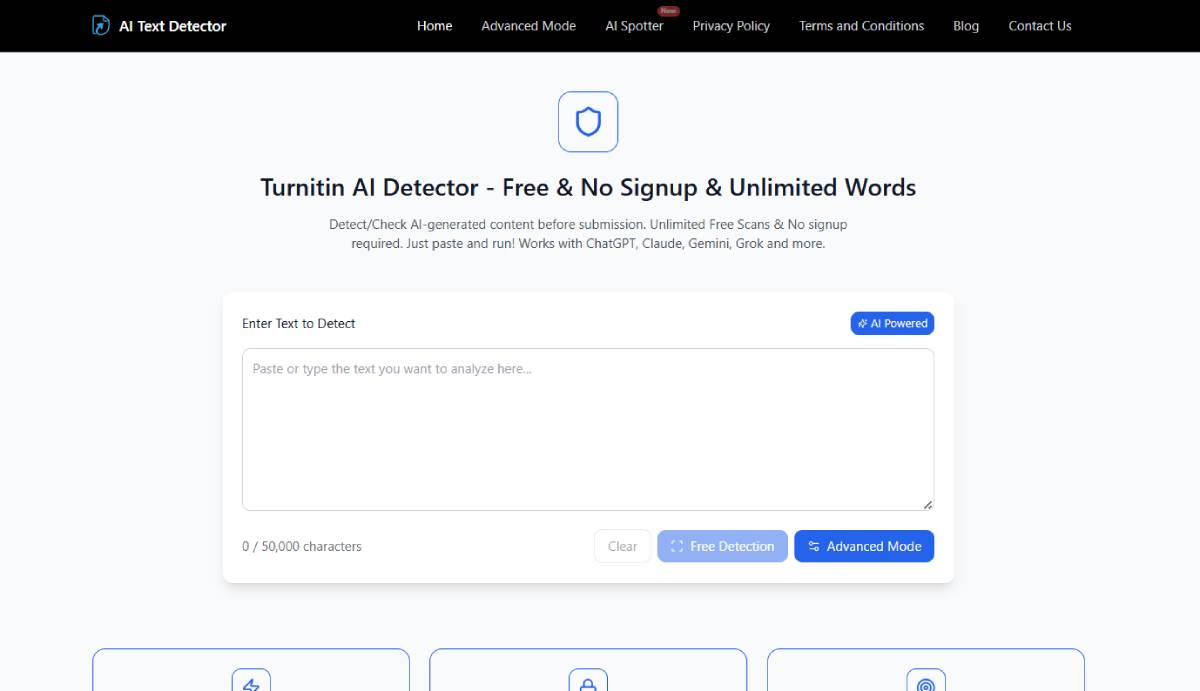
The platform at Turnitin AI Detector markets itself as a freely accessible AI detection tool capable of analyzing unlimited text without requiring user registration.

May 26, 2026
|

A new wave of AI content detection tools is reshaping the academic integrity landscape, as web-based platforms such as Turnitin AI Detector claim to offer free, unlimited-text analysis without signup requirements. The development highlights growing global demand for accessible plagiarism and AI-generated text detection solutions across education, publishing, and corporate compliance sectors.

The platform at Turnitin AI Detector markets itself as a freely accessible AI detection tool capable of analyzing unlimited text without requiring user registration. It positions itself within the fast-expanding ecosystem of AI content verification services, which have seen rapid adoption following the rise of generative AI models.

The tool targets students, educators, and content creators seeking quick validation of AI-generated or potentially plagiarized material. Its emergence reflects intensifying competition in lightweight, browser-based detection tools that operate alongside established academic integrity systems. The broader sector is witnessing increased fragmentation, with multiple entrants offering simplified, low-barrier access models.

The rise of platforms like Turnitin AI Detector comes amid a global surge in generative AI usage across education and professional writing. As tools like large language models become mainstream, institutions have increasingly struggled to distinguish between human-written and AI-generated content.

Traditionally, academic integrity has been governed by established providers such as Turnitin LLC and similar plagiarism detection systems. However, the rapid adoption of AI writing tools has created a parallel demand for real-time AI detection systems that are more accessible and lightweight.

This shift reflects a broader digital transformation in education technology, where speed, accessibility, and cost-free access are becoming key competitive differentiators. At the same time, concerns persist regarding the accuracy of AI detection systems, particularly in distinguishing nuanced or edited AI-generated text from human writing.

Education technology analysts suggest that free AI detection tools represent both an innovation opportunity and a credibility challenge. While accessibility increases adoption, experts caution that accuracy and false-positive rates remain critical limitations across many AI detection systems.

Although no verified corporate statements are publicly available from Turnitin AI Detector operators, the platform’s positioning reflects a broader trend toward democratized academic tools that bypass traditional subscription-based models.

Industry observers note that institutions increasingly rely on hybrid approaches combining established plagiarism detection systems with emerging AI classifiers. However, concerns remain about transparency in detection methodologies and the potential for over-reliance on automated scoring. Experts also highlight that as generative models evolve, detection tools must continuously adapt, creating an ongoing technological arms race between content generation and content verification systems.

The rise of tools such as Turnitin AI Detector signals increasing pressure on education providers, publishers, and compliance teams to adopt multi-layered content verification strategies.

For businesses in the edtech sector, this trend intensifies competition between premium enterprise platforms and free browser-based alternatives. While free tools may drive user adoption, they also raise questions about data privacy, reliability, and institutional trust.

From a policy standpoint, educational regulators may need to establish clearer standards for AI content detection accuracy and disclosure requirements. For universities and corporations, the shift could necessitate updated academic integrity frameworks that account for the limitations of automated detection systems.

Looking ahead, AI detection technology is expected to evolve rapidly alongside generative AI advancements. Platforms like Turnitin AI Detector may expand capabilities to include multilingual detection, semantic analysis, and real-time integration with writing tools. However, the sector will likely remain challenged by accuracy constraints and ethical concerns. Decision-makers should monitor regulatory developments and institutional adoption patterns as AI content verification becomes a standard layer in digital education infrastructure.

Source: Turnitin
Date: May 26, 2026

  • Featured tools
Scalenut AI
Free

Scalenut AI is an all-in-one SEO content platform that combines AI-driven writing, keyword research, competitor insights, and optimization tools to help you plan, create, and rank content.

#
SEO
Learn more
Tome AI
Free

Tome AI is an AI-powered storytelling and presentation tool designed to help users create compelling narratives and presentations quickly and efficiently. It leverages advanced AI technologies to generate content, images, and animations based on user input.

#
Presentation
#
Startup Tools
Learn more

Learn more about future of AI

Join 80,000+ Ai enthusiast getting weekly updates on exciting AI tools.
Thank you! Your submission has been received!
Oops! Something went wrong while submitting the form.

Free AI Detectors Fuel Academic Integrity Tech

May 26, 2026

The platform at Turnitin AI Detector markets itself as a freely accessible AI detection tool capable of analyzing unlimited text without requiring user registration.

A new wave of AI content detection tools is reshaping the academic integrity landscape, as web-based platforms such as Turnitin AI Detector claim to offer free, unlimited-text analysis without signup requirements. The development highlights growing global demand for accessible plagiarism and AI-generated text detection solutions across education, publishing, and corporate compliance sectors.

The platform at Turnitin AI Detector markets itself as a freely accessible AI detection tool capable of analyzing unlimited text without requiring user registration. It positions itself within the fast-expanding ecosystem of AI content verification services, which have seen rapid adoption following the rise of generative AI models.

The tool targets students, educators, and content creators seeking quick validation of AI-generated or potentially plagiarized material. Its emergence reflects intensifying competition in lightweight, browser-based detection tools that operate alongside established academic integrity systems. The broader sector is witnessing increased fragmentation, with multiple entrants offering simplified, low-barrier access models.

The rise of platforms like Turnitin AI Detector comes amid a global surge in generative AI usage across education and professional writing. As tools like large language models become mainstream, institutions have increasingly struggled to distinguish between human-written and AI-generated content.

Traditionally, academic integrity has been governed by established providers such as Turnitin LLC and similar plagiarism detection systems. However, the rapid adoption of AI writing tools has created a parallel demand for real-time AI detection systems that are more accessible and lightweight.

This shift reflects a broader digital transformation in education technology, where speed, accessibility, and cost-free access are becoming key competitive differentiators. At the same time, concerns persist regarding the accuracy of AI detection systems, particularly in distinguishing nuanced or edited AI-generated text from human writing.

Education technology analysts suggest that free AI detection tools represent both an innovation opportunity and a credibility challenge. While accessibility increases adoption, experts caution that accuracy and false-positive rates remain critical limitations across many AI detection systems.

Although no verified corporate statements are publicly available from Turnitin AI Detector operators, the platform’s positioning reflects a broader trend toward democratized academic tools that bypass traditional subscription-based models.

Industry observers note that institutions increasingly rely on hybrid approaches combining established plagiarism detection systems with emerging AI classifiers. However, concerns remain about transparency in detection methodologies and the potential for over-reliance on automated scoring. Experts also highlight that as generative models evolve, detection tools must continuously adapt, creating an ongoing technological arms race between content generation and content verification systems.

The rise of tools such as Turnitin AI Detector signals increasing pressure on education providers, publishers, and compliance teams to adopt multi-layered content verification strategies.

For businesses in the edtech sector, this trend intensifies competition between premium enterprise platforms and free browser-based alternatives. While free tools may drive user adoption, they also raise questions about data privacy, reliability, and institutional trust.

From a policy standpoint, educational regulators may need to establish clearer standards for AI content detection accuracy and disclosure requirements. For universities and corporations, the shift could necessitate updated academic integrity frameworks that account for the limitations of automated detection systems.

Looking ahead, AI detection technology is expected to evolve rapidly alongside generative AI advancements. Platforms like Turnitin AI Detector may expand capabilities to include multilingual detection, semantic analysis, and real-time integration with writing tools. However, the sector will likely remain challenged by accuracy constraints and ethical concerns. Decision-makers should monitor regulatory developments and institutional adoption patterns as AI content verification becomes a standard layer in digital education infrastructure.

Source: Turnitin
Date: May 26, 2026

Promote Your Tool

Copy Embed Code

Similar Blogs

May 26, 2026
|

South Korea Accelerates Global Physical AI Race

Senior officials in South Korea, including the deputy prime minister, have emphasized the country’s ambition to become a leading force in physical AI technologies.
Read more
May 26, 2026
|

US Retail Surge Fuels Memorial Day Laptop Discounts

Retailers across the United States have activated large-scale Memorial Day discounts, targeting premium and mid-range laptops from major manufacturers including Apple, HP, and Lenovo.
Read more
May 26, 2026
|

Sennheiser Momentum 5 Modular ANC Headphones

Sennheiser has upgraded its Momentum lineup with the Momentum 5, integrating enhanced ANC performance and lossless Bluetooth audio support.
Read more
May 26, 2026
|

Ferrari Debuts First Electric EV Collaboration

The vehicle, internally referenced in industry reporting as a next-generation EV concept, is expected to reflect Ferrari’s performance heritage while integrating advanced electrification systems.
Read more
May 26, 2026
|

Free AI Detectors Fuel Academic Integrity Tech

The platform at Turnitin AI Detector markets itself as a freely accessible AI detection tool capable of analyzing unlimited text without requiring user registration.
Read more
May 26, 2026
|

Chub AI Powers Interactive AI Companions

Chub AI operates as a community-driven platform enabling users to create, share, and interact with AI-generated characters.
Read more