
Gemini Agent Accelerates AI Automation Race

Hands-on evaluations of Google’s Gemini AI agent indicate that the system is capable of performing multi-step tasks with a level of effectiveness broadly consistent with the company’s demonstrations.

June 2, 2026
|

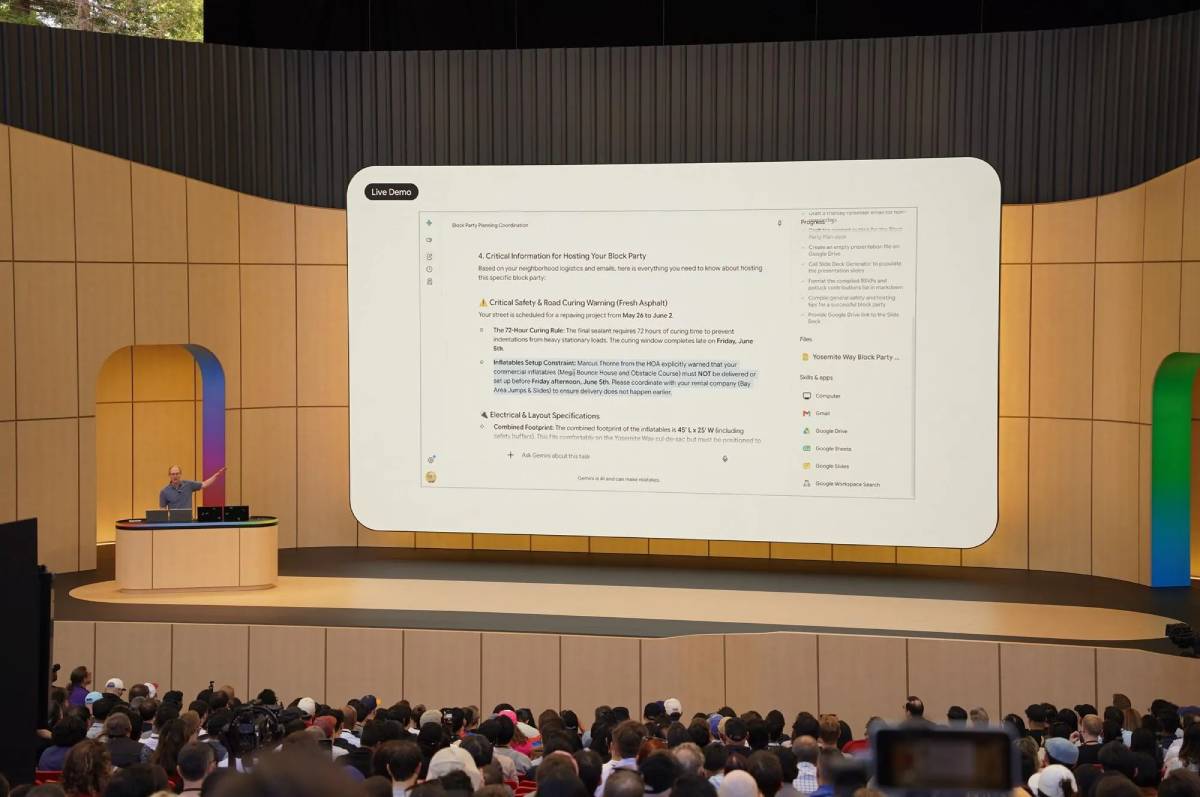
A notable development in the artificial intelligence sector emerged as early testing of Google’s new Gemini powered AI agent suggested that the technology performs close to the capabilities demonstrated during the company’s public unveiling. The development strengthens Google's position in the rapidly evolving AI-agent market and signals a broader shift toward autonomous digital assistants capable of executing complex tasks with minimal human intervention.

Hands-on evaluations of Google’s Gemini AI agent indicate that the system is capable of performing multi-step tasks with a level of effectiveness broadly consistent with the company’s demonstrations. Unlike traditional chatbots, the agent is designed to take actions on behalf of users, including navigating websites, gathering information, completing workflows, and executing digital tasks.

The technology represents a significant step in Google's broader AI strategy, integrating advanced reasoning capabilities with action-oriented automation. Early reviews suggest that while limitations remain, the agent demonstrates practical utility across a range of productivity and consumer applications.

The launch comes amid escalating competition among major AI developers, including OpenAI, Anthropic, Microsoft, and Meta, all of whom are investing heavily in autonomous AI systems that can function as digital assistants rather than simple conversational tools.

The development aligns with a broader trend across global technology markets where AI is evolving beyond content generation toward autonomous task execution. Since the emergence of large language models, much of the industry’s focus has centered on creating systems capable of generating text, images, and code. However, technology leaders increasingly view AI agents as the next major platform shift. These systems are designed not only to understand information but also to interact with software, navigate digital environments, and perform tasks independently.

Google has invested heavily in advancing Gemini as its flagship AI platform, seeking to compete directly with OpenAI's ChatGPT ecosystem and other frontier AI systems. The company has gradually integrated Gemini across search, productivity software, cloud services, and mobile devices.

The race toward autonomous AI agents has become strategically important because it represents a potentially transformative business opportunity. Analysts estimate that intelligent agents could automate significant portions of knowledge work, customer service, software development, research, and administrative operations.

The technology also has geopolitical significance as governments increasingly view advanced AI capabilities as critical national assets tied to economic competitiveness and technological leadership.

Industry analysts view the positive reception of Google's AI agent as an important validation of the company’s long-term AI strategy. Historically, skepticism has often surrounded highly polished technology demonstrations, with observers questioning whether real-world performance could match public presentations.

Early evaluations indicating that Gemini’s agent performs close to demonstrated capabilities may strengthen confidence among enterprise customers considering AI-agent adoption. Technology experts argue that reliability remains one of the most important barriers to widespread deployment, particularly in corporate environments where errors can carry financial and operational consequences.

Google executives have consistently emphasized the importance of creating AI systems capable of helping users complete tasks rather than simply answering questions. The company sees agents as a natural evolution of digital assistance, combining reasoning, planning, and execution capabilities within a unified experience.

Market observers note that the competitive landscape remains fluid. OpenAI, Anthropic, Microsoft, and several startups are pursuing similar objectives, creating what many analysts describe as the next major battleground in artificial intelligence.

The ability to deliver dependable autonomous systems may ultimately prove more commercially valuable than incremental improvements in conversational performance alone. For global executives, the emergence of capable AI agents could redefine workplace productivity and digital operations. Organizations may increasingly evaluate how autonomous systems can automate workflows, reduce costs, and improve decision-making efficiency.

Investors are likely to monitor adoption rates closely, as AI agents represent a potentially significant new revenue stream for technology providers. Companies offering enterprise software, cloud infrastructure, cybersecurity, and workflow automation solutions may also benefit from growing demand.

For consumers, AI agents could simplify digital interactions by handling routine online tasks with minimal supervision. However, policymakers and regulators may face increasing pressure to establish governance frameworks addressing transparency, accountability, privacy, and security as AI systems gain greater autonomy. Businesses that prepare for agent-driven workflows may gain strategic advantages as the technology matures.

The next phase of development will focus on scalability, reliability, and enterprise integration. Decision-makers should watch how effectively Google expands Gemini agent capabilities across its ecosystem and whether businesses embrace autonomous AI as a core operational tool.

Competition in the AI-agent market is expected to intensify significantly over the coming year. While technical challenges remain, the latest demonstrations suggest that autonomous digital assistants are moving from concept to commercial reality, potentially reshaping how work is performed across industries.

Source: The Verge
Date: June 2, 2026

  • Featured tools
Wonder AI
Free

Wonder AI is a versatile AI-powered creative platform that generates text, images, and audio with minimal input, designed for fast storytelling, visual creation, and audio content generation

#
Art Generator
Learn more
Kreateable AI
Free

Kreateable AI is a white-label, AI-driven design platform that enables logo generation, social media posts, ads, and more for businesses, agencies, and service providers.

#
Logo Generator
Learn more

Learn more about future of AI

Join 80,000+ Ai enthusiast getting weekly updates on exciting AI tools.
Thank you! Your submission has been received!
Oops! Something went wrong while submitting the form.

Gemini Agent Accelerates AI Automation Race

June 2, 2026

Hands-on evaluations of Google’s Gemini AI agent indicate that the system is capable of performing multi-step tasks with a level of effectiveness broadly consistent with the company’s demonstrations.

A notable development in the artificial intelligence sector emerged as early testing of Google’s new Gemini powered AI agent suggested that the technology performs close to the capabilities demonstrated during the company’s public unveiling. The development strengthens Google's position in the rapidly evolving AI-agent market and signals a broader shift toward autonomous digital assistants capable of executing complex tasks with minimal human intervention.

Hands-on evaluations of Google’s Gemini AI agent indicate that the system is capable of performing multi-step tasks with a level of effectiveness broadly consistent with the company’s demonstrations. Unlike traditional chatbots, the agent is designed to take actions on behalf of users, including navigating websites, gathering information, completing workflows, and executing digital tasks.

The technology represents a significant step in Google's broader AI strategy, integrating advanced reasoning capabilities with action-oriented automation. Early reviews suggest that while limitations remain, the agent demonstrates practical utility across a range of productivity and consumer applications.

The launch comes amid escalating competition among major AI developers, including OpenAI, Anthropic, Microsoft, and Meta, all of whom are investing heavily in autonomous AI systems that can function as digital assistants rather than simple conversational tools.

The development aligns with a broader trend across global technology markets where AI is evolving beyond content generation toward autonomous task execution. Since the emergence of large language models, much of the industry’s focus has centered on creating systems capable of generating text, images, and code. However, technology leaders increasingly view AI agents as the next major platform shift. These systems are designed not only to understand information but also to interact with software, navigate digital environments, and perform tasks independently.

Google has invested heavily in advancing Gemini as its flagship AI platform, seeking to compete directly with OpenAI's ChatGPT ecosystem and other frontier AI systems. The company has gradually integrated Gemini across search, productivity software, cloud services, and mobile devices.

The race toward autonomous AI agents has become strategically important because it represents a potentially transformative business opportunity. Analysts estimate that intelligent agents could automate significant portions of knowledge work, customer service, software development, research, and administrative operations.

The technology also has geopolitical significance as governments increasingly view advanced AI capabilities as critical national assets tied to economic competitiveness and technological leadership.

Industry analysts view the positive reception of Google's AI agent as an important validation of the company’s long-term AI strategy. Historically, skepticism has often surrounded highly polished technology demonstrations, with observers questioning whether real-world performance could match public presentations.

Early evaluations indicating that Gemini’s agent performs close to demonstrated capabilities may strengthen confidence among enterprise customers considering AI-agent adoption. Technology experts argue that reliability remains one of the most important barriers to widespread deployment, particularly in corporate environments where errors can carry financial and operational consequences.

Google executives have consistently emphasized the importance of creating AI systems capable of helping users complete tasks rather than simply answering questions. The company sees agents as a natural evolution of digital assistance, combining reasoning, planning, and execution capabilities within a unified experience.

Market observers note that the competitive landscape remains fluid. OpenAI, Anthropic, Microsoft, and several startups are pursuing similar objectives, creating what many analysts describe as the next major battleground in artificial intelligence.

The ability to deliver dependable autonomous systems may ultimately prove more commercially valuable than incremental improvements in conversational performance alone. For global executives, the emergence of capable AI agents could redefine workplace productivity and digital operations. Organizations may increasingly evaluate how autonomous systems can automate workflows, reduce costs, and improve decision-making efficiency.

Investors are likely to monitor adoption rates closely, as AI agents represent a potentially significant new revenue stream for technology providers. Companies offering enterprise software, cloud infrastructure, cybersecurity, and workflow automation solutions may also benefit from growing demand.

For consumers, AI agents could simplify digital interactions by handling routine online tasks with minimal supervision. However, policymakers and regulators may face increasing pressure to establish governance frameworks addressing transparency, accountability, privacy, and security as AI systems gain greater autonomy. Businesses that prepare for agent-driven workflows may gain strategic advantages as the technology matures.

The next phase of development will focus on scalability, reliability, and enterprise integration. Decision-makers should watch how effectively Google expands Gemini agent capabilities across its ecosystem and whether businesses embrace autonomous AI as a core operational tool.

Competition in the AI-agent market is expected to intensify significantly over the coming year. While technical challenges remain, the latest demonstrations suggest that autonomous digital assistants are moving from concept to commercial reality, potentially reshaping how work is performed across industries.

Source: The Verge
Date: June 2, 2026

Promote Your Tool

Copy Embed Code

Similar Blogs

June 16, 2026
|

Best Revenue & Sales Enablement Consulting Services in USA

Revenue and sales enablement consulting firms play a crucial role in helping organizations build scalable growth engines. Whether the goal is improving sales execution, implementing revenue operations, optimizing technology platforms.
Read more
June 16, 2026
|

Best Sales Consulting Services in USA

The best sales consulting firms do more than improve sales performance they help organizations build scalable revenue engines that support long-term growth.
Read more
June 16, 2026
|

Best CRM Consulting Services in USA

A successful CRM implementation requires more than technology it requires the right strategy, processes, and expertise. The best CRM consulting firms help organizations align customer relationship management with broader business objectives.
Read more
June 16, 2026
|

Best Pricing Strategy Consulting Services in USA

Pricing strategy remains one of the highest-impact growth levers available to modern businesses. Whether you're launching a new product, optimizing an existing pricing structure.
Read more
June 16, 2026
|

Best GTM Consulting Services in USA

Go-to-market execution has become one of the most important drivers of business success. Organizations that effectively align product strategy, marketing, sales, customer success.
Read more
June 16, 2026
|

Best Revenue Management Consulting Services in USA

Revenue management has become a critical discipline for organizations seeking sustainable growth in increasingly competitive markets. Companies that effectively align pricing, sales, marketing, operations.
Read more