
Global Capital Floods AI Investment Wave

Institutional investors, hedge funds, and private equity firms are rapidly increasing allocations to AI-linked assets, spanning semiconductors, cloud infrastructure, data centers, and software platforms.

June 9, 2026
|
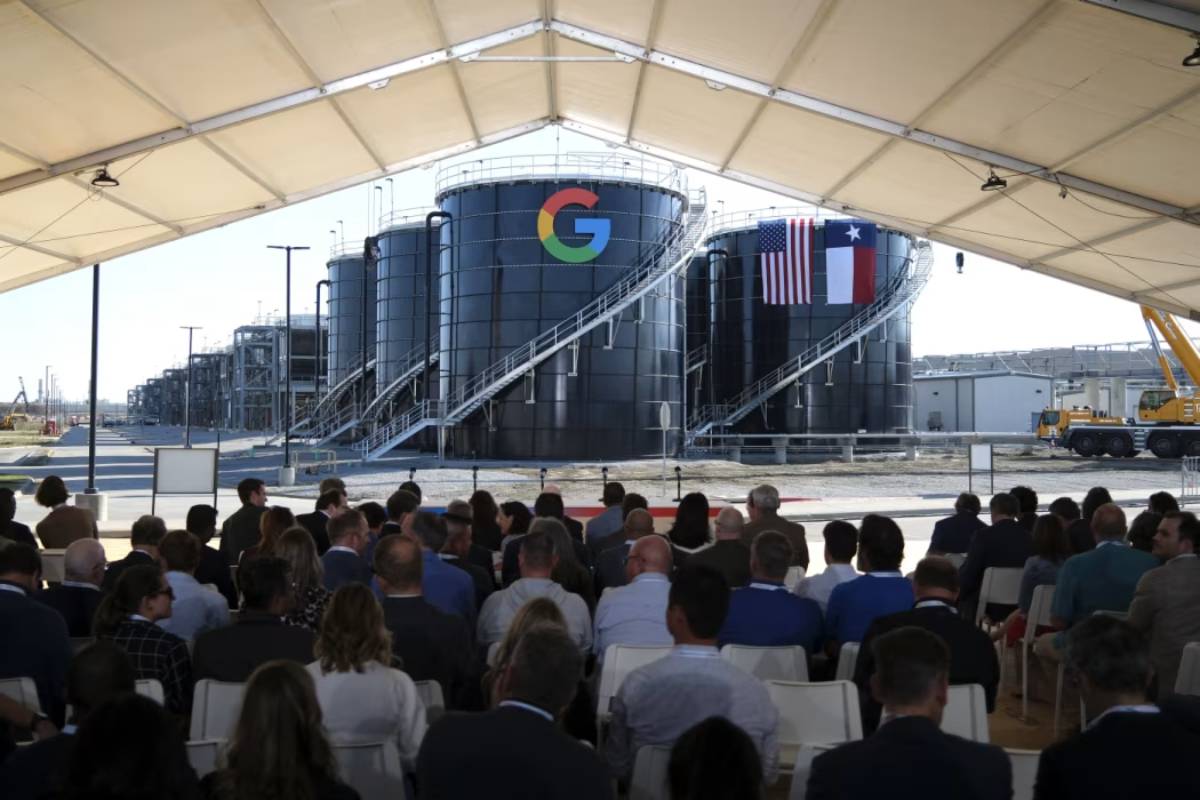
Image Source:  Wall Street Journal

A major development unfolded across global financial markets as Wall Street intensified its capital deployment into the artificial intelligence sector, with investors aggressively funding companies across the AI value chain. The surge reflects a strategic shift in global risk appetite, as institutions seek exposure to the fastest-growing technology cycle in decades, reshaping valuations, capital flows, and long-term investment priorities worldwide.

Institutional investors, hedge funds, and private equity firms are rapidly increasing allocations to AI-linked assets, spanning semiconductors, cloud infrastructure, data centers, and software platforms. The momentum has accelerated in recent weeks, with multiple multi-billion-dollar funding rounds reported across AI startups and infrastructure providers.

Market activity shows a widening investment scope beyond core AI model developers, extending into energy providers, hardware manufacturers, and networking companies. Large technology firms continue to attract significant inflows as investors position for long-term AI monetization.

The rally has contributed to broader equity market gains, particularly in technology-heavy indices, while also raising concerns about overvaluation risks and capital concentration in a narrow set of high-growth sectors.

The development aligns with a broader global trend where artificial intelligence has become the dominant driver of capital markets activity. Over the past two years, AI-related investments have expanded dramatically, fueled by breakthroughs in generative models, enterprise adoption, and cloud computing demand.

Historically, transformative technology cycles such as the internet boom and mobile revolution have triggered similar surges in investor enthusiasm. However, the scale of current AI investment is unprecedented, driven by the high compute intensity of modern AI systems and the need for extensive infrastructure buildout.

Geopolitically, nations are competing to secure leadership in AI development, further accelerating public and private investment flows. Governments in the United States, Europe, and Asia are supporting domestic AI ecosystems through subsidies, regulatory frameworks, and strategic industrial policies.

At the same time, concerns are emerging about concentration risk, as a small number of technology giants account for a significant share of market gains and capital inflows. Market analysts describe the current phase as a “capital super-cycle” in artificial intelligence, where investment momentum is being driven by both fear of missing out and long-term structural expectations. Some strategists argue that AI could become the defining productivity engine of the next decade, justifying elevated valuations across the sector.

However, cautionary voices highlight the risk of speculative excess. Financial experts warn that while revenue growth in AI is strong, monetization timelines remain uneven across different segments of the industry. Concerns also persist around infrastructure bottlenecks, including energy constraints, semiconductor supply limitations, and data center scalability.

Institutional investors emphasize diversification within AI exposure, noting that winners may emerge across multiple layers of the ecosystem rather than a single dominant category. Policy analysts also point out that regulatory scrutiny could increase as the sector’s economic influence expands.

For businesses, the surge in AI investment signals heightened competition for capital, talent, and infrastructure resources. Companies operating in adjacent sectors may benefit from spillover demand, particularly in energy, networking, and industrial construction.

For investors, the trend reinforces the importance of strategic positioning within the AI value chain. While returns have been strong, volatility risk is increasing as valuations expand rapidly across key segments.

For policymakers, the rapid inflow of capital raises questions around financial stability, market concentration, and long-term economic dependency on a narrow set of technology leaders. Regulatory frameworks may evolve to address systemic risks associated with AI-driven market expansion.

The AI investment cycle is expected to continue intensifying as new applications and enterprise use cases emerge. Market participants will closely watch earnings performance, infrastructure capacity expansion, and regulatory developments.

However, uncertainty remains around the sustainability of current valuation levels and the speed at which AI monetization can keep pace with capital inflows. The next phase will likely determine whether this wave becomes a long-term structural shift or a temporary market expansion cycle.

Source: Wall Street Journal
Date: June 8, 2026

  • Featured tools
Tome AI
Free

Tome AI is an AI-powered storytelling and presentation tool designed to help users create compelling narratives and presentations quickly and efficiently. It leverages advanced AI technologies to generate content, images, and animations based on user input.

#
Presentation
#
Startup Tools
Learn more
Hostinger Horizons
Freemium

Hostinger Horizons is an AI-powered platform that allows users to build and deploy custom web applications without writing code. It packs hosting, domain management and backend integration into a unified tool for rapid app creation.

#
Startup Tools
#
Coding
#
Project Management
Learn more

Learn more about future of AI

Join 80,000+ Ai enthusiast getting weekly updates on exciting AI tools.
Thank you! Your submission has been received!
Oops! Something went wrong while submitting the form.

Global Capital Floods AI Investment Wave

June 9, 2026

Institutional investors, hedge funds, and private equity firms are rapidly increasing allocations to AI-linked assets, spanning semiconductors, cloud infrastructure, data centers, and software platforms.

Image Source:  Wall Street Journal

A major development unfolded across global financial markets as Wall Street intensified its capital deployment into the artificial intelligence sector, with investors aggressively funding companies across the AI value chain. The surge reflects a strategic shift in global risk appetite, as institutions seek exposure to the fastest-growing technology cycle in decades, reshaping valuations, capital flows, and long-term investment priorities worldwide.

Institutional investors, hedge funds, and private equity firms are rapidly increasing allocations to AI-linked assets, spanning semiconductors, cloud infrastructure, data centers, and software platforms. The momentum has accelerated in recent weeks, with multiple multi-billion-dollar funding rounds reported across AI startups and infrastructure providers.

Market activity shows a widening investment scope beyond core AI model developers, extending into energy providers, hardware manufacturers, and networking companies. Large technology firms continue to attract significant inflows as investors position for long-term AI monetization.

The rally has contributed to broader equity market gains, particularly in technology-heavy indices, while also raising concerns about overvaluation risks and capital concentration in a narrow set of high-growth sectors.

The development aligns with a broader global trend where artificial intelligence has become the dominant driver of capital markets activity. Over the past two years, AI-related investments have expanded dramatically, fueled by breakthroughs in generative models, enterprise adoption, and cloud computing demand.

Historically, transformative technology cycles such as the internet boom and mobile revolution have triggered similar surges in investor enthusiasm. However, the scale of current AI investment is unprecedented, driven by the high compute intensity of modern AI systems and the need for extensive infrastructure buildout.

Geopolitically, nations are competing to secure leadership in AI development, further accelerating public and private investment flows. Governments in the United States, Europe, and Asia are supporting domestic AI ecosystems through subsidies, regulatory frameworks, and strategic industrial policies.

At the same time, concerns are emerging about concentration risk, as a small number of technology giants account for a significant share of market gains and capital inflows. Market analysts describe the current phase as a “capital super-cycle” in artificial intelligence, where investment momentum is being driven by both fear of missing out and long-term structural expectations. Some strategists argue that AI could become the defining productivity engine of the next decade, justifying elevated valuations across the sector.

However, cautionary voices highlight the risk of speculative excess. Financial experts warn that while revenue growth in AI is strong, monetization timelines remain uneven across different segments of the industry. Concerns also persist around infrastructure bottlenecks, including energy constraints, semiconductor supply limitations, and data center scalability.

Institutional investors emphasize diversification within AI exposure, noting that winners may emerge across multiple layers of the ecosystem rather than a single dominant category. Policy analysts also point out that regulatory scrutiny could increase as the sector’s economic influence expands.

For businesses, the surge in AI investment signals heightened competition for capital, talent, and infrastructure resources. Companies operating in adjacent sectors may benefit from spillover demand, particularly in energy, networking, and industrial construction.

For investors, the trend reinforces the importance of strategic positioning within the AI value chain. While returns have been strong, volatility risk is increasing as valuations expand rapidly across key segments.

For policymakers, the rapid inflow of capital raises questions around financial stability, market concentration, and long-term economic dependency on a narrow set of technology leaders. Regulatory frameworks may evolve to address systemic risks associated with AI-driven market expansion.

The AI investment cycle is expected to continue intensifying as new applications and enterprise use cases emerge. Market participants will closely watch earnings performance, infrastructure capacity expansion, and regulatory developments.

However, uncertainty remains around the sustainability of current valuation levels and the speed at which AI monetization can keep pace with capital inflows. The next phase will likely determine whether this wave becomes a long-term structural shift or a temporary market expansion cycle.

Source: Wall Street Journal
Date: June 8, 2026

Promote Your Tool

Copy Embed Code

Similar Blogs

June 9, 2026
|

Apple Hybrid AI Strategy Privacy Focus

Apple’s latest AI framework, revealed at WWDC 2026, incorporates advanced model capabilities influenced by Google’s Gemini ecosystem while adapting them for Apple’s proprietary infrastructure.
Read more
June 9, 2026
|

Apple Fitness Plus AI Coaching Expansion

Apple’s latest Fitness+ update brings Spanish language support to its AI-driven Workout Buddy feature, which provides real-time coaching and motivational guidance during workouts.
Read more
June 9, 2026
|

Apple Overhauls AI Strategy WWDC2026 Ecosystem

Apple introduced a broad expansion of its “Apple Intelligence” framework, embedding AI more deeply into iOS, iPadOS, macOS, and visionOS.
Read more
June 9, 2026
|

Apple Expands iPadOS AI Productivity Ecosystem

Apple’s iPadOS 27 introduces a new layer of system-wide intelligence designed to improve multitasking, content generation, and contextual assistance across iPad devices.
Read more
June 9, 2026
|

Apple Upgrades Vision Pro AI Spatial Intelligence

Apple’s Vision Pro will soon receive AI-powered enhancements that allow the device to better interpret and interact with real-world environments.
Read more
June 9, 2026
|

Instagram Expands Profile Grid Customization Feature

Instagram’s new feature enables users to manually rearrange the order of posts displayed on their profile grid, moving away from the traditional chronological layout.
Read more