
Google Expands Gemini Omni AI Strategy

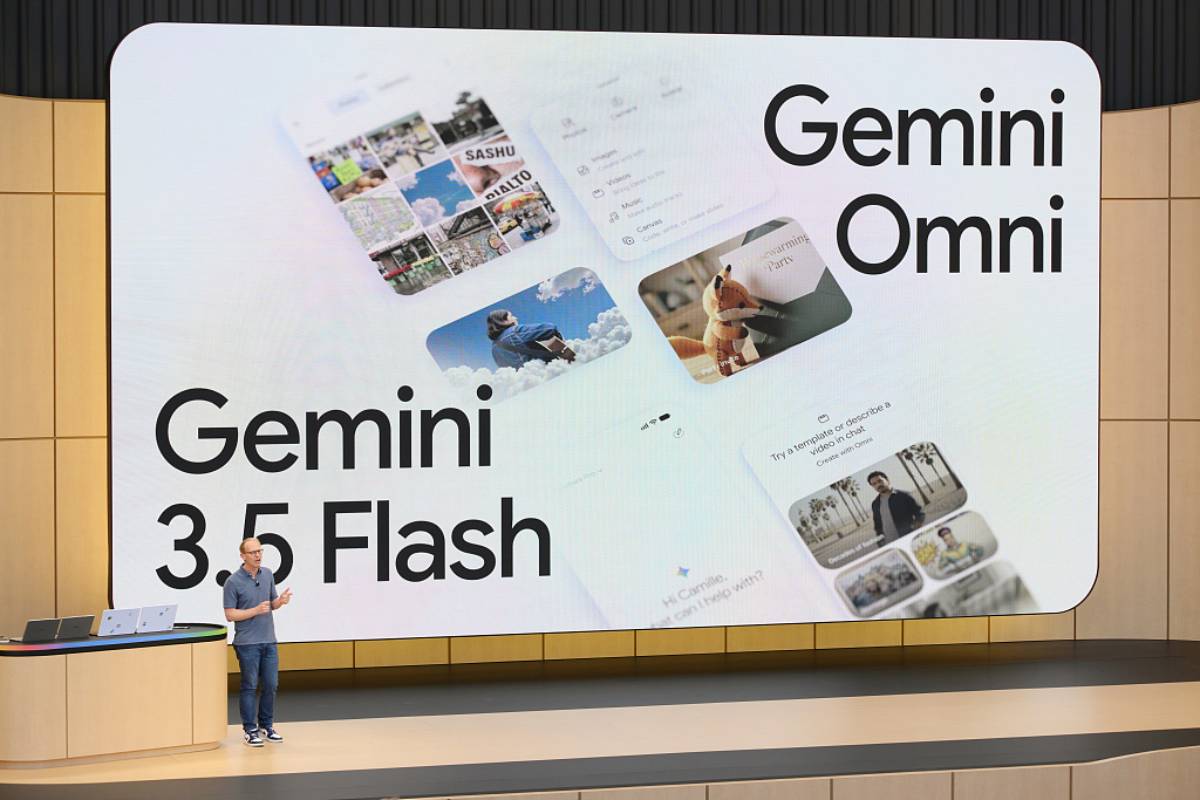
Google introduced Gemini Omni as part of its expanding Gemini AI ecosystem, emphasizing advanced multimodal capabilities and real-time interaction across multiple data formats.

May 26, 2026
|

A significant development has emerged in the global artificial intelligence race as Google unveiled Gemini Omni, a next-generation multimodal AI system designed to process and integrate text, audio, video, and visual inputs more seamlessly. The launch underscores escalating competition among major technology firms to dominate enterprise AI infrastructure and consumer-facing intelligent systems.

Google introduced Gemini Omni as part of its expanding Gemini AI ecosystem, emphasizing advanced multimodal capabilities and real-time interaction across multiple data formats. The platform aims to unify conversational AI, visual understanding, and contextual reasoning into a single integrated architecture.

The launch reflects Google’s broader strategy to strengthen its position against rivals including OpenAI, Microsoft, and Meta in the rapidly evolving generative AI market. Gemini Omni is expected to support enterprise productivity tools, developer ecosystems, search applications, and AI-enhanced consumer services. The announcement also highlights increasing investment by hyperscale technology companies in AI infrastructure, cloud integration, and next-generation model optimization.

The release of Gemini Omni by Google aligns with a broader shift in artificial intelligence from text-centric systems toward fully multimodal AI architectures. Industry leaders are increasingly racing to develop models capable of understanding and generating content across speech, images, video, and real-world contextual environments.

This transition reflects growing enterprise demand for AI systems that can operate more naturally within workflows spanning communication, automation, analytics, and digital interaction. Historically, generative AI adoption accelerated through chatbot interfaces and text generation platforms, but the competitive focus is now shifting toward integrated AI ecosystems capable of reasoning across diverse data streams.

The move also carries geopolitical significance as AI leadership becomes increasingly tied to national competitiveness, semiconductor access, and cloud infrastructure dominance. Major US and Chinese technology firms are aggressively scaling investments to secure influence over future AI standards and enterprise adoption ecosystems.

Executives at Google have positioned Gemini Omni as a major advancement in AI interaction and contextual intelligence, emphasizing its ability to deliver more fluid multimodal experiences across products and services.

Industry analysts suggest that multimodal systems represent the next critical battleground in the AI sector. Experts argue that the ability to process and synthesize multiple forms of information simultaneously could redefine enterprise productivity, digital assistants, and autonomous AI applications.

Technology strategists also note that Google’s scale advantage in cloud infrastructure, search data, and consumer platforms gives it a strong foundation for rapid Gemini deployment. However, analysts caution that monetization, regulatory oversight, and computational cost efficiency remain major challenges across the AI industry.

Observers further highlight that competition among leading AI firms is increasingly centered not only on model performance, but on ecosystem integration, developer adoption, and long-term enterprise trust.

For enterprises, Gemini Omni signals accelerating integration of multimodal AI into workplace productivity, customer engagement, and operational automation systems. Businesses may increasingly adopt AI platforms capable of handling diverse data types within unified workflows.

For investors, the launch reinforces expectations of sustained capital expenditure growth across cloud computing, semiconductors, and AI infrastructure sectors. It also intensifies competitive pressure on firms lacking scalable AI ecosystems.

From a policy perspective, governments and regulators are likely to increase scrutiny of large-scale AI deployment, particularly around data governance, copyright concerns, and market concentration. The expansion of multimodal AI systems may also intensify debates over AI safety, misinformation risks, and international technology leadership.

Looking ahead, the success of Gemini Omni will depend on adoption across enterprise and consumer ecosystems, as well as Google’s ability to balance innovation with regulatory compliance. Decision-makers should closely monitor advancements in multimodal reasoning, AI infrastructure scaling, and interoperability across cloud platforms. As competition intensifies among global AI leaders, the next phase of the industry will likely be defined by ecosystem control, real-time intelligence, and the convergence of AI with everyday digital experiences.

Source: Google Blog
Date: May 26, 2026

  • Featured tools
Tome AI
Free

Tome AI is an AI-powered storytelling and presentation tool designed to help users create compelling narratives and presentations quickly and efficiently. It leverages advanced AI technologies to generate content, images, and animations based on user input.

#
Presentation
#
Startup Tools
Learn more
Hostinger Website Builder
Paid

Hostinger Website Builder is a drag-and-drop website creator bundled with hosting and AI-powered tools, designed for businesses, blogs and small shops with minimal technical effort.It makes launching a site fast and affordable, with templates, responsive design and built-in hosting all in one.

#
Productivity
#
Startup Tools
#
Ecommerce
Learn more

Learn more about future of AI

Join 80,000+ Ai enthusiast getting weekly updates on exciting AI tools.
Thank you! Your submission has been received!
Oops! Something went wrong while submitting the form.

Google Expands Gemini Omni AI Strategy

May 26, 2026

Google introduced Gemini Omni as part of its expanding Gemini AI ecosystem, emphasizing advanced multimodal capabilities and real-time interaction across multiple data formats.

A significant development has emerged in the global artificial intelligence race as Google unveiled Gemini Omni, a next-generation multimodal AI system designed to process and integrate text, audio, video, and visual inputs more seamlessly. The launch underscores escalating competition among major technology firms to dominate enterprise AI infrastructure and consumer-facing intelligent systems.

Google introduced Gemini Omni as part of its expanding Gemini AI ecosystem, emphasizing advanced multimodal capabilities and real-time interaction across multiple data formats. The platform aims to unify conversational AI, visual understanding, and contextual reasoning into a single integrated architecture.

The launch reflects Google’s broader strategy to strengthen its position against rivals including OpenAI, Microsoft, and Meta in the rapidly evolving generative AI market. Gemini Omni is expected to support enterprise productivity tools, developer ecosystems, search applications, and AI-enhanced consumer services. The announcement also highlights increasing investment by hyperscale technology companies in AI infrastructure, cloud integration, and next-generation model optimization.

The release of Gemini Omni by Google aligns with a broader shift in artificial intelligence from text-centric systems toward fully multimodal AI architectures. Industry leaders are increasingly racing to develop models capable of understanding and generating content across speech, images, video, and real-world contextual environments.

This transition reflects growing enterprise demand for AI systems that can operate more naturally within workflows spanning communication, automation, analytics, and digital interaction. Historically, generative AI adoption accelerated through chatbot interfaces and text generation platforms, but the competitive focus is now shifting toward integrated AI ecosystems capable of reasoning across diverse data streams.

The move also carries geopolitical significance as AI leadership becomes increasingly tied to national competitiveness, semiconductor access, and cloud infrastructure dominance. Major US and Chinese technology firms are aggressively scaling investments to secure influence over future AI standards and enterprise adoption ecosystems.

Executives at Google have positioned Gemini Omni as a major advancement in AI interaction and contextual intelligence, emphasizing its ability to deliver more fluid multimodal experiences across products and services.

Industry analysts suggest that multimodal systems represent the next critical battleground in the AI sector. Experts argue that the ability to process and synthesize multiple forms of information simultaneously could redefine enterprise productivity, digital assistants, and autonomous AI applications.

Technology strategists also note that Google’s scale advantage in cloud infrastructure, search data, and consumer platforms gives it a strong foundation for rapid Gemini deployment. However, analysts caution that monetization, regulatory oversight, and computational cost efficiency remain major challenges across the AI industry.

Observers further highlight that competition among leading AI firms is increasingly centered not only on model performance, but on ecosystem integration, developer adoption, and long-term enterprise trust.

For enterprises, Gemini Omni signals accelerating integration of multimodal AI into workplace productivity, customer engagement, and operational automation systems. Businesses may increasingly adopt AI platforms capable of handling diverse data types within unified workflows.

For investors, the launch reinforces expectations of sustained capital expenditure growth across cloud computing, semiconductors, and AI infrastructure sectors. It also intensifies competitive pressure on firms lacking scalable AI ecosystems.

From a policy perspective, governments and regulators are likely to increase scrutiny of large-scale AI deployment, particularly around data governance, copyright concerns, and market concentration. The expansion of multimodal AI systems may also intensify debates over AI safety, misinformation risks, and international technology leadership.

Looking ahead, the success of Gemini Omni will depend on adoption across enterprise and consumer ecosystems, as well as Google’s ability to balance innovation with regulatory compliance. Decision-makers should closely monitor advancements in multimodal reasoning, AI infrastructure scaling, and interoperability across cloud platforms. As competition intensifies among global AI leaders, the next phase of the industry will likely be defined by ecosystem control, real-time intelligence, and the convergence of AI with everyday digital experiences.

Source: Google Blog
Date: May 26, 2026

Promote Your Tool

Copy Embed Code

Similar Blogs

May 26, 2026
|

Google Clarifies AI Ultra Subscription Strategy

Google reportedly addressed confusion surrounding multiple “AI Ultra” plans tied to its expanding Gemini AI ecosystem and productivity offerings.
Read more
May 26, 2026
|

Google Expands Gemini Omni AI Strategy

Google introduced Gemini Omni as part of its expanding Gemini AI ecosystem, emphasizing advanced multimodal capabilities and real-time interaction across multiple data formats.
Read more
May 26, 2026
|

South Korea Accelerates Global Physical AI Race

Senior officials in South Korea, including the deputy prime minister, have emphasized the country’s ambition to become a leading force in physical AI technologies.
Read more
May 26, 2026
|

US Retail Surge Fuels Memorial Day Laptop Discounts

Retailers across the United States have activated large-scale Memorial Day discounts, targeting premium and mid-range laptops from major manufacturers including Apple, HP, and Lenovo.
Read more
May 26, 2026
|

Sennheiser Momentum 5 Modular ANC Headphones

Sennheiser has upgraded its Momentum lineup with the Momentum 5, integrating enhanced ANC performance and lossless Bluetooth audio support.
Read more
May 26, 2026
|

Ferrari Debuts First Electric EV Collaboration

The vehicle, internally referenced in industry reporting as a next-generation EV concept, is expected to reflect Ferrari’s performance heritage while integrating advanced electrification systems.
Read more