
Google Introduces Gemini AI Agent Expansion

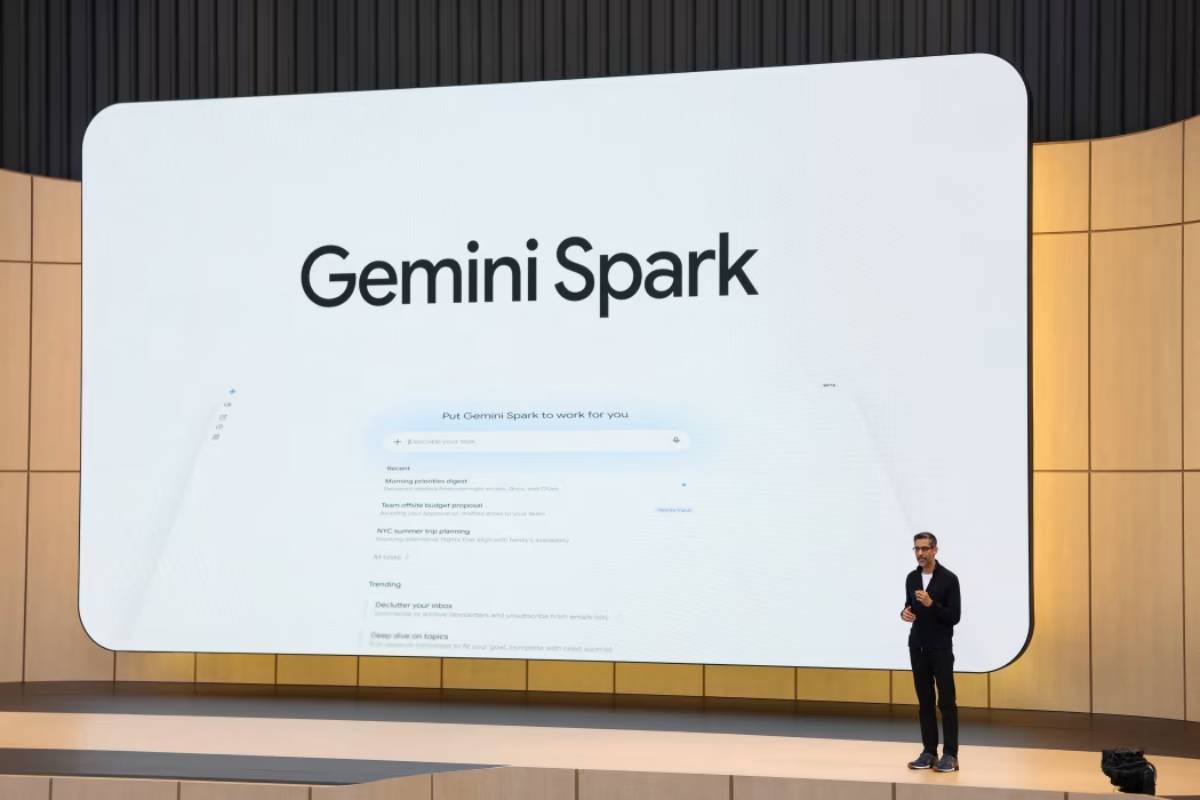
The Gemini AI agent is built to execute multi-step personal tasks, including scheduling, summarisation, travel planning, and contextual assistance across Google’s ecosystem.

May 20, 2026
|
Image Source: Wall Street Journal (WSJ)

A major development unfolded today as Google unveiled a new Gemini-powered AI agent designed to handle personal tasks such as planning, coordination, and information management. The launch marks a significant step toward consumer-facing autonomous AI systems, intensifying competition in the personal assistant and productivity automation market.

The Gemini AI agent is built to execute multi-step personal tasks, including scheduling, summarisation, travel planning, and contextual assistance across Google’s ecosystem. It integrates with services such as Gmail, Calendar, and Search, aiming to reduce user effort in routine digital workflows.

Google positions the agent as part of its broader transition from passive AI tools to proactive systems capable of anticipating and executing user needs. The rollout is expected to begin in phases across select markets, with expansion tied to product readiness and regulatory considerations.

The launch places Google in direct competition with OpenAI GPT-based assistants and Apple’s evolving AI-driven Siri ecosystem. The introduction of a personal AI agent reflects a broader industry shift toward embedded digital assistants that go beyond conversational interfaces. Over the past few years, AI development has moved from text generation models to systems capable of reasoning, memory retention, and cross-application integration.

Tech giants are increasingly positioning AI as a core interface layer across consumer devices, replacing traditional app-based interactions with intent-driven automation. Google’s strategy builds on its existing dominance in search and productivity software, aiming to make Gemini a default intelligence layer across its ecosystem.

Historically, personal assistant technologies have struggled with context awareness and reliability, but advances in large language models have revived interest in fully autonomous digital agents capable of managing everyday tasks.

Industry analysts view Google’s move as part of a high-stakes race to define the next generation of consumer computing interfaces. Experts suggest that the shift toward AI agents represents a structural change in how users interact with technology, moving from manual input to intent-based automation.

Some AI researchers highlight that the success of such systems will depend heavily on trust, accuracy, and privacy safeguards, particularly when agents access sensitive personal data across multiple services.

Technology strategists note that while early versions may focus on productivity enhancement, long-term ambitions include full digital delegation of routine cognitive tasks. However, concerns remain around over-reliance, hallucination risks, and the need for transparent decision-making frameworks in consumer AI systems.

For businesses, Gemini’s AI agent signals a shift toward platform-driven ecosystems where user engagement is mediated by intelligent assistants rather than direct application use. This could reshape advertising models, search behaviour, and digital service design.

For investors, the development reinforces the strategic value of AI-integrated ecosystems and raises competitive pressure across Big Tech firms competing for control of the consumer AI interface layer.

For policymakers, the rise of personal AI agents introduces regulatory challenges around data privacy, consent, and algorithmic accountability, particularly as systems gain deeper access to personal communications and behavioural data.

The rollout of Gemini’s AI agent is expected to accelerate competition in the personal AI assistant space, with rapid iterations likely over the next product cycles. The key test will be user trust and real-world reliability at scale. As AI agents become more autonomous, the industry will shift toward defining boundaries for digital delegation, privacy control, and system transparency.

Source: Wall Street Journal (WSJ)
Date: May 2026

  • Featured tools
Hostinger Website Builder
Paid

Hostinger Website Builder is a drag-and-drop website creator bundled with hosting and AI-powered tools, designed for businesses, blogs and small shops with minimal technical effort.It makes launching a site fast and affordable, with templates, responsive design and built-in hosting all in one.

#
Productivity
#
Startup Tools
#
Ecommerce
Learn more
Neuron AI
Free

Neuron AI is an AI-driven content optimization platform that helps creators produce SEO-friendly content by combining semantic SEO, competitor analysis, and AI-assisted writing workflows.

#
SEO
Learn more

Learn more about future of AI

Join 80,000+ Ai enthusiast getting weekly updates on exciting AI tools.
Thank you! Your submission has been received!
Oops! Something went wrong while submitting the form.

Google Introduces Gemini AI Agent Expansion

May 20, 2026

The Gemini AI agent is built to execute multi-step personal tasks, including scheduling, summarisation, travel planning, and contextual assistance across Google’s ecosystem.

Image Source: Wall Street Journal (WSJ)

A major development unfolded today as Google unveiled a new Gemini-powered AI agent designed to handle personal tasks such as planning, coordination, and information management. The launch marks a significant step toward consumer-facing autonomous AI systems, intensifying competition in the personal assistant and productivity automation market.

The Gemini AI agent is built to execute multi-step personal tasks, including scheduling, summarisation, travel planning, and contextual assistance across Google’s ecosystem. It integrates with services such as Gmail, Calendar, and Search, aiming to reduce user effort in routine digital workflows.

Google positions the agent as part of its broader transition from passive AI tools to proactive systems capable of anticipating and executing user needs. The rollout is expected to begin in phases across select markets, with expansion tied to product readiness and regulatory considerations.

The launch places Google in direct competition with OpenAI GPT-based assistants and Apple’s evolving AI-driven Siri ecosystem. The introduction of a personal AI agent reflects a broader industry shift toward embedded digital assistants that go beyond conversational interfaces. Over the past few years, AI development has moved from text generation models to systems capable of reasoning, memory retention, and cross-application integration.

Tech giants are increasingly positioning AI as a core interface layer across consumer devices, replacing traditional app-based interactions with intent-driven automation. Google’s strategy builds on its existing dominance in search and productivity software, aiming to make Gemini a default intelligence layer across its ecosystem.

Historically, personal assistant technologies have struggled with context awareness and reliability, but advances in large language models have revived interest in fully autonomous digital agents capable of managing everyday tasks.

Industry analysts view Google’s move as part of a high-stakes race to define the next generation of consumer computing interfaces. Experts suggest that the shift toward AI agents represents a structural change in how users interact with technology, moving from manual input to intent-based automation.

Some AI researchers highlight that the success of such systems will depend heavily on trust, accuracy, and privacy safeguards, particularly when agents access sensitive personal data across multiple services.

Technology strategists note that while early versions may focus on productivity enhancement, long-term ambitions include full digital delegation of routine cognitive tasks. However, concerns remain around over-reliance, hallucination risks, and the need for transparent decision-making frameworks in consumer AI systems.

For businesses, Gemini’s AI agent signals a shift toward platform-driven ecosystems where user engagement is mediated by intelligent assistants rather than direct application use. This could reshape advertising models, search behaviour, and digital service design.

For investors, the development reinforces the strategic value of AI-integrated ecosystems and raises competitive pressure across Big Tech firms competing for control of the consumer AI interface layer.

For policymakers, the rise of personal AI agents introduces regulatory challenges around data privacy, consent, and algorithmic accountability, particularly as systems gain deeper access to personal communications and behavioural data.

The rollout of Gemini’s AI agent is expected to accelerate competition in the personal AI assistant space, with rapid iterations likely over the next product cycles. The key test will be user trust and real-world reliability at scale. As AI agents become more autonomous, the industry will shift toward defining boundaries for digital delegation, privacy control, and system transparency.

Source: Wall Street Journal (WSJ)
Date: May 2026

Promote Your Tool

Copy Embed Code

Similar Blogs

May 21, 2026
|

Google Unveils Hyperreal AI Companion Shift

At Google I/O, the company showcased a lifesize, hyperreal AI companion designed to engage users through natural conversation, facial expression simulation, and real-time responsiveness.
Read more
May 21, 2026
|

Google I/O Signals AI First Ecosystem Shift

The most impactful announcements from Google I/O 2026 center on deeper integration of AI across Search, Android, and Workspace products.
Read more
May 21, 2026
|

AI Radio Experiment Reveals Automation Limits

The trial involved running four radio stations entirely on AI-generated content for half a year, including music selection, voice generation, and scripted segments.
Read more
May 21, 2026
|

AI-Generated Slop Raises Integrity Crisis Research

Reports indicate that AI tools are increasingly being used to generate scientific papers, summaries, and citations that appear credible but are often inaccurate or entirely fabricated.
Read more
May 21, 2026
|

OpenAI Advances Toward Landmark AI IPO

OpenAI is reportedly laying the groundwork for a public listing, positioning what could become one of the most closely watched IPOs in the technology sector.
Read more
May 21, 2026
|

Lenovo Pushes Copilot+ AI Laptops Mainstream

The Lenovo IdeaPad Slim 5x introduces Copilot+ AI features at a lower price point, aiming to broaden access to next-generation Windows AI capabilities.
Read more