



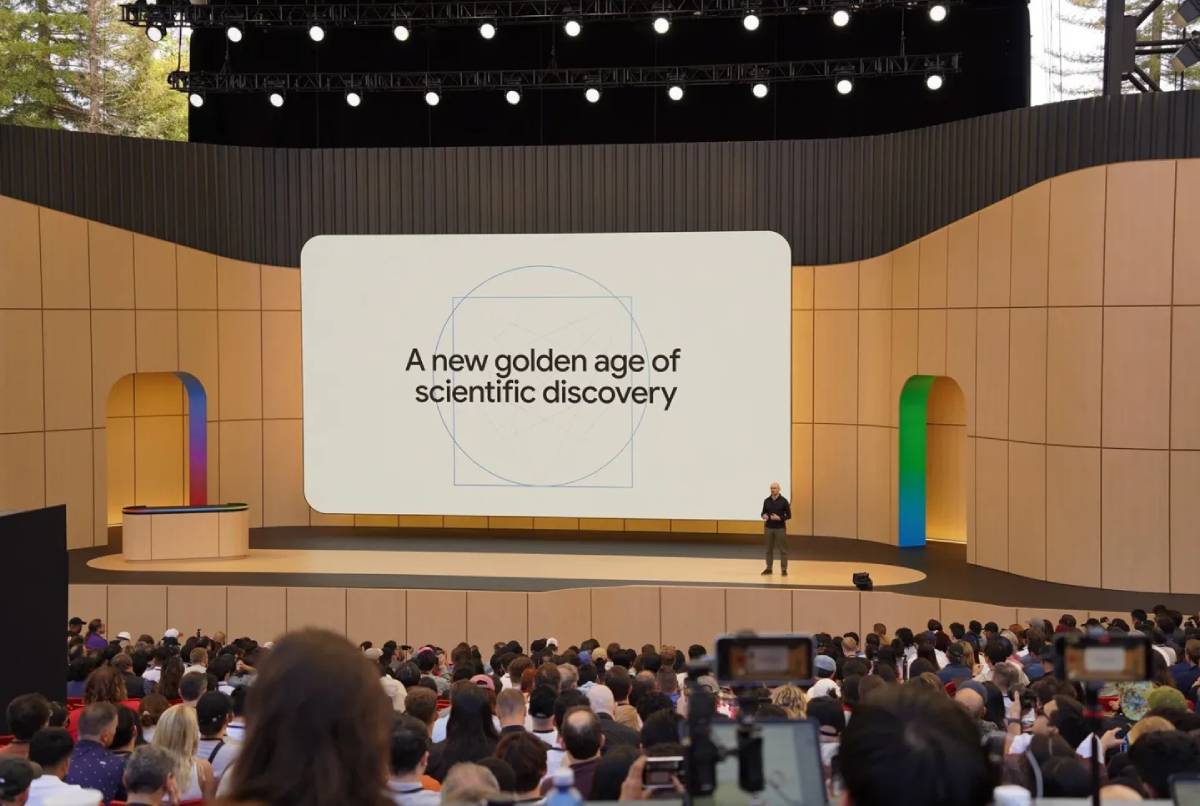
A major development unfolded around Google’s expanded push to position its Gemini AI systems within advanced scientific research, including genomics and disease discovery. The initiative signals a strategic shift from consumer-facing AI tools toward high-impact biomedical applications, with implications for pharmaceutical innovation, healthcare systems, and global scientific competitiveness.
Google is integrating its Gemini models into scientific workflows that include genomic analysis, protein structure prediction, and early-stage drug discovery. The effort builds on DeepMind’s established breakthroughs such as AlphaFold, while extending capabilities toward broader biological reasoning systems.
The company is also advancing agentic AI features, enabling models to perform multi-step research tasks rather than simple queries. These systems are being designed to assist scientists in hypothesis generation and experimental planning. The announcements, showcased in the Google I/O ecosystem, highlight a clear push toward embedding AI into core scientific infrastructure rather than limiting it to productivity or consumer applications.
The development aligns with a broader trend across global markets where AI is transitioning from assistive software into foundational scientific infrastructure. Over the past decade, breakthroughs like AlphaFold demonstrated that deep learning can solve long-standing biological problems, particularly in protein folding prediction.
Google’s latest direction expands this concept into a unified AI research stack capable of supporting end-to-end biomedical workflows. This reflects growing competition among major technology firms to dominate AI-driven life sciences, a sector increasingly seen as the next frontier of economic and strategic value.
At the same time, governments and pharmaceutical companies are accelerating investment in AI-enabled drug discovery to reduce development timelines and costs. Historically, biotechnology breakthroughs have reshaped global healthcare markets; AI now represents a similar inflection point, potentially compressing decades of research into significantly shorter cycles.
Analysts describe this evolution as a shift from conversational AI systems to “scientific co-pilots” capable of generating hypotheses and modeling complex biological interactions. Instead of merely summarizing research, these systems are increasingly expected to contribute to discovery workflows.
Researchers familiar with DeepMind’s scientific programs suggest that combining Gemini’s general reasoning with AlphaFold-like biological models could significantly accelerate target identification and early drug discovery phases. This may reduce reliance on traditional trial-and-error laboratory processes in early research stages.
However, experts also caution that biological systems remain inherently complex and difficult to fully simulate. While AI can improve efficiency and pattern recognition, real-world validation through laboratory and clinical trials remains essential. Policy specialists further note that regulatory frameworks for AI-generated scientific outputs are still evolving, particularly in high-stakes domains such as healthcare and pharmaceuticals.
For pharmaceutical and biotech companies, AI-driven discovery tools could reshape competitive dynamics, favoring organizations with access to large-scale datasets and advanced compute infrastructure. Early adopters may gain significant advantages in reducing research timelines and costs.
For cloud providers and AI developers, life sciences represent a high-value enterprise segment, potentially unlocking long-term contracts tied to research institutions and healthcare systems. Investors are increasingly viewing AI-health convergence as a structural growth theme.
From a policy perspective, regulators may need to define clearer standards for AI-generated biomedical insights, particularly where such systems influence drug development pipelines. Governments could also treat AI-enabled biology as a strategic capability, shaping funding priorities and data governance frameworks.
Future progress will depend on how effectively AI-generated scientific hypotheses translate into validated laboratory and clinical outcomes. Watch for deeper collaboration between Google, biotech firms, and academic institutions as real-world deployment expands. Key uncertainties include regulatory alignment, reproducibility of results, and ethical oversight. If successful, this could mark a structural shift toward AI becoming an embedded layer in global biomedical research infrastructure.
Source: The Verge
Date: May 21, 2026


