



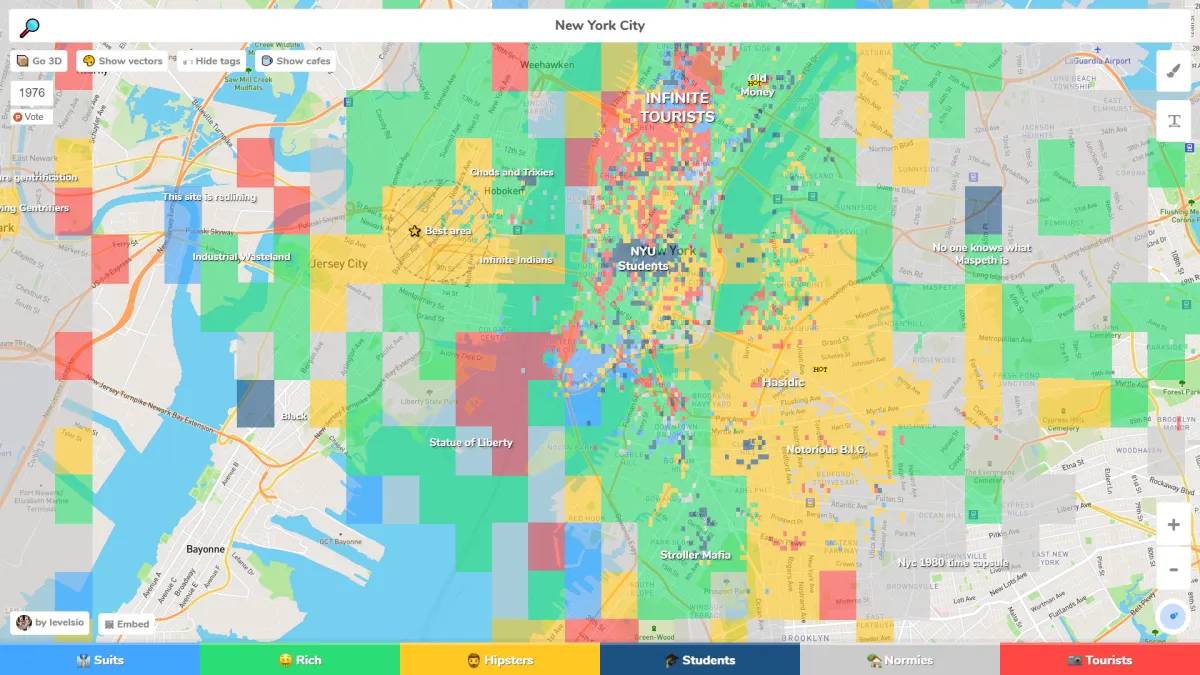
Hoodmaps represents a new approach to urban navigation by combining digital mapping technology with community-generated insights. As cities become increasingly complex environments for residents, businesses, and visitors, platforms focused on local knowledge are gaining attention for improving location awareness, neighborhood understanding, and personalized urban experiences.
Hoodmaps is a collaborative mapping platform that allows users to add local perspectives and cultural observations to city maps. Unlike traditional navigation services focused primarily on roads and locations, the platform emphasizes community knowledge, neighborhood characteristics, and local experiences.
The service enables users to explore cities through socially generated information, helping highlight differences between areas based on community perspectives. Hoodmaps reflects growing interest in user-generated geographic platforms that combine technology with local intelligence.
By offering an alternative view of urban environments, the platform supports travelers, residents, and researchers seeking deeper understanding of cities beyond conventional mapping data.
The global mapping and location technology industry has evolved significantly as digital platforms move beyond basic navigation toward richer location-based experiences. Traditional mapping services primarily focus on routes, businesses, and geographic information, while newer platforms increasingly incorporate social data and community insights.
Hoodmaps aligns with this broader trend by demonstrating how crowdsourced information can create more detailed perspectives of urban environments. The growth of smart cities, location-based services, and digital communities has increased demand for technologies that capture human experiences alongside geographic data.
Urban areas are becoming more diverse and dynamic, creating opportunities for platforms that help people better understand neighborhoods, cultural patterns, and local identities. As cities continue expanding globally, community-driven mapping solutions represent an emerging category within the broader location technology ecosystem.
Urban technology analysts suggest that community-driven mapping platforms can provide valuable perspectives by adding human context to traditional geographic data. Experts note that local knowledge often reveals insights that conventional mapping systems may not capture, including cultural characteristics, neighborhood identities, and social patterns.
Technology researchers emphasize that user-generated location platforms represent a broader shift toward participatory digital ecosystems where communities contribute directly to information networks. These approaches can improve how people interact with cities and discover local environments.
Although Hoodmaps operates as a niche mapping platform, industry observers recognize its contribution to the growing field of human-centered location technology. Analysts suggest future developments may involve artificial intelligence, improved data verification, augmented reality navigation, and deeper integration with smart city initiatives.
For businesses, Hoodmaps highlights the growing importance of understanding local environments and community perspectives. Companies operating in urban markets may benefit from location intelligence tools that provide deeper insights into consumer behavior and neighborhood dynamics.
Investors tracking geographic technology markets may view community-driven platforms as part of broader innovation in mapping and urban data solutions. Policymakers may consider the role of digital mapping technologies in improving urban planning, tourism, and community engagement.
The platform reflects a wider movement toward more personalized and socially informed digital services that connect technology with real-world experiences. Looking ahead, Hoodmaps and similar community-based mapping platforms are expected to benefit from continued growth in location technology, smart city development, and user-generated digital ecosystems. Decision-makers should monitor advancements in AI-powered mapping, data accuracy, privacy standards, and immersive navigation experiences. As cities become increasingly connected, platforms combining geographic information with human insights may play a larger role in shaping urban understanding.
Source: AlternativeTo
Date: July 22, 2026


