



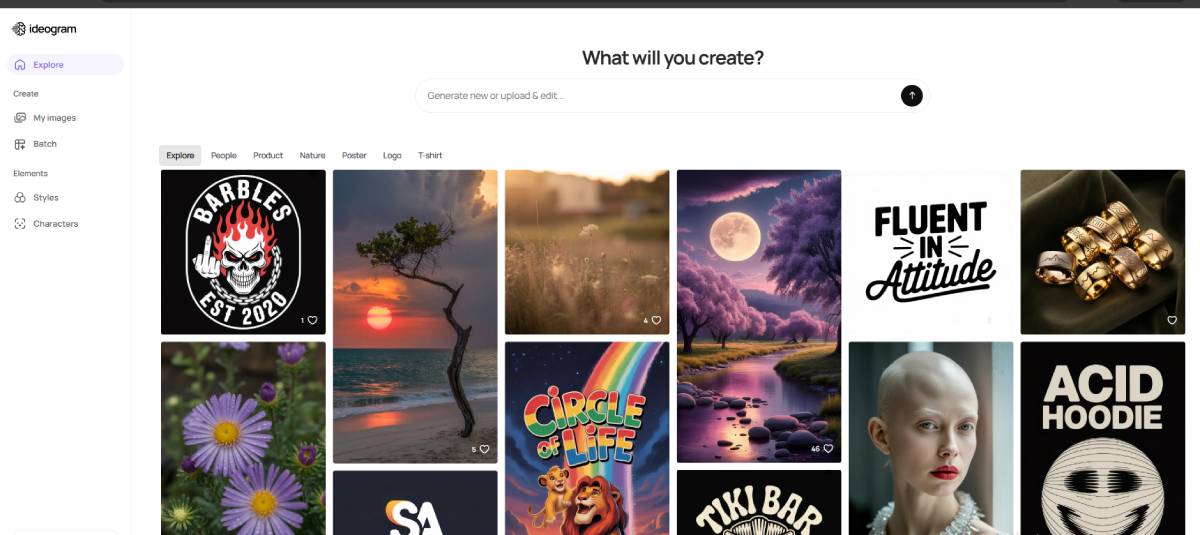
Ideogram AI Ideogram AI is redefining digital content creation by enabling users from marketers to independent creators to generate high-quality visuals instantly. This development signals a shift in creative workflows, impacting global design, advertising, and e-commerce sectors by dramatically accelerating idea-to-production cycles.
Ideogram AI leverages advanced generative algorithms to produce images from text prompts, offering customization, style transfer, and real-time iterative adjustments. The platform targets content creators, design professionals, and corporate marketing teams seeking scalable visual production. Since its launch, Ideogram AI has attracted widespread adoption, integrating with online creative tools and design workflows.
Key stakeholders include startups, advertising agencies, and enterprise clients exploring AI-driven content pipelines. Pricing models and enterprise partnerships are expanding as demand for rapid, cost-efficient visual assets grows. The platform’s capabilities reflect rising expectations for speed, quality, and creative flexibility in digital content markets worldwide.
The development aligns with a broader trend where AI-powered generative tools are transforming creative industries. Historically, high-quality image creation required professional studios, extensive design software, or skilled graphic designers. AI platforms like Ideogram democratize these capabilities, enabling instant production with minimal technical expertise.
Global adoption of AI in marketing, social media, and e-commerce has accelerated demand for tools that reduce costs and shorten production timelines. This trend coincides with the expansion of the creator economy, where influencers, SMEs, and digital agencies increasingly rely on scalable, AI-driven solutions.
For executives and investors, platforms like Ideogram exemplify the monetization potential of generative AI beyond text applications, bridging the gap between creativity and commerce while reshaping competitive dynamics across creative and retail markets.
Analysts highlight that AI image generation is among the fastest-growing segments of creative technology, driven by demand for efficiency and personalization. Experts note that tools like Ideogram not only reduce production overhead but also allow businesses to experiment with innovative visual narratives at scale.
Marketing strategists suggest that AI-generated imagery can enhance engagement metrics, improve brand consistency, and accelerate campaign iteration cycles. Industry observers caution that competition is intensifying, with multiple startups and tech giants investing in advanced generative models.
Ideogram’s spokesperson emphasizes its commitment to ethical AI use, copyright compliance, and continuous model refinement to ensure realistic and commercially viable outputs. Analysts suggest long-term success will hinge on enterprise integration, user experience, and alignment with emerging AI governance frameworks.
For businesses, Ideogram AI presents opportunities to reduce creative costs, scale content production, and accelerate marketing campaigns. Investors may interpret rapid adoption as a signal of high growth potential in the generative AI sector. Consumers benefit from more personalized and visually engaging content, while creators gain tools to compete with larger production houses.
From a regulatory perspective, AI-generated imagery raises questions around intellectual property, content authenticity, and ethical use, highlighting the need for transparent policies. Executives should weigh efficiency gains against compliance and brand risk, ensuring responsible deployment within marketing, advertising, and creative operations.
Looking ahead, Ideogram AI is likely to deepen integrations with e-commerce, social media, and collaborative design platforms. Decision-makers should monitor adoption rates, model accuracy, and regulatory developments around AI-generated content. The trajectory of Ideogram underscores a structural shift: AI is becoming an essential tool for creative production, reshaping workflows, reducing costs, and accelerating content monetization across global markets.
Source: Ideogram AI
Date: March 2, 2026


