



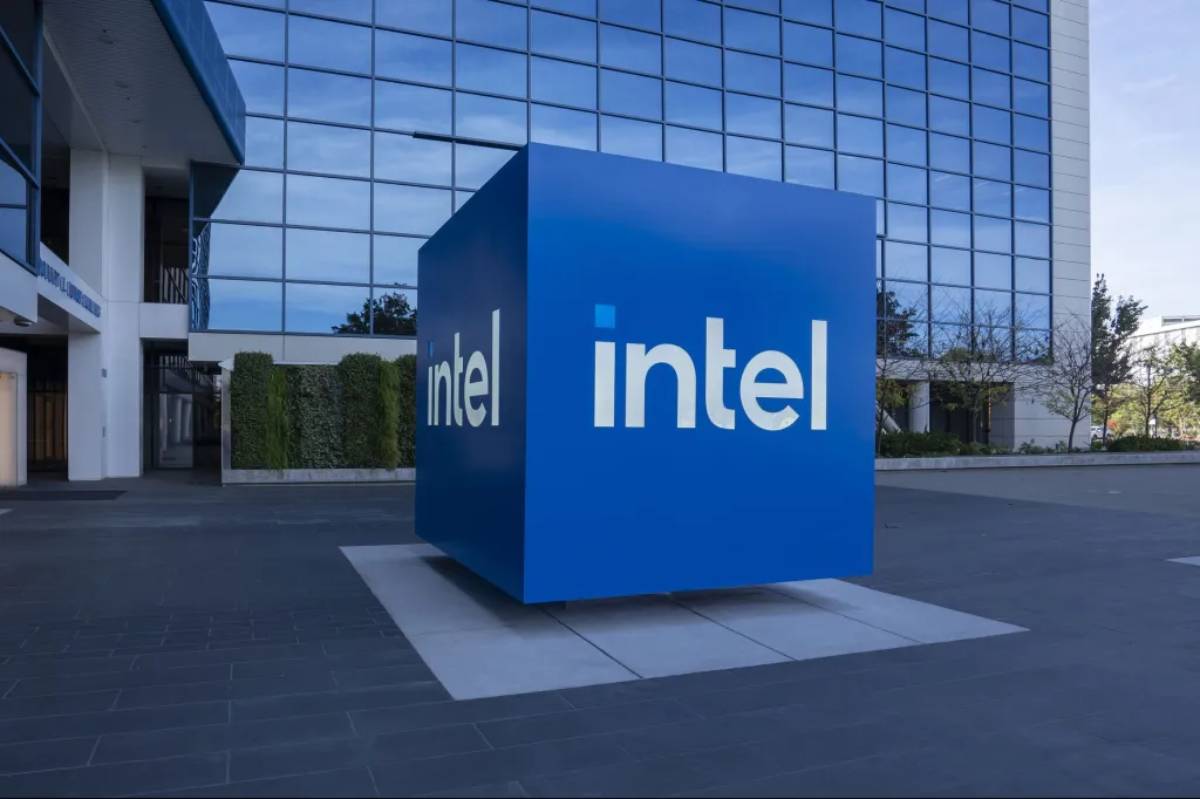
A major development unfolded today as Intel disclosed challenges in meeting surging AI data center demand, triggering a 13% drop in its stock price. The shortfall underscores intensifying competition in the AI hardware market, impacting enterprise clients, cloud providers, and investors, while raising concerns over supply chain resilience and the company’s ability to capitalize on the AI growth surge.
Intel reported that its current production capacity is insufficient to meet skyrocketing demand from hyperscale data centers deploying AI workloads. Short-term supply constraints have affected new orders, particularly for its advanced AI-focused Xeon processors and accelerator cards.
Competitors, including AMD and NVIDIA, are capitalizing on Intel’s bottleneck, intensifying market pressures. Analysts note that delayed shipments could affect Intel’s revenue projections for the fiscal year. The stock reaction reflects investor apprehension over the company’s capacity to scale quickly while maintaining margins. Intel has committed to ramping up production, yet timelines remain uncertain, adding volatility to both its stock and broader AI infrastructure markets.
The development aligns with a global trend where AI adoption is driving unprecedented demand for specialized data center hardware. Enterprises and cloud providers are expanding AI deployments for generative AI, machine learning, and large-scale analytics, putting pressure on chipmakers to deliver faster, more energy-efficient solutions.
Intel, historically dominant in server processors, faces structural challenges, including a complex manufacturing roadmap and competition from vertically integrated rivals like NVIDIA, whose GPUs have become the industry standard for AI workloads. Delays in meeting demand highlight systemic supply chain vulnerabilities and underscore the high stakes for hardware leaders in capturing the AI growth wave. For investors and corporate leaders, Intel’s struggles signal that execution and scalability are now as critical as technological innovation in securing market leadership.
Industry analysts suggest Intel’s shortfall reflects both executional challenges and a broader acceleration in AI adoption. “Demand for AI-optimized infrastructure is outpacing traditional supply chains, and Intel is feeling the squeeze,” said a leading semiconductor analyst.
Intel officials have acknowledged the capacity gap while emphasizing ongoing investments in chip fabrication and AI accelerators. Corporate clients indicate flexibility but caution that prolonged shortages may push them to diversify suppliers, potentially eroding Intel’s market share.
Competitors are leveraging the situation to expand partnerships with cloud providers and enterprise clients. Market observers predict that Intel’s ability to scale production efficiently will determine its positioning against NVIDIA and AMD in a rapidly evolving AI hardware ecosystem. The episode underscores the intersection of technological demand, capital-intensive manufacturing, and global supply chain management.
For executives, Intel’s capacity bottleneck highlights the risks of overreliance on single suppliers for critical AI infrastructure. Companies may need to diversify hardware sources, optimize deployment strategies, and anticipate delivery delays.
Investors face short-term volatility but should also monitor Intel’s strategic capacity expansions, R&D investments, and potential partnerships. Governments and regulatory authorities may increasingly scrutinize supply chain resilience for AI-critical technologies, including semiconductors. Analysts warn that delays in production could have cascading effects on AI deployment timelines across industries, potentially affecting innovation cycles, enterprise competitiveness, and broader economic growth in tech-dependent sectors.
Decision-makers should closely watch Intel’s production ramp-up, competitor strategies, and potential supply chain bottlenecks. The company’s ability to meet demand while maintaining margins will be critical for market confidence. Uncertainties remain around timing, global supply constraints, and AI hardware adoption rates. Investors and corporate buyers must balance risk mitigation with strategic opportunities as the AI infrastructure market continues its rapid expansion.
Source & Date
Source: Economic Times – Telecom Section
Date: January 23, 2026


