
Linux Gains Ground as Users Rethink Windows Dependence

A user experience transition after three months of daily Linux usage, with no perceived loss in productivity or functionality compared to Windows.

April 27, 2026
|
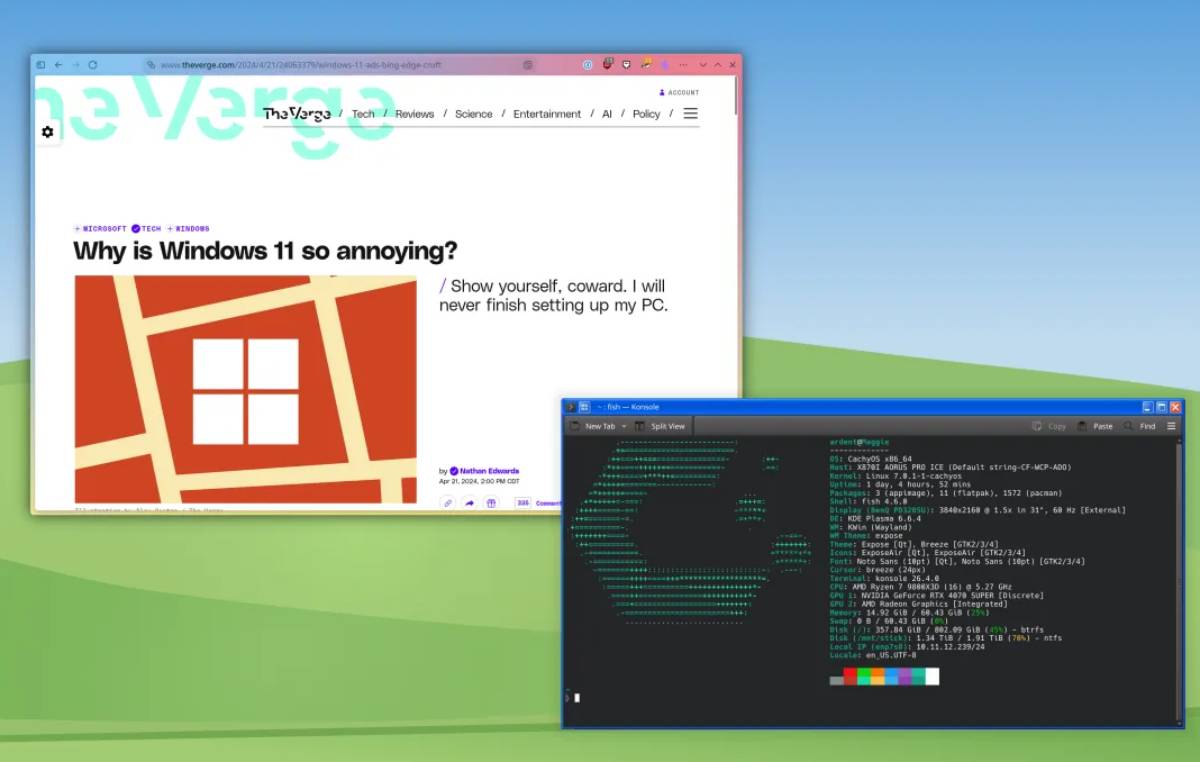
Image Source: The Verge

A notable shift in consumer operating system preferences is emerging as long-term users increasingly experiment with Linux as an alternative to Windows. The transition highlights growing dissatisfaction with traditional desktop ecosystems and signals a broader reevaluation of software control, user autonomy, and platform dependency in personal and professional computing environments.

A user experience transition after three months of daily Linux usage, with no perceived loss in productivity or functionality compared to Windows. The narrative reflects a growing trend of individual users and developers migrating toward open-source operating systems.

Linux distributions now offer improved hardware compatibility, modern desktop environments, and expanded software support through containerization and web-based applications. Key stakeholders in this shift include open-source communities, enterprise developers, and cloud-native ecosystem providers. The trend also aligns with broader adoption of Linux-based systems in servers, cloud infrastructure, and AI development environments, reinforcing its role beyond niche technical usage.

The growing interest in Linux reflects a long-term structural shift in computing, where open-source ecosystems are increasingly competing with proprietary operating systems. Historically, Windows has dominated the desktop market, while Linux has powered servers, cloud infrastructure, and embedded systems.

However, the rise of cloud computing, AI development frameworks, and developer-centric tooling has strengthened Linux’s position in modern computing workflows. Many developers now operate in hybrid environments where Linux-based systems are used locally or accessed through virtualized infrastructure.

This transition also reflects broader digital autonomy trends, where users seek greater control over system customization, privacy, and software transparency. As operating systems evolve toward cloud integration and platform abstraction, the traditional dominance of desktop-centric ecosystems is gradually being redefined.

Technology analysts suggest that Linux adoption among mainstream users, while still limited, reflects a broader shift in computing preferences driven by flexibility, performance efficiency, and reduced system overhead. Experts note that modern Linux distributions have significantly improved user experience, narrowing the historical usability gap with Windows.

Open-source advocates highlight that Linux ecosystems benefit from rapid community-driven innovation, especially in developer tools, cybersecurity frameworks, and AI/ML environments. Meanwhile, industry observers caution that while Linux has matured significantly, mainstream adoption still faces barriers in gaming compatibility, proprietary software availability, and enterprise IT standardization.

Although no formal corporate statements are involved in this user-driven trend, analysts interpret such transitions as indicative of growing dissatisfaction with locked-down software ecosystems and increasing interest in modular, open computing environments.

For technology companies, increased Linux adoption signals rising demand for open, customizable, and cloud-native computing environments. This may influence software vendors to prioritize cross-platform compatibility and web-based application delivery models.

For enterprises, the trend could accelerate internal experimentation with Linux-based development environments, particularly in cloud computing, cybersecurity, and AI engineering workflows. Investors may see indirect implications in the open-source ecosystem, including enterprise Linux providers and cloud infrastructure companies.

From a policy perspective, the shift reinforces discussions around digital sovereignty, software transparency, and user control over computing environments. Governments may increasingly evaluate open-source systems for public sector and critical infrastructure deployments.

Looking ahead, Linux adoption is likely to continue expanding within developer, academic, and cloud-native communities, though mass consumer migration remains gradual. Improvements in gaming support, enterprise software compatibility, and desktop usability will determine future adoption rates. The broader trajectory suggests a continued fragmentation of operating system ecosystems, with hybrid cloud-based computing reducing reliance on traditional desktop platforms.

Source: The Verge
Date: April 2026

  • Featured tools
Neuron AI
Free

Neuron AI is an AI-driven content optimization platform that helps creators produce SEO-friendly content by combining semantic SEO, competitor analysis, and AI-assisted writing workflows.

#
SEO
Learn more
Ai Fiesta
Paid

AI Fiesta is an all-in-one productivity platform that gives users access to multiple leading AI models through a single interface. It includes features like prompt enhancement, image generation, audio transcription and side-by-side model comparison.

#
Copywriting
#
Art Generator
Learn more

Learn more about future of AI

Join 80,000+ Ai enthusiast getting weekly updates on exciting AI tools.
Thank you! Your submission has been received!
Oops! Something went wrong while submitting the form.

Linux Gains Ground as Users Rethink Windows Dependence

April 27, 2026

A user experience transition after three months of daily Linux usage, with no perceived loss in productivity or functionality compared to Windows.

Image Source: The Verge

A notable shift in consumer operating system preferences is emerging as long-term users increasingly experiment with Linux as an alternative to Windows. The transition highlights growing dissatisfaction with traditional desktop ecosystems and signals a broader reevaluation of software control, user autonomy, and platform dependency in personal and professional computing environments.

A user experience transition after three months of daily Linux usage, with no perceived loss in productivity or functionality compared to Windows. The narrative reflects a growing trend of individual users and developers migrating toward open-source operating systems.

Linux distributions now offer improved hardware compatibility, modern desktop environments, and expanded software support through containerization and web-based applications. Key stakeholders in this shift include open-source communities, enterprise developers, and cloud-native ecosystem providers. The trend also aligns with broader adoption of Linux-based systems in servers, cloud infrastructure, and AI development environments, reinforcing its role beyond niche technical usage.

The growing interest in Linux reflects a long-term structural shift in computing, where open-source ecosystems are increasingly competing with proprietary operating systems. Historically, Windows has dominated the desktop market, while Linux has powered servers, cloud infrastructure, and embedded systems.

However, the rise of cloud computing, AI development frameworks, and developer-centric tooling has strengthened Linux’s position in modern computing workflows. Many developers now operate in hybrid environments where Linux-based systems are used locally or accessed through virtualized infrastructure.

This transition also reflects broader digital autonomy trends, where users seek greater control over system customization, privacy, and software transparency. As operating systems evolve toward cloud integration and platform abstraction, the traditional dominance of desktop-centric ecosystems is gradually being redefined.

Technology analysts suggest that Linux adoption among mainstream users, while still limited, reflects a broader shift in computing preferences driven by flexibility, performance efficiency, and reduced system overhead. Experts note that modern Linux distributions have significantly improved user experience, narrowing the historical usability gap with Windows.

Open-source advocates highlight that Linux ecosystems benefit from rapid community-driven innovation, especially in developer tools, cybersecurity frameworks, and AI/ML environments. Meanwhile, industry observers caution that while Linux has matured significantly, mainstream adoption still faces barriers in gaming compatibility, proprietary software availability, and enterprise IT standardization.

Although no formal corporate statements are involved in this user-driven trend, analysts interpret such transitions as indicative of growing dissatisfaction with locked-down software ecosystems and increasing interest in modular, open computing environments.

For technology companies, increased Linux adoption signals rising demand for open, customizable, and cloud-native computing environments. This may influence software vendors to prioritize cross-platform compatibility and web-based application delivery models.

For enterprises, the trend could accelerate internal experimentation with Linux-based development environments, particularly in cloud computing, cybersecurity, and AI engineering workflows. Investors may see indirect implications in the open-source ecosystem, including enterprise Linux providers and cloud infrastructure companies.

From a policy perspective, the shift reinforces discussions around digital sovereignty, software transparency, and user control over computing environments. Governments may increasingly evaluate open-source systems for public sector and critical infrastructure deployments.

Looking ahead, Linux adoption is likely to continue expanding within developer, academic, and cloud-native communities, though mass consumer migration remains gradual. Improvements in gaming support, enterprise software compatibility, and desktop usability will determine future adoption rates. The broader trajectory suggests a continued fragmentation of operating system ecosystems, with hybrid cloud-based computing reducing reliance on traditional desktop platforms.

Source: The Verge
Date: April 2026

Promote Your Tool

Copy Embed Code

Similar Blogs

April 27, 2026
|

Global AI Race Intensifies With New Model Releases

Multiple frontier AI companies are accelerating the release of next-generation models aimed at improving reasoning, multimodal capabilities, and enterprise integration.
Read more
April 27, 2026
|

Budget Tablet Competition Intensifies as TCL Hits $150 Price Point

A TCL tablet is currently available on Amazon for as low as $150 as part of a limited-time promotional discount. The deal positions the device within the highly competitive entry-level tablet category, targeting students, casual users, and cost-conscious consumers.
Read more
April 27, 2026
|

Apple Enables Default iPhone Security in iOS 26.4.1

The iOS 26.4.1 update includes a bug fix that results in an important iPhone security feature being automatically enabled for users. This adjustment reduces the need for manual activation and ensures broader baseline protection across supported devices.
Read more
April 27, 2026
|

Microsoft Adds 35-Day Windows Update Pause Option

Microsoft has introduced an expanded update control feature allowing Windows users to pause system updates for up to 35 days, according to The Verge.
Read more
April 27, 2026
|

Linux Gains Ground as Users Rethink Windows Dependence

A user experience transition after three months of daily Linux usage, with no perceived loss in productivity or functionality compared to Windows.
Read more
April 27, 2026
|

Project Maven and the Militarization of AI Strategy

Project Maven was launched as a U.S. Department of Defense initiative to deploy AI for analyzing vast amounts of drone and surveillance imagery.
Read more