



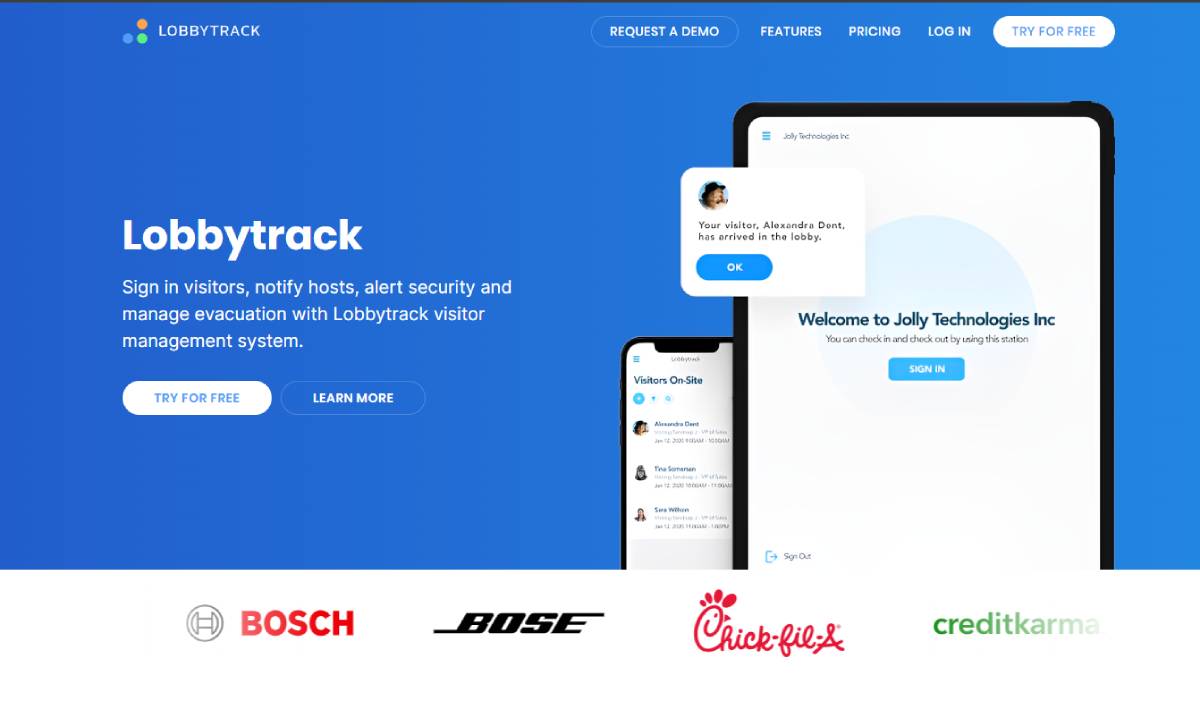
Lobbytrack is strengthening the role of digital visitor management in modern workplaces, helping organizations replace traditional reception processes with more structured systems for visitor registration, access control and facility security. The technology is particularly relevant as businesses, schools and other institutions seek stronger visibility over people entering their premises while maintaining efficient front-desk operations.
Lobbytrack provides organizations with tools designed to digitize visitor registration and improve the management of guests entering physical facilities. Core capabilities include visitor check-in, badge printing, visitor records, notifications and administrative monitoring.
The system can help organizations establish more consistent reception procedures while maintaining digital records of visitors. Automated notifications can also help relevant employees know when guests arrive, supporting smoother coordination between reception areas and internal teams.
For organizations managing multiple visitors or requiring tighter facility controls, a centralized visitor-management system can provide greater visibility than paper-based sign-in processes. The technology also supports a broader move toward integrating workplace security with digital administrative workflows.
The modern workplace has changed significantly as organizations balance physical security with employee experience, hybrid work patterns and increasingly sophisticated facility-management requirements. Visitor management has consequently moved beyond simple sign-in books toward digital systems capable of recording, monitoring and communicating visitor activity.
Security concerns have further increased demand for accurate records of people entering corporate facilities, educational institutions, healthcare environments and other controlled locations. At the same time, reception teams are under pressure to provide faster and more professional experiences for guests.
Lobbytrack fits within this broader transformation by digitizing a traditionally manual process. A centralized visitor-management system can help organizations establish standardized procedures while improving administrative visibility.
For executives, the issue extends beyond reception efficiency. Visitor-management technology can become part of a wider physical-security strategy, particularly when organizations need reliable records, employee notifications and clearer accountability around facility access.
From a security-management perspective, digital visitor systems offer an important advantage: they can create a more structured and auditable process for handling guests. Electronic records can make it easier for administrators to understand who has entered a facility and when, while automated notifications can improve communication with employees.
The effectiveness of such systems ultimately depends on implementation. Organizations need clearly defined visitor policies, appropriate employee training and reliable procedures for handling sensitive information.
Lobbytrack's relevance is therefore strongest for organizations where visitor volume, security requirements or compliance considerations make manual reception processes increasingly difficult to manage. Executives evaluating such technology should consider integration with existing access-control systems, data-retention practices, ease of deployment and the experience provided to both visitors and employees.
For businesses, visitor-management software can improve reception efficiency while providing stronger visibility into facility activity. Automated registration and notifications can reduce administrative workloads and create more consistent processes across locations.
Security teams may also benefit from centralized visitor records and standardized procedures. However, organizations must balance security objectives with privacy considerations, particularly when collecting visitor names, contact information, identification details or photographs.
From a policy perspective, businesses should establish clear rules around data collection, retention, access and deletion. Executives should also assess cybersecurity protections and integration requirements before deploying visitor-management technology at scale.
Visitor management is likely to become increasingly connected with broader workplace-security and facility-management ecosystems. Organizations will increasingly look for systems that combine visitor registration with access control, notifications, reporting and identity verification. Lobbytrack's future relevance will depend on how effectively it adapts to these expectations while maintaining ease of use and responsible data handling. For decision-makers, the priority will be balancing stronger physical security with seamless visitor experiences.
Source: Crozdesk
Date: August 13, 2026


