
MBR2GPT Supports Modern Disk Standards

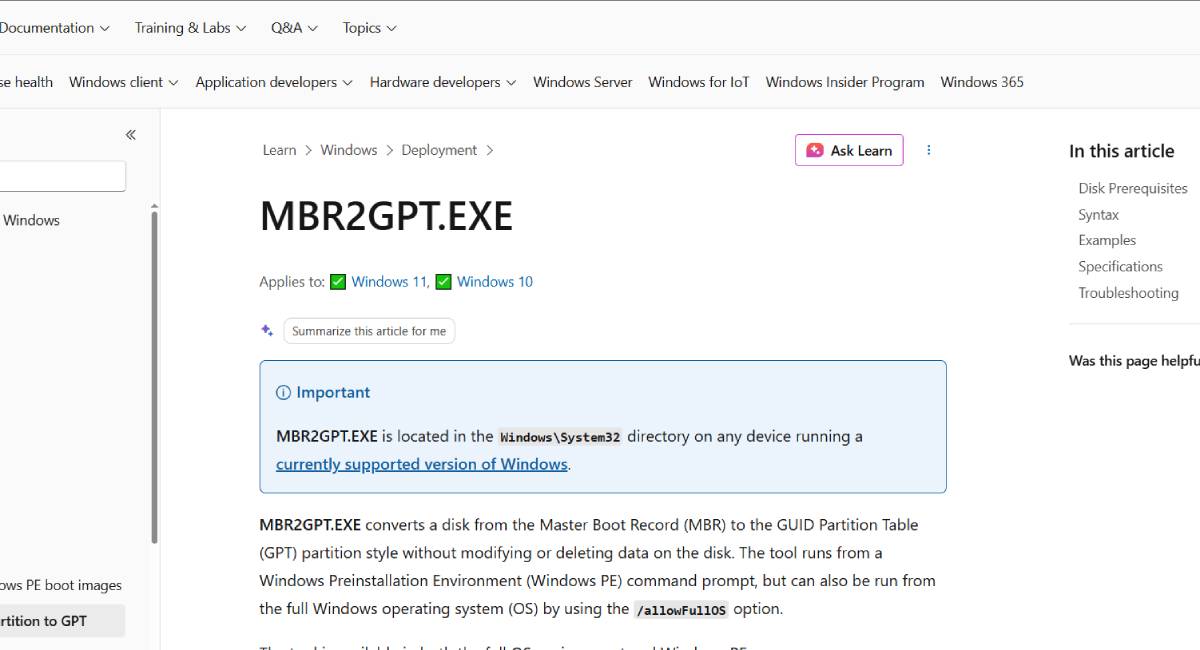
MBR2GPT is a system utility designed to convert storage drives from the legacy Master Boot Record (MBR) partition format to the newer GUID Partition Table (GPT) standard without requiring complete disk reformatting.

July 29, 2026
|

MBR2GPT reflects the ongoing modernization of enterprise IT infrastructure by enabling the conversion of legacy disk partition formats to newer GPT standards. As organizations accelerate digital transformation and adopt modern hardware platforms, tools supporting seamless system migration have become increasingly important for maintaining operational continuity and improving long-term infrastructure resilience.

MBR2GPT is a system utility designed to convert storage drives from the legacy Master Boot Record (MBR) partition format to the newer GUID Partition Table (GPT) standard without requiring complete disk reformatting. The utility supports organizations and IT professionals modernizing computing environments while minimizing operational disruption.

The transition to GPT enables compatibility with Unified Extensible Firmware Interface (UEFI), larger storage capacities, and enhanced system capabilities. As enterprises continue refreshing infrastructure and deploying modern operating systems, migration tools such as MBR2GPT play an important role in simplifying upgrade processes while reducing deployment complexity and downtime.

Global enterprises are increasingly replacing legacy IT infrastructure with modern hardware platforms capable of supporting advanced security features, larger storage systems, and cloud-integrated environments. One important aspect of this modernization involves transitioning from traditional BIOS-based architectures using MBR partitioning to UEFI systems utilizing GPT.

GPT has become the preferred storage standard because it supports significantly larger disks, more partitions, improved reliability, and enhanced compatibility with modern operating systems. As organizations adopt Windows 11, virtualization technologies, and next-generation enterprise hardware, demand for migration utilities has steadily increased.

MBR2GPT aligns with this broader industry movement by helping simplify infrastructure upgrades while preserving operational continuity. Efficient migration tools reduce deployment costs, minimize business interruptions, and support organizations pursuing digital transformation initiatives across both public and private sector environments.

Enterprise infrastructure analysts emphasize that legacy system modernization remains a strategic priority for organizations seeking improved cybersecurity, scalability, and long-term operational efficiency. Experts note that storage architecture plays a foundational role in supporting secure boot processes, hardware compatibility, and enterprise resilience.

Technology consultants also point out that utilities facilitating non-destructive migration significantly reduce the complexity of enterprise upgrade projects. By minimizing downtime and avoiding complete storage reconfiguration, organizations can accelerate modernization efforts while maintaining business continuity.

Although MBR2GPT represents a specialized technical utility rather than a broad enterprise platform, industry observers recognize the importance of migration technologies in supporting infrastructure transformation. Analysts expect future innovation to focus on automation, cloud deployment compatibility, AI-assisted system management, and simplified enterprise migration workflows.

For businesses, MBR2GPT demonstrates the importance of effective infrastructure migration strategies as organizations continue modernizing IT environments. Enterprises investing in new hardware, virtualization, and cloud computing can benefit from technologies that reduce deployment risk and improve operational efficiency.

Investors monitoring enterprise software and infrastructure markets may view migration and systems management tools as supporting long-term digital transformation spending. Policymakers and technology leaders will continue encouraging modernization initiatives that strengthen cybersecurity, improve infrastructure resilience, and support national digital competitiveness.

The utility reflects a broader shift toward modern enterprise architecture built around scalable, secure, and future-ready computing environments. Looking ahead, migration technologies like MBR2GPT are expected to remain relevant as organizations continue upgrading enterprise infrastructure. Decision-makers should monitor developments in storage technologies, UEFI adoption, cloud-native deployment models, automation, and cybersecurity requirements. As digital transformation accelerates across industries, efficient migration solutions will continue supporting reliable infrastructure modernization while reducing operational risk and implementation costs.

Source: AlternativeTo
Date: July 23, 2026

  • Featured tools
Outplay AI
Free

Outplay AI is a dynamic sales engagement platform combining AI-powered outreach, multi-channel automation, and performance tracking to help teams optimize conversion and pipeline generation.

#
Sales
Learn more
Neuron AI
Free

Neuron AI is an AI-driven content optimization platform that helps creators produce SEO-friendly content by combining semantic SEO, competitor analysis, and AI-assisted writing workflows.

#
SEO
Learn more

Learn more about future of AI

Join 80,000+ Ai enthusiast getting weekly updates on exciting AI tools.
Thank you! Your submission has been received!
Oops! Something went wrong while submitting the form.

MBR2GPT Supports Modern Disk Standards

July 29, 2026

MBR2GPT is a system utility designed to convert storage drives from the legacy Master Boot Record (MBR) partition format to the newer GUID Partition Table (GPT) standard without requiring complete disk reformatting.

MBR2GPT reflects the ongoing modernization of enterprise IT infrastructure by enabling the conversion of legacy disk partition formats to newer GPT standards. As organizations accelerate digital transformation and adopt modern hardware platforms, tools supporting seamless system migration have become increasingly important for maintaining operational continuity and improving long-term infrastructure resilience.

MBR2GPT is a system utility designed to convert storage drives from the legacy Master Boot Record (MBR) partition format to the newer GUID Partition Table (GPT) standard without requiring complete disk reformatting. The utility supports organizations and IT professionals modernizing computing environments while minimizing operational disruption.

The transition to GPT enables compatibility with Unified Extensible Firmware Interface (UEFI), larger storage capacities, and enhanced system capabilities. As enterprises continue refreshing infrastructure and deploying modern operating systems, migration tools such as MBR2GPT play an important role in simplifying upgrade processes while reducing deployment complexity and downtime.

Global enterprises are increasingly replacing legacy IT infrastructure with modern hardware platforms capable of supporting advanced security features, larger storage systems, and cloud-integrated environments. One important aspect of this modernization involves transitioning from traditional BIOS-based architectures using MBR partitioning to UEFI systems utilizing GPT.

GPT has become the preferred storage standard because it supports significantly larger disks, more partitions, improved reliability, and enhanced compatibility with modern operating systems. As organizations adopt Windows 11, virtualization technologies, and next-generation enterprise hardware, demand for migration utilities has steadily increased.

MBR2GPT aligns with this broader industry movement by helping simplify infrastructure upgrades while preserving operational continuity. Efficient migration tools reduce deployment costs, minimize business interruptions, and support organizations pursuing digital transformation initiatives across both public and private sector environments.

Enterprise infrastructure analysts emphasize that legacy system modernization remains a strategic priority for organizations seeking improved cybersecurity, scalability, and long-term operational efficiency. Experts note that storage architecture plays a foundational role in supporting secure boot processes, hardware compatibility, and enterprise resilience.

Technology consultants also point out that utilities facilitating non-destructive migration significantly reduce the complexity of enterprise upgrade projects. By minimizing downtime and avoiding complete storage reconfiguration, organizations can accelerate modernization efforts while maintaining business continuity.

Although MBR2GPT represents a specialized technical utility rather than a broad enterprise platform, industry observers recognize the importance of migration technologies in supporting infrastructure transformation. Analysts expect future innovation to focus on automation, cloud deployment compatibility, AI-assisted system management, and simplified enterprise migration workflows.

For businesses, MBR2GPT demonstrates the importance of effective infrastructure migration strategies as organizations continue modernizing IT environments. Enterprises investing in new hardware, virtualization, and cloud computing can benefit from technologies that reduce deployment risk and improve operational efficiency.

Investors monitoring enterprise software and infrastructure markets may view migration and systems management tools as supporting long-term digital transformation spending. Policymakers and technology leaders will continue encouraging modernization initiatives that strengthen cybersecurity, improve infrastructure resilience, and support national digital competitiveness.

The utility reflects a broader shift toward modern enterprise architecture built around scalable, secure, and future-ready computing environments. Looking ahead, migration technologies like MBR2GPT are expected to remain relevant as organizations continue upgrading enterprise infrastructure. Decision-makers should monitor developments in storage technologies, UEFI adoption, cloud-native deployment models, automation, and cybersecurity requirements. As digital transformation accelerates across industries, efficient migration solutions will continue supporting reliable infrastructure modernization while reducing operational risk and implementation costs.

Source: AlternativeTo
Date: July 23, 2026

Promote Your Tool

Copy Embed Code

Similar Blogs

July 31, 2026
|

Dodo MIDI Enhances Music Production Workflows

Dodo MIDI is part of the music technology ecosystem, focusing on MIDI-based tools that help users create, control, and manage digital musical compositions.
Read more
July 31, 2026
|

Polar Cloud Advances Secure Data Management

Polar Cloud is positioned within the cloud computing ecosystem, offering users technology solutions focused on managing and accessing digital resources through cloud-based environments.
Read more
July 31, 2026
|

Metastream Enhances Shared Digital Entertainment

Metastream is a digital platform designed to enable synchronized media playback, allowing multiple users to watch online content together from different locations.
Read more
July 31, 2026
|

Deep Realms Advances Immersive Digital Experiences

Deep Realms is positioned within the category of immersive digital experiences, offering users a platform focused on exploration, creativity, and interactive engagement.
Read more
July 31, 2026
|

Starbackpage Evolves Digital Marketplace Platforms

Starbackpage is part of the online classified marketplace category, where users can create listings, discover services, and interact through digital platforms.
Read more
July 31, 2026
|

Calyx VPN Strengthens Digital Privacy Security

Calyx VPN is a privacy-focused virtual private network solution designed to provide users with secure internet connections and enhanced online privacy.
Read more