



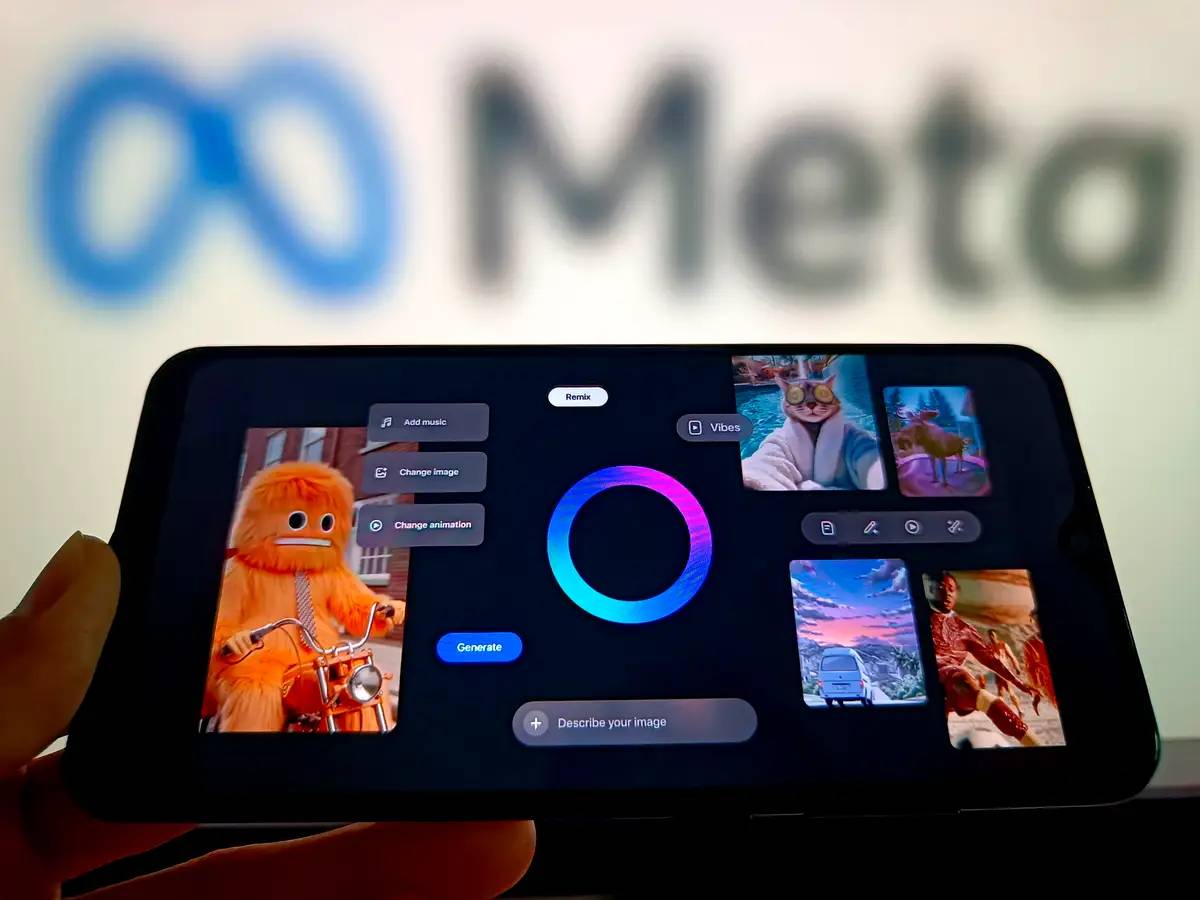
A major development unfolded as Meta began testing a standalone AI-powered video application in select markets, marking a strategic expansion beyond its core social platforms. The move signals Meta’s intent to deepen its AI-led content ecosystem, with implications for creators, advertisers, and rivals competing for user attention in short-form video.
Meta has launched limited tests of a dedicated AI video app designed to enable users to generate, edit, and personalise video content using artificial intelligence. The pilot is being rolled out in select regions, indicating an experimental phase rather than a full-scale launch.
The app reportedly operates independently of Instagram and Facebook, suggesting Meta is exploring new distribution models for AI-native content. This initiative builds on Meta’s broader push into generative AI tools across text, image, and video formats. By separating the app from its flagship platforms, Meta gains flexibility to test features, user behaviour, and monetisation strategies without disrupting its existing user base.
The development aligns with a broader trend across global markets where AI-driven content creation is reshaping digital media and social engagement. Short-form video has become the dominant growth engine for platforms, intensifying competition among global tech giants.
Meta has faced sustained pressure from rivals that have successfully built AI-first content ecosystems, prompting the company to accelerate experimentation beyond incremental updates to Instagram Reels or Facebook video. Historically, Meta has used standalone apps as testing grounds some evolving into core products, others quietly discontinued.
At the same time, generative AI video tools are advancing rapidly, lowering production barriers for creators while raising questions around authenticity, intellectual property, and content moderation. Against this backdrop, Meta’s move reflects both an offensive strategy to capture new creator segments and a defensive effort to remain relevant in an increasingly AI-native social media landscape.
Industry analysts view the pilot as a calculated bet rather than a guaranteed product launch. Experts suggest Meta is seeking granular insights into how users interact with AI-generated video when removed from traditional social graphs.
Digital media strategists note that standalone experimentation allows Meta to refine AI models, user interfaces, and safety controls before wider deployment. Some analysts caution, however, that success will depend on whether the app offers meaningful differentiation beyond existing AI video tools already embedded in social platforms.
From a market perspective, observers highlight that Meta’s heavy investment in AI infrastructure places pressure on leadership to demonstrate tangible user-facing innovation. While official commentary has been limited, the test itself signals Meta’s confidence that AI-generated video will become a core pillar of future digital engagement.
For businesses and creators, the app could unlock new avenues for low-cost, high-speed video production, potentially reshaping influencer marketing and digital advertising workflows. Advertisers may gain access to AI-assisted creative formats at scale, reducing production timelines.
Investors will view the move as another data point in Meta’s broader AI monetisation strategy, particularly its ability to translate infrastructure spending into user growth. From a policy perspective, standalone AI video platforms may attract closer scrutiny around deepfakes, misinformation, and copyright compliance, pushing regulators to revisit governance frameworks for generative media.
Looking ahead, decision-makers will watch whether Meta expands testing to additional regions or integrates the app’s features back into its core platforms. User adoption, creator engagement, and regulatory response will shape the app’s future. The experiment underscores a wider industry shift toward AI-native platforms, where speed of iteration may define competitive advantage.
Source: Social Samosa
Date: February 2026


