



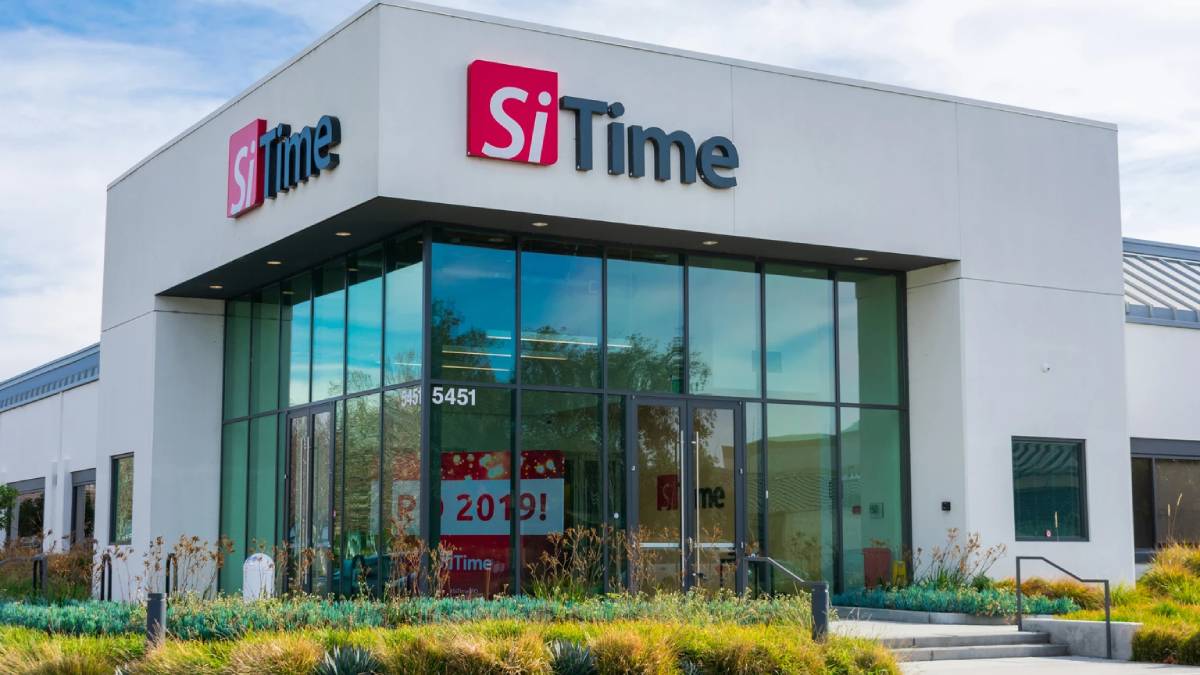
A major development unfolded as SiTime announced a $2.9 billion acquisition of Renesas’ timing business, underscoring how critical semiconductor infrastructure is becoming in the AI era. The deal sharpens focus on precision timing an often-overlooked layer powering data centres, AI accelerators, and next-generation digital systems.
SiTime confirmed it will acquire Renesas’ timing assets in a $2.9 billion transaction, significantly expanding its footprint in high-performance clocking and synchronisation solutions. The deal transfers a mature portfolio of timing products, engineering talent, and customer relationships into SiTime’s ecosystem.
The acquisition is strategically aimed at fast-growing AI workloads, where precise timing is essential to synchronise massive data flows across processors, memory, and networks. For Renesas, the divestment reflects a portfolio streamlining effort, while SiTime gains immediate scale and diversification across data centres, automotive, industrial, and communications markets.
The development aligns with a broader trend across global semiconductor markets where foundational technologies are gaining renewed strategic importance due to AI. While GPUs and accelerators dominate headlines, timing and synchronisation components quietly underpin performance, reliability, and energy efficiency in AI systems.
As AI clusters grow larger and more distributed, even nanosecond-level inaccuracies can degrade system performance or increase power consumption. This has elevated precision timing from a niche component to a mission-critical enabler.
Historically, timing solutions were viewed as commoditised. However, the rise of hyperscale data centres, 5G networks, autonomous systems, and AI-driven infrastructure has transformed the category into a high-value segment. SiTime’s move reflects how semiconductor firms are repositioning around infrastructure bottlenecks created by AI’s explosive growth.
Industry analysts view the acquisition as a bold but logical consolidation play. Experts note that AI hardware performance increasingly depends on system-level optimisation, where timing accuracy directly affects throughput and latency.
Market observers suggest SiTime’s analog and MEMS-based timing expertise complements Renesas’ established customer base, creating a more comprehensive platform for advanced computing environments. Analysts also point out that owning timing IP gives suppliers greater pricing power as customers prioritise reliability over cost.
Corporate commentary around the deal has emphasised long-term growth rather than short-term margin impact, signalling confidence that AI-driven demand will absorb integration costs. Industry leaders broadly interpret the move as validation that “invisible” semiconductor layers are becoming strategic assets in the AI value chain.
For technology companies, the deal highlights the need to secure critical infrastructure components as AI systems scale. Enterprises building AI data centres may face tighter supplier ecosystems and higher costs for specialised components like precision timing.
Investors are likely to see the transaction as a signal that second-order AI beneficiaries beyond GPUs offer durable growth opportunities. From a policy perspective, the deal reinforces concerns around semiconductor concentration and supply-chain resilience, particularly as governments push for domestic control over strategic chip technologies tied to national digital infrastructure.
Looking ahead, attention will focus on how quickly SiTime integrates the acquired assets and converts AI demand into sustained revenue growth. Decision-makers will watch customer retention, pricing power, and execution in hyperscale markets. As AI systems become larger and more interconnected, precision timing may emerge as a quiet but decisive battleground in the semiconductor race.
Source: Tech Funding News
Date: February 2026


