
Microsoft Pushes AI Skills Framework for Workforce

Microsoft emphasized the growing importance of AI literacy, adaptability, and continuous learning in navigating the future workforce. The company highlighted how its AI platform ecosystem.

April 1, 2026
|
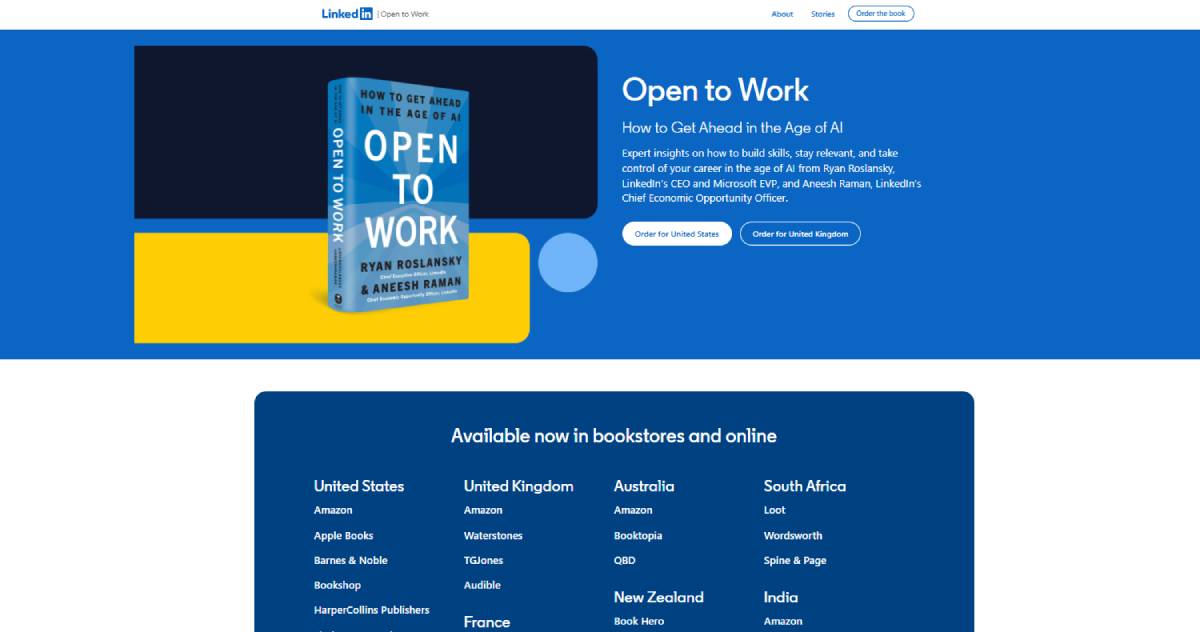
Image source: https://www.linkedin.com/opentowork

A major development unfolded as Microsoft outlined a strategic roadmap for workers to stay competitive in the age of AI, signalling a shift toward skills-based transformation driven by AI platforms. The guidance highlights how individuals and organizations must adapt to evolving AI frameworks reshaping global labor markets.

Microsoft emphasized the growing importance of AI literacy, adaptability, and continuous learning in navigating the future workforce. The company highlighted how its AI platform ecosystem, including tools like Microsoft Copilot, is redefining productivity and job roles.

The framework encourages workers to combine domain expertise with AI capabilities, positioning human-AI collaboration as a core competency. Key stakeholders include employees, enterprises, educators, and policymakers addressing workforce transformation. The initiative reflects a broader push by technology firms to shape workforce readiness, aligning skills development with the rapid deployment of AI platforms across industries.

The development aligns with a broader trend across global markets where AI platforms are fundamentally reshaping the nature of work. Automation, generative AI, and agent-based systems are transforming job roles, requiring workers to develop new competencies.

Companies like Microsoft, Google, and Amazon are investing heavily in AI frameworks that augment human productivity rather than replace it entirely. Historically, technological revolutionsfrom industrial automation to the digital era have led to workforce disruption followed by new job creation. The current AI wave is no different but is unfolding at a faster pace. Governments and organizations are increasingly focused on reskilling and upskilling initiatives to bridge the gap between existing capabilities and emerging AI-driven job requirements.

Industry experts suggest that the future of work will be defined by “AI-augmented roles,” where workers collaborate with AI platforms rather than compete against them. Analysts highlight that productivity gains from AI frameworks could be substantial, but only for those equipped with the right skills.

Workforce strategists emphasize the importance of adaptability, critical thinking, and digital fluency as essential capabilities in the AI era. From a corporate perspective, leaders are increasingly viewing AI platforms as tools to enhance employee performance and innovation. However, experts also caution that unequal access to AI tools and training could widen economic disparities. Microsoft’s messaging reinforces the need for a proactive approach, encouraging individuals and organizations to embrace continuous learning and integrate AI into everyday workflows.

For global executives, the shift underscores the need to align workforce strategies with AI platform adoption. Organizations may need to invest in training programs, redesign job roles, and integrate AI frameworks into core operations to remain competitive. Investors could see opportunities in companies that effectively leverage human-AI collaboration to drive productivity. From a policy standpoint, governments may need to expand education and reskilling initiatives to support workforce transitions. Failure to adapt could result in talent shortages and increased inequality, making workforce transformation a critical priority for both public and private sectors.

Looking ahead, the integration of AI platforms into daily work is expected to accelerate, making AI literacy a fundamental requirement across industries. Decision-makers should monitor how quickly organizations and education systems adapt to this shift. The ability to combine human expertise with AI frameworks will likely determine competitive advantage in the evolving global economy.

Source: Microsoft Blog
Date: March 31, 2026

  • Featured tools
Murf Ai
Free

Murf AI Review – Advanced AI Voice Generator for Realistic Voiceovers

#
Text to Speech
Learn more
Tome AI
Free

Tome AI is an AI-powered storytelling and presentation tool designed to help users create compelling narratives and presentations quickly and efficiently. It leverages advanced AI technologies to generate content, images, and animations based on user input.

#
Presentation
#
Startup Tools
Learn more

Learn more about future of AI

Join 80,000+ Ai enthusiast getting weekly updates on exciting AI tools.
Thank you! Your submission has been received!
Oops! Something went wrong while submitting the form.

Microsoft Pushes AI Skills Framework for Workforce

April 1, 2026

Microsoft emphasized the growing importance of AI literacy, adaptability, and continuous learning in navigating the future workforce. The company highlighted how its AI platform ecosystem.

Image source: https://www.linkedin.com/opentowork

A major development unfolded as Microsoft outlined a strategic roadmap for workers to stay competitive in the age of AI, signalling a shift toward skills-based transformation driven by AI platforms. The guidance highlights how individuals and organizations must adapt to evolving AI frameworks reshaping global labor markets.

Microsoft emphasized the growing importance of AI literacy, adaptability, and continuous learning in navigating the future workforce. The company highlighted how its AI platform ecosystem, including tools like Microsoft Copilot, is redefining productivity and job roles.

The framework encourages workers to combine domain expertise with AI capabilities, positioning human-AI collaboration as a core competency. Key stakeholders include employees, enterprises, educators, and policymakers addressing workforce transformation. The initiative reflects a broader push by technology firms to shape workforce readiness, aligning skills development with the rapid deployment of AI platforms across industries.

The development aligns with a broader trend across global markets where AI platforms are fundamentally reshaping the nature of work. Automation, generative AI, and agent-based systems are transforming job roles, requiring workers to develop new competencies.

Companies like Microsoft, Google, and Amazon are investing heavily in AI frameworks that augment human productivity rather than replace it entirely. Historically, technological revolutionsfrom industrial automation to the digital era have led to workforce disruption followed by new job creation. The current AI wave is no different but is unfolding at a faster pace. Governments and organizations are increasingly focused on reskilling and upskilling initiatives to bridge the gap between existing capabilities and emerging AI-driven job requirements.

Industry experts suggest that the future of work will be defined by “AI-augmented roles,” where workers collaborate with AI platforms rather than compete against them. Analysts highlight that productivity gains from AI frameworks could be substantial, but only for those equipped with the right skills.

Workforce strategists emphasize the importance of adaptability, critical thinking, and digital fluency as essential capabilities in the AI era. From a corporate perspective, leaders are increasingly viewing AI platforms as tools to enhance employee performance and innovation. However, experts also caution that unequal access to AI tools and training could widen economic disparities. Microsoft’s messaging reinforces the need for a proactive approach, encouraging individuals and organizations to embrace continuous learning and integrate AI into everyday workflows.

For global executives, the shift underscores the need to align workforce strategies with AI platform adoption. Organizations may need to invest in training programs, redesign job roles, and integrate AI frameworks into core operations to remain competitive. Investors could see opportunities in companies that effectively leverage human-AI collaboration to drive productivity. From a policy standpoint, governments may need to expand education and reskilling initiatives to support workforce transitions. Failure to adapt could result in talent shortages and increased inequality, making workforce transformation a critical priority for both public and private sectors.

Looking ahead, the integration of AI platforms into daily work is expected to accelerate, making AI literacy a fundamental requirement across industries. Decision-makers should monitor how quickly organizations and education systems adapt to this shift. The ability to combine human expertise with AI frameworks will likely determine competitive advantage in the evolving global economy.

Source: Microsoft Blog
Date: March 31, 2026

Promote Your Tool

Copy Embed Code

Similar Blogs

April 1, 2026
|

AI Data Center Boom Strains Memory Supply

AI-driven workloads are rapidly increasing demand for high-performance memory, particularly high-bandwidth memory (HBM) used in advanced AI servers.
Read more
April 1, 2026
|

Gallagher Deploys Microsoft AI to Cut Claims Time

Gallagher has implemented AI-driven workflows using Microsoft Foundry to streamline insurance claims processing, significantly reducing turnaround times.
Read more
April 1, 2026
|

Google Advances AI Evaluation and Benchmarking Standards

Google’s research explores how many human evaluators are necessary to produce statistically reliable AI benchmarks, particularly for subjective tasks such as language quality, reasoning, and alignment.
Read more
April 1, 2026
|

Ollama Integrates Apple MLX for On Device AI

Ollama has integrated Apple’s MLX framework to optimize AI model execution on devices powered by Apple silicon chips, including M1, M2, and newer processors.
Read more
April 1, 2026
|

Apple AI Restrictions Spark Innovation Control Debate

Apple has intensified scrutiny and restrictions on AI-powered applications distributed through its platform, citing safety, privacy, and quality concerns. The crackdown affects developers building AI-driven tools.
Read more
April 1, 2026
|

Microsoft Pushes AI Skills Framework for Workforce

Microsoft emphasized the growing importance of AI literacy, adaptability, and continuous learning in navigating the future workforce. The company highlighted how its AI platform ecosystem.
Read more