



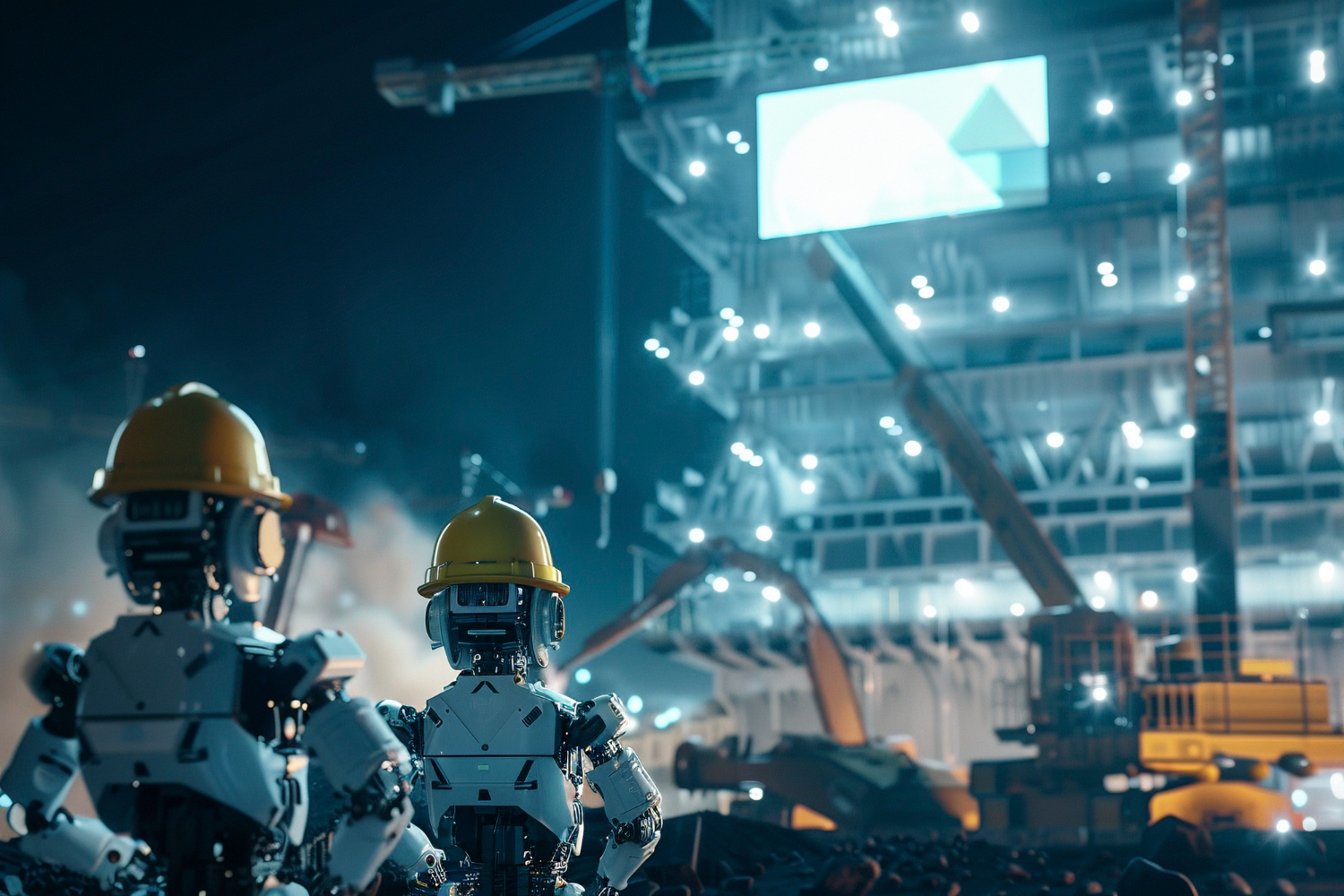
BHP describes the end-to-end effects of AI on operations from mineral extraction to customer delivery, with leaders having decided to move beyond pilot rollouts, treating AI as an operational capability by starting with a small set of problems that affected the company's performance where change could be measured in results Cryptopolitan. Deploying predictive maintenance at facilities in Escondida, Chile, the company reports savings of more than three giga-litres of water and 118 gigawatt hours of energy in two years, attributing the gains directly to AI Cryptopolitan.
BHP found it could avoid unplanned downtime of machinery plus tightened energy and water use, with each use case addressing a small but impactful problem given an owner and an accompanying KPI, with results reviewed with the same regularity used for other operational performance monitoring elsewhere in the company Cryptopolitan. The technology gives operators real-time options and analytics that identify anomalies and automate corrective actions at multiple facilities including concentrators and desalination plants Cryptopolitan.
Rio Tinto pioneered autonomous operations through "Mine of the Future" project, operating fleets of driverless trucks and trains in remote areas, optimizing fuel efficiency while improving safety by reducing human exposure to hazardous environments CNBC. BHP uses AI-integrated wearables including smart hard-hat sensor technology at Escondida, measuring truck driver fatigue by analyzing drivers' brain waves Cryptopolitan.
The global AI in mining market size is evaluated at $35.47 billion in 2025 and is predicted to hit around $828.33 billion by 2034, growing at a CAGR of 41.92% IT Pro. By 2025, over 60% of new mining sites are expected to deploy AI-driven predictive maintenance systems to maximize equipment uptime and cost-efficiency, with market leaders worldwide deploying AI for predictive maintenance, exploration targeting, safety monitoring, and digital twin automation Thriveholdings.
AI-driven mineral exploration is scalable across the globe, with integration of satellite-based soil health and geochemistry analysis increasing the precision of exploration, increasing discovery rates by up to 50% by 2025 H2S Media. During exploration, AI models analyze geological and satellite data to reduce discovery timelines by 20–30% Thriveholdings. The use of AI-integrated wearables is increasing in many industries including engineering, utilities, manufacturing, and mining, with wearables monitoring personal conditions and providing real-time alerts to supervisors Cryptopolitan.
The lesson BHP learned is placing AI tools where decisions happen: when operators and control teams can act on recommendations in real time, improvements compound, with the real-time nature of data analysis and the use of triggers-to-action meaning the differences become quickly apparent Cryptopolitan. Conversely, periodic reporting means decisions are only taken if staff both see the results of data and then decide it's necessary Cryptopolitan.
BHP incorporated AI into its logistics network, improving haulage schedules and minimizing disruptions across its global supply chain, with environmental demands increasing and AI helping mining companies meet sustainability targets by using live monitoring systems to track water usage, emissions, and energy consumption CNBC. Countries seeking mineral independence will need cutting-edge software and a willingness to invest in foundational data gathering, regulatory adaptation, and international partnerships, with the combination of advanced analytics, skilled human judgment, and thoughtful governance appearing essential for deploying AI effectively Yahoo Finance.
Decision-makers can draw learnings from BHP's experiences in deploying AI at the literal coal-face, with a plan that could help leaders in their own strategies including choosing one reliability problem and one resource-efficiency problem that operations teams already track, then attaching a KPI Cryptopolitan. Transitioning to AI-driven operations requires a skilled workforce that understands both mining processes and digital technologies, with many mines facing a gap in data literacy and technical expertise, and bridging this divide demanding significant investment in training and development CNBC.
As AI systems become more integrated with operational technology, they also become potential targets for cyber threats, with evolving regulations surrounding data use and AI ethics meaning mining companies must be proactive in ensuring compliance and safeguarding security of operations CNBC.
The future of AI in mining will include fully integrated, adaptive systems that respond in real time to changing conditions, with these "smart mines" combining AI with edge computing, robotics, and IoT to create environments that optimize autonomously CNBC. By 2025, the use of AI for mining automation is expected to double productivity in some operations, enabling the industry to move towards truly "smart mines" that operate efficiently, safely, and sustainably all day, every day H2S Media. Decision-makers across industries should recognize that BHP's approach starting with measurable problems, assigning ownership and KPIs, and integrating AI at decision points rather than reporting layers provides a replicable blueprint for operational AI deployment transcending sector boundaries.
Source & Date
Source: AI News, BHP, Rio Tinto, Omdena, CSG Talent, Precedence Research
Date: December 2025


