
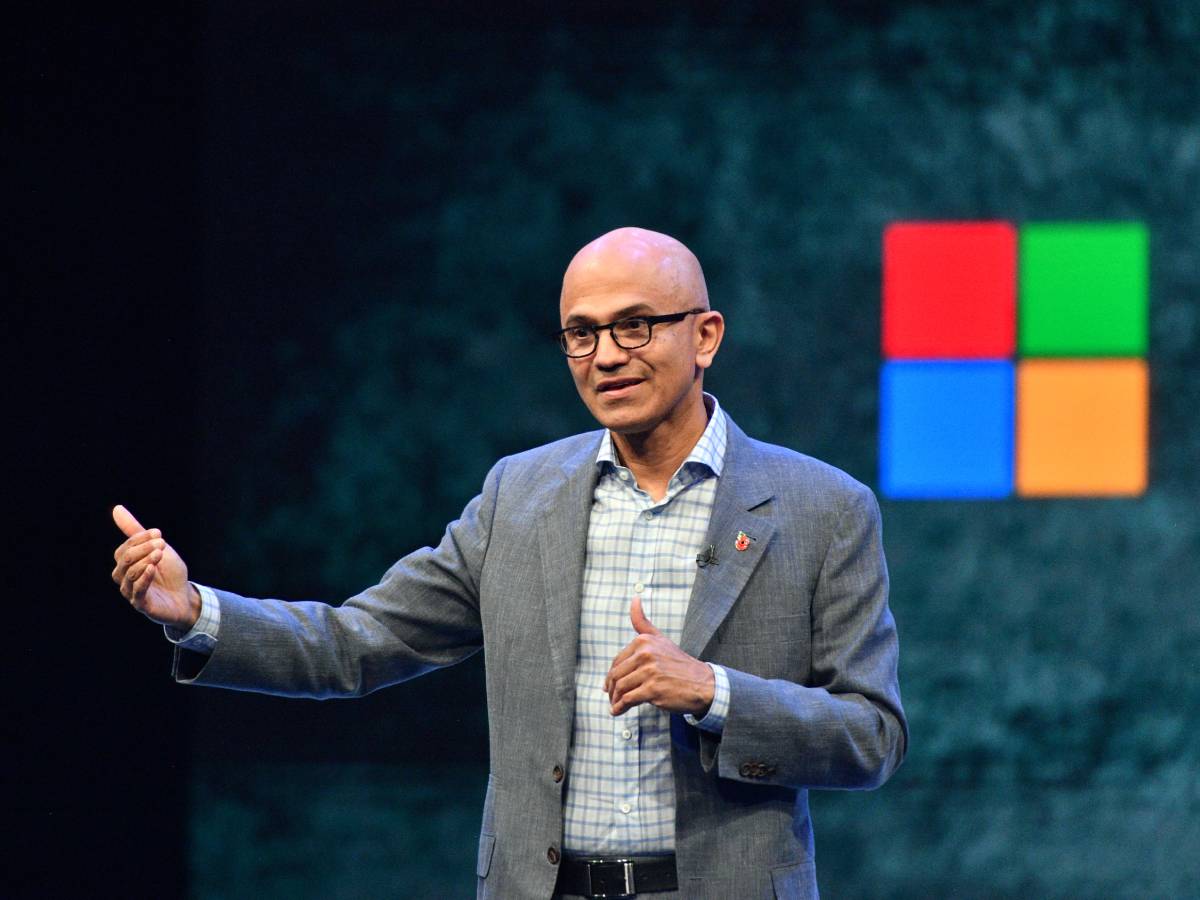
Nadella Calls for Global AI Responsibility Pact to Secure Public Trust

Satya Nadella emphasized that AI’s long-term success depends on trust, accountability, and alignment with public interest. He called on AI companies to embed responsibility, safety.

January 23, 2026
|

A major development unfolded as Microsoft CEO Satya Nadella issued a direct message to the global AI industry, urging companies to make artificial intelligence socially acceptable for both citizens and governments. The call signals a strategic shift toward responsible AI governance, with implications for global markets, regulation, and corporate leadership.

Satya Nadella emphasized that AI’s long-term success depends on trust, accountability, and alignment with public interest. He called on AI companies to embed responsibility, safety, and transparency into product design and deployment.

The message targets major AI developers, cloud providers, and platform companies that shape global digital infrastructure. Nadella highlighted the need for collaboration between governments and private companies to establish shared rules of engagement for AI systems.

The statement comes as regulatory pressure rises globally, with governments increasingly demanding ethical AI frameworks, explainability standards, and risk controls. The focus is shifting from pure innovation speed to legitimacy, governance, and public acceptance.

The development aligns with a broader trend across global markets where AI adoption is accelerating faster than regulatory and social trust frameworks. From Europe’s AI Act to emerging AI governance models in Asia and North America, governments are asserting control over how AI systems are built, trained, and deployed.

Historically, technological revolutions—from social media to cloud computing—scaled rapidly before regulatory structures matured, creating public backlash and policy intervention. AI now sits at a similar inflection point. Concerns around data privacy, job displacement, algorithmic bias, misinformation, and national security have made AI a political, social, and economic issue—not just a technological one.

For global corporations, AI is no longer just a productivity tool but a governance challenge. Corporate responsibility, regulatory compliance, and public trust are becoming core components of AI strategy alongside innovation and profitability.

Industry analysts view Nadella’s message as a recognition that AI legitimacy is becoming as important as AI capability. Experts argue that without trust frameworks, AI adoption risks regulatory clampdowns, public resistance, and fragmented global markets.

Policy experts highlight that governments are increasingly unwilling to accept “move fast and break things” approaches in AI development. Instead, they are demanding risk assessments, accountability mechanisms, and auditability.

Corporate leaders across sectors are beginning to echo similar concerns, emphasizing responsible AI, explainability, and human oversight. Market observers note that trust-based AI governance could become a competitive advantage, differentiating companies that can scale safely from those that face regulatory friction.

The consensus view is that AI companies must evolve from pure technology builders into institutional actors that operate within political, ethical, and societal frameworks.

For global executives, the shift could redefine operational strategies across AI development, deployment, and governance. Companies may need to invest more in compliance, AI ethics teams, governance frameworks, and regulatory engagement.

Investors are likely to increasingly assess AI companies not just on innovation and growth, but on regulatory resilience and reputational risk management.

For policymakers, Nadella’s message reinforces the push for structured AI regulation rather than reactive bans. Governments may accelerate standard-setting, certification models, and international AI governance cooperation.

Analysts warn that firms ignoring responsible AI principles risk facing stricter regulations, public backlash, and market exclusion in highly regulated regions.

Decision-makers should watch for coordinated industry frameworks on responsible AI, stronger government-industry collaboration, and the emergence of global AI governance standards. Over the next 12–24 months, AI leadership will increasingly be defined not just by model performance, but by trust, compliance, and social legitimacy. The AI race is shifting from raw capability to sustainable acceptance.

Source & Date

Source: The Times of India
Date: January 2026

  • Featured tools
Twistly AI
Paid

Twistly AI is a PowerPoint add-in that allows users to generate full slide decks, improve existing presentations, and convert various content types into polished slides directly within Microsoft PowerPoint.It streamlines presentation creation using AI-powered text analysis, image generation and content conversion.

#
Presentation
Learn more
Surfer AI
Free

Surfer AI is an AI-powered content creation assistant built into the Surfer SEO platform, designed to generate SEO-optimized articles from prompts, leveraging data from search results to inform tone, structure, and relevance.

#
SEO
Learn more

Learn more about future of AI

Join 80,000+ Ai enthusiast getting weekly updates on exciting AI tools.
Thank you! Your submission has been received!
Oops! Something went wrong while submitting the form.

Nadella Calls for Global AI Responsibility Pact to Secure Public Trust

January 23, 2026

Satya Nadella emphasized that AI’s long-term success depends on trust, accountability, and alignment with public interest. He called on AI companies to embed responsibility, safety.

A major development unfolded as Microsoft CEO Satya Nadella issued a direct message to the global AI industry, urging companies to make artificial intelligence socially acceptable for both citizens and governments. The call signals a strategic shift toward responsible AI governance, with implications for global markets, regulation, and corporate leadership.

Satya Nadella emphasized that AI’s long-term success depends on trust, accountability, and alignment with public interest. He called on AI companies to embed responsibility, safety, and transparency into product design and deployment.

The message targets major AI developers, cloud providers, and platform companies that shape global digital infrastructure. Nadella highlighted the need for collaboration between governments and private companies to establish shared rules of engagement for AI systems.

The statement comes as regulatory pressure rises globally, with governments increasingly demanding ethical AI frameworks, explainability standards, and risk controls. The focus is shifting from pure innovation speed to legitimacy, governance, and public acceptance.

The development aligns with a broader trend across global markets where AI adoption is accelerating faster than regulatory and social trust frameworks. From Europe’s AI Act to emerging AI governance models in Asia and North America, governments are asserting control over how AI systems are built, trained, and deployed.

Historically, technological revolutions—from social media to cloud computing—scaled rapidly before regulatory structures matured, creating public backlash and policy intervention. AI now sits at a similar inflection point. Concerns around data privacy, job displacement, algorithmic bias, misinformation, and national security have made AI a political, social, and economic issue—not just a technological one.

For global corporations, AI is no longer just a productivity tool but a governance challenge. Corporate responsibility, regulatory compliance, and public trust are becoming core components of AI strategy alongside innovation and profitability.

Industry analysts view Nadella’s message as a recognition that AI legitimacy is becoming as important as AI capability. Experts argue that without trust frameworks, AI adoption risks regulatory clampdowns, public resistance, and fragmented global markets.

Policy experts highlight that governments are increasingly unwilling to accept “move fast and break things” approaches in AI development. Instead, they are demanding risk assessments, accountability mechanisms, and auditability.

Corporate leaders across sectors are beginning to echo similar concerns, emphasizing responsible AI, explainability, and human oversight. Market observers note that trust-based AI governance could become a competitive advantage, differentiating companies that can scale safely from those that face regulatory friction.

The consensus view is that AI companies must evolve from pure technology builders into institutional actors that operate within political, ethical, and societal frameworks.

For global executives, the shift could redefine operational strategies across AI development, deployment, and governance. Companies may need to invest more in compliance, AI ethics teams, governance frameworks, and regulatory engagement.

Investors are likely to increasingly assess AI companies not just on innovation and growth, but on regulatory resilience and reputational risk management.

For policymakers, Nadella’s message reinforces the push for structured AI regulation rather than reactive bans. Governments may accelerate standard-setting, certification models, and international AI governance cooperation.

Analysts warn that firms ignoring responsible AI principles risk facing stricter regulations, public backlash, and market exclusion in highly regulated regions.

Decision-makers should watch for coordinated industry frameworks on responsible AI, stronger government-industry collaboration, and the emergence of global AI governance standards. Over the next 12–24 months, AI leadership will increasingly be defined not just by model performance, but by trust, compliance, and social legitimacy. The AI race is shifting from raw capability to sustainable acceptance.

Source & Date

Source: The Times of India
Date: January 2026

Promote Your Tool

Copy Embed Code

Similar Blogs

January 23, 2026
|

Intel Faces AI Data Center Supply Crunch, Shares Slide 13%

Intel reported that its current production capacity is insufficient to meet skyrocketing demand from hyperscale data centers deploying AI workloads. Short-term supply constraints have affected new orders.
Read more
January 23, 2026
|

Johansson & Blanchett Support Campaign Accusing AI Firms Theft

A major development unfolded today as Scarlett Johansson and Cate Blanchett publicly endorsed a campaign alleging that AI companies are misappropriating creative content. The move highlights rising tensions.
Read more
January 23, 2026
|

OpenAI Faces Strategic Uncertainty Amid Investor Leadership Concerns

Noble, a renowned tech investor, publicly questioned CEO Sam Altman’s strategic decisions, citing risks tied to rapid scaling, competitive pressures, and operational governance.
Read more
January 23, 2026
|

Infosys Identifies Financial Services as Primary Catalyst for AI Growth

The CEO emphasized partnerships with global banks, insurers, and fintech firms to co-develop AI solutions tailored to sector-specific challenges. Investments in AI platforms, cloud integration.
Read more
January 23, 2026
|

Fossil fuels are a crutch: How AI’s unlikely winner could be renewable energy

AI applications are streamlining energy production, storage, and distribution in solar, wind, and battery systems, improving predictive maintenance and grid management. Several AI startups.
Read more
January 23, 2026
|

Apple Explores AI Pin with Cameras, Microphones, Next-Gen Wearable

Apple aims to leverage its ecosystem iOS, WatchOS, and AirPods for seamless connectivity, creating a cohesive experience across devices. Competitors in AI wearables, including Google, Meta, and emerging startups.
Read more