



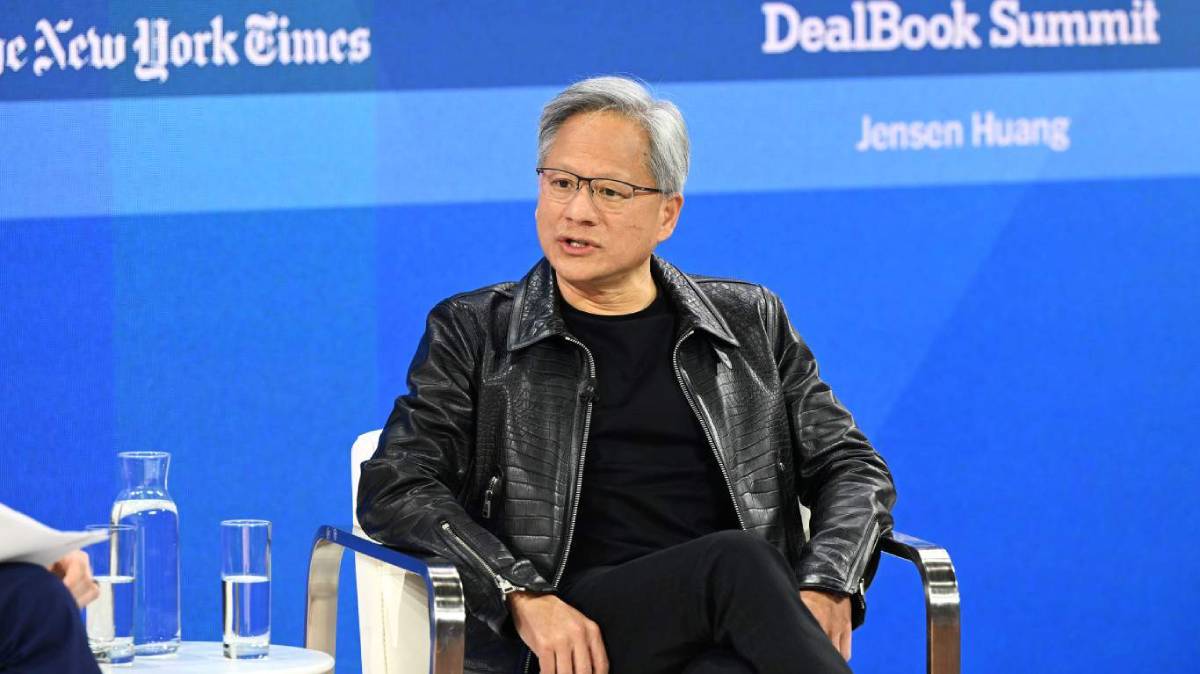
A major development unfolded as Jensen Huang, CEO of Nvidia, suggested that artificial general intelligence (AGI) may already be emerging. The statement signals a potential inflection point for global technology markets, with profound implications for investors, enterprises, and governments navigating the accelerating AI revolution.
Jensen Huang’s remarks indicate that AI systems are rapidly approaching or have reached capabilities comparable to human-level reasoning in certain domains. While not universally defined, AGI represents a milestone where machines can perform a wide range of cognitive tasks.
The comments come amid surging demand for Nvidia’s AI chips, which power data centers, cloud platforms, and advanced machine learning systems globally. Investors are increasingly positioning portfolios around companies benefiting from AI infrastructure expansion.
Market narratives now highlight a cluster of potential “winners,” including semiconductor firms, cloud providers, and AI software leaders. The timing aligns with heightened capital flows into AI, signaling strong investor confidence in long-term growth trajectories.
The development aligns with a broader trend across global markets where AI is transitioning from experimental technology to foundational infrastructure. Over the past decade, advancements in deep learning, large language models, and compute power have accelerated progress toward more generalized AI systems.
Nvidia has been central to this transformation, supplying GPUs that underpin leading AI models across industries. Its dominance in AI hardware has positioned it as a bellwether for the sector’s growth.
The concept of AGI, once considered decades away, is now being actively debated within both academic and corporate circles. Companies like OpenAI, Google, and Microsoft are investing heavily in building increasingly capable AI systems.
This shift is occurring alongside geopolitical competition, particularly between the United States and China, as nations race to secure leadership in AI technologies that could reshape economic and strategic power balances.
Industry analysts view Huang’s statement as both visionary and strategic, reinforcing Nvidia’s position at the center of the AI ecosystem. Some experts caution that while AI capabilities are advancing rapidly, true AGI defined as fully autonomous, human-level intelligence across all domains remains a contested milestone.
Others interpret Huang’s remarks as reflective of practical AGI systems that deliver economically valuable outcomes across multiple sectors, even if they fall short of theoretical definitions. Market analysts emphasize that Nvidia’s growth narrative is closely tied to continued AI adoption, with its hardware serving as the backbone for training and deploying advanced models.
Meanwhile, policymakers and researchers stress the importance of governance frameworks, as more capable AI systems introduce risks related to safety, ethics, and misuse. The discourse underscores a growing need for global coordination in AI regulation.
For global executives, the suggestion that AGI is emerging could accelerate investment in AI-driven transformation across industries. Companies may need to rapidly integrate AI into core operations to remain competitive, from automation to decision-making systems.
Investors are likely to continue favoring firms positioned within the AI value chain, particularly in semiconductors, cloud computing, and enterprise software. This could further concentrate market power among leading tech players.
From a policy perspective, governments may intensify efforts to regulate AI development, balancing innovation with safety. The prospect of AGI raises questions around workforce displacement, national security, and ethical oversight, requiring proactive policy frameworks.
Looking ahead, the debate over whether AGI has truly arrived will intensify, shaping both market sentiment and regulatory responses. Key indicators to watch include breakthroughs in autonomous reasoning, enterprise adoption rates, and global policy coordination.
If Huang’s assertion proves directionally accurate, AI could enter a new phase of exponential impact. For decision-makers, the imperative will be clear: adapt quickly or risk falling behind in an AI-first economy.
Source: Yahoo Finance
Date: April 5, 2026


