
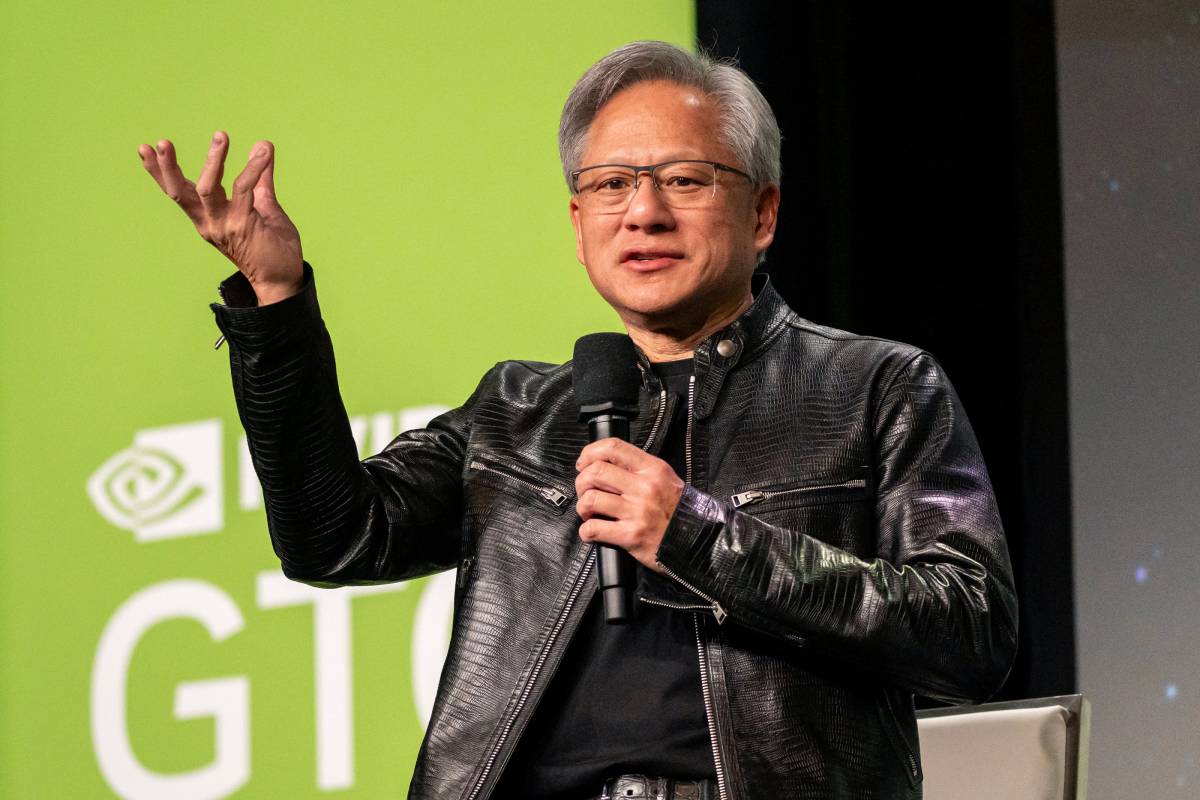
NVIDIA GTC 2026 Showcases AI Infrastructure for Industrial Era

At GTC 2026, Jensen Huang is expected to deliver a keynote outlining NVIDIA’s latest advancements in accelerated computing, AI chips, robotics, and enterprise AI platforms.

March 30, 2026
|

A major moment in the global AI economy is set to unfold as Jensen Huang and leading technology executives convene at NVIDIA GTC 2026. Hosted by NVIDIA, the summit will showcase next-generation AI infrastructure, signaling strategic shifts that could redefine enterprise computing, capital expenditure cycles, and geopolitical tech leadership.

At GTC 2026, Jensen Huang is expected to deliver a keynote outlining NVIDIA’s latest advancements in accelerated computing, AI chips, robotics, and enterprise AI platforms. The conference will feature global technology leaders, developers, policymakers, and corporate partners across industries.

The event comes amid surging demand for AI data center capacity and advanced GPUs. NVIDIA’s ecosystem including hyperscalers, automotive firms, healthcare innovators, and sovereign AI initiatives will present real-world deployments of AI at scale.

GTC has evolved from a developer-focused gathering into a global platform where product launches, infrastructure roadmaps, and strategic alliances influence markets and national AI competitiveness.

The development aligns with a broader trend across global markets where AI infrastructure has become the backbone of economic transformation. NVIDIA sits at the center of this shift, supplying the advanced processors powering generative AI models, autonomous systems, and scientific computing.

Over the past three years, capital spending on AI data centers has surged, reshaping semiconductor supply chains and cloud strategies. Governments from the United States to Europe and Asia are prioritizing sovereign AI capabilities, further boosting demand for high-performance computing systems.

GTC has historically served as NVIDIA’s stage for unveiling breakthrough architectures and long-term visions from GPU innovations to AI supercomputing clusters. In today’s geopolitical climate, product announcements carry strategic weight, particularly amid export controls and intensifying U.S.-China technology competition.

For executives and policymakers alike, GTC is no longer just a tech event it is a barometer of global AI momentum. NVIDIA leadership has framed the 2026 edition as a showcase of the “Age of AI,” emphasizing the convergence of hardware, software, and industry-specific AI applications. Jensen Huang has consistently argued that accelerated computing is foundational to every sector from manufacturing and finance to life sciences.

Market analysts expect updates on next-generation GPU architectures and AI enterprise platforms that could drive another wave of data center investment. Some project that NVIDIA’s roadmap announcements may influence cloud provider capex guidance and semiconductor market forecasts.

Industry experts note that partnerships unveiled at GTC often signal broader ecosystem alignment. Strategic collaborations with automotive, robotics, and telecommunications players could expand AI integration beyond data centers into edge and industrial environments.

For investors, GTC keynotes increasingly function as forward-looking earnings indicators. For global executives, the announcements at GTC 2026 may redefine digital transformation roadmaps. Companies evaluating AI adoption will closely watch infrastructure cost curves, performance benchmarks, and deployment frameworks unveiled at the event.

Investors could interpret product launches as signals of sustained AI demand, influencing semiconductor valuations and broader equity markets. From a policy standpoint, NVIDIA’s positioning underscores the strategic importance of chip supply chains. Governments crafting AI strategies must weigh infrastructure dependencies, export rules, and domestic manufacturing capabilities.

As AI becomes a national competitiveness issue, corporate product cycles and public policy objectives are increasingly intertwined. The immediate market reaction will depend on the scale of product innovation and ecosystem commitments revealed at GTC. Stakeholders should monitor capital expenditure guidance from hyperscalers, enterprise AI adoption metrics, and geopolitical responses to advanced chip deployments.

In the Age of AI, infrastructure is destiny and NVIDIA’s GTC 2026 may set the tone for the next chapter of global technological leadership.

Source: NVIDIA Newsroom
Date: March 2026

  • Featured tools
Figstack AI
Free

Figstack AI is an intelligent assistant for developers that explains code, generates docstrings, converts code between languages, and analyzes time complexity helping you work smarter, not harder.

#
Coding
Learn more
Hostinger Horizons
Freemium

Hostinger Horizons is an AI-powered platform that allows users to build and deploy custom web applications without writing code. It packs hosting, domain management and backend integration into a unified tool for rapid app creation.

#
Startup Tools
#
Coding
#
Project Management
Learn more

Learn more about future of AI

Join 80,000+ Ai enthusiast getting weekly updates on exciting AI tools.
Thank you! Your submission has been received!
Oops! Something went wrong while submitting the form.

NVIDIA GTC 2026 Showcases AI Infrastructure for Industrial Era

March 30, 2026

At GTC 2026, Jensen Huang is expected to deliver a keynote outlining NVIDIA’s latest advancements in accelerated computing, AI chips, robotics, and enterprise AI platforms.

A major moment in the global AI economy is set to unfold as Jensen Huang and leading technology executives convene at NVIDIA GTC 2026. Hosted by NVIDIA, the summit will showcase next-generation AI infrastructure, signaling strategic shifts that could redefine enterprise computing, capital expenditure cycles, and geopolitical tech leadership.

At GTC 2026, Jensen Huang is expected to deliver a keynote outlining NVIDIA’s latest advancements in accelerated computing, AI chips, robotics, and enterprise AI platforms. The conference will feature global technology leaders, developers, policymakers, and corporate partners across industries.

The event comes amid surging demand for AI data center capacity and advanced GPUs. NVIDIA’s ecosystem including hyperscalers, automotive firms, healthcare innovators, and sovereign AI initiatives will present real-world deployments of AI at scale.

GTC has evolved from a developer-focused gathering into a global platform where product launches, infrastructure roadmaps, and strategic alliances influence markets and national AI competitiveness.

The development aligns with a broader trend across global markets where AI infrastructure has become the backbone of economic transformation. NVIDIA sits at the center of this shift, supplying the advanced processors powering generative AI models, autonomous systems, and scientific computing.

Over the past three years, capital spending on AI data centers has surged, reshaping semiconductor supply chains and cloud strategies. Governments from the United States to Europe and Asia are prioritizing sovereign AI capabilities, further boosting demand for high-performance computing systems.

GTC has historically served as NVIDIA’s stage for unveiling breakthrough architectures and long-term visions from GPU innovations to AI supercomputing clusters. In today’s geopolitical climate, product announcements carry strategic weight, particularly amid export controls and intensifying U.S.-China technology competition.

For executives and policymakers alike, GTC is no longer just a tech event it is a barometer of global AI momentum. NVIDIA leadership has framed the 2026 edition as a showcase of the “Age of AI,” emphasizing the convergence of hardware, software, and industry-specific AI applications. Jensen Huang has consistently argued that accelerated computing is foundational to every sector from manufacturing and finance to life sciences.

Market analysts expect updates on next-generation GPU architectures and AI enterprise platforms that could drive another wave of data center investment. Some project that NVIDIA’s roadmap announcements may influence cloud provider capex guidance and semiconductor market forecasts.

Industry experts note that partnerships unveiled at GTC often signal broader ecosystem alignment. Strategic collaborations with automotive, robotics, and telecommunications players could expand AI integration beyond data centers into edge and industrial environments.

For investors, GTC keynotes increasingly function as forward-looking earnings indicators. For global executives, the announcements at GTC 2026 may redefine digital transformation roadmaps. Companies evaluating AI adoption will closely watch infrastructure cost curves, performance benchmarks, and deployment frameworks unveiled at the event.

Investors could interpret product launches as signals of sustained AI demand, influencing semiconductor valuations and broader equity markets. From a policy standpoint, NVIDIA’s positioning underscores the strategic importance of chip supply chains. Governments crafting AI strategies must weigh infrastructure dependencies, export rules, and domestic manufacturing capabilities.

As AI becomes a national competitiveness issue, corporate product cycles and public policy objectives are increasingly intertwined. The immediate market reaction will depend on the scale of product innovation and ecosystem commitments revealed at GTC. Stakeholders should monitor capital expenditure guidance from hyperscalers, enterprise AI adoption metrics, and geopolitical responses to advanced chip deployments.

In the Age of AI, infrastructure is destiny and NVIDIA’s GTC 2026 may set the tone for the next chapter of global technological leadership.

Source: NVIDIA Newsroom
Date: March 2026

Promote Your Tool

Copy Embed Code

Similar Blogs

April 17, 2026
|

Cybertruck-Style E-Bike Targets Urban Mobility

The newly introduced e-bike, often described as the “Cybertruck of e-bikes,” is designed with a rugged, futuristic aesthetic and enhanced performance capabilities aimed at replacing short car commutes.
Read more
April 17, 2026
|

Casely Reissues Power Bank Recall Over Safety

Casely has officially reannounced a recall of its portable power bank products originally flagged in 2025, following confirmation of a fatality associated with battery malfunction.
Read more
April 17, 2026
|

Telegram Scrutiny Over $21B Crypto Scam

Investigations highlight that Telegram has remained a hosting channel for a sprawling crypto scam ecosystem despite prior sanctions and enforcement actions targeting related entities.
Read more
April 17, 2026
|

Europe Launches Online Age Verification App

European regulators have rolled out a new age verification app designed to help online platforms confirm user eligibility for age-restricted content and services.
Read more
April 17, 2026
|

Meta Raises Quest 3 Prices on Supply Strain

Meta has officially raised prices on its Quest 3 and Quest 3S VR headsets, citing increased memory (RAM) costs amid global supply constraints.
Read more
April 17, 2026
|

Ozlo Sleepbuds See 30% Price Cut

Ozlo Sleepbuds, designed for noise-masking and sleep optimization, are currently being offered at nearly 30% off their standard retail price in a limited-time promotional campaign aligned with Mother’s Day gifting demand.
Read more