



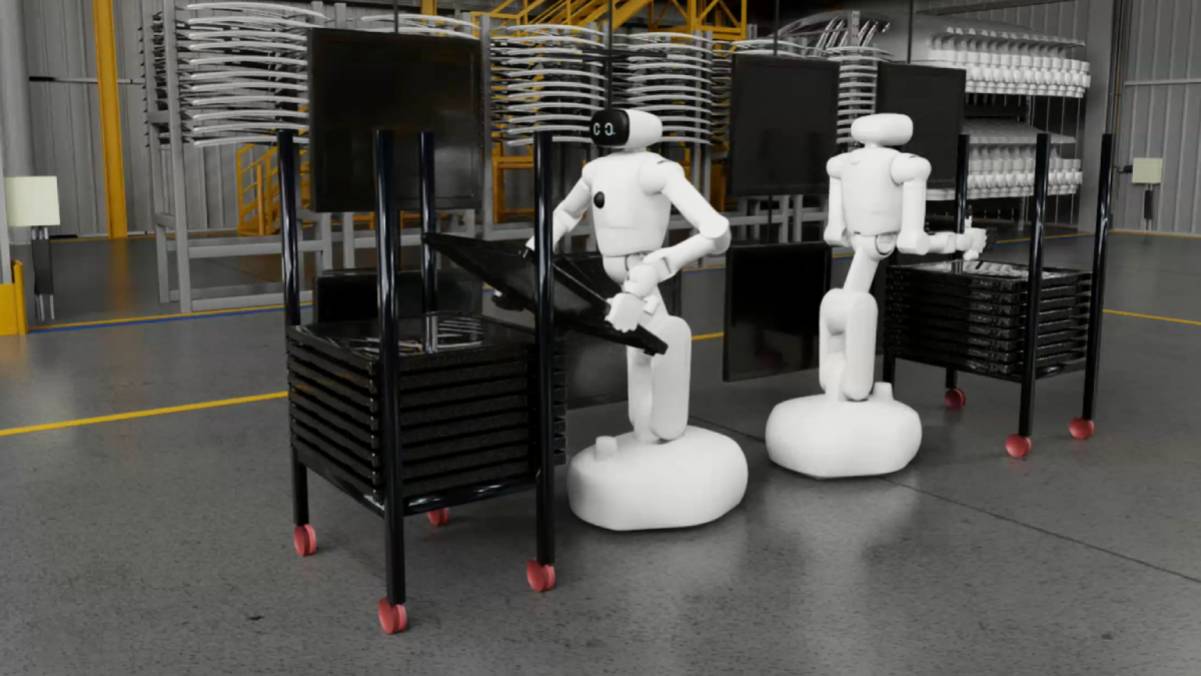
A major development unfolded as NVIDIA and LG Group announced plans to build an AI factory aimed at accelerating physical AI, intelligent mobility, and next-generation infrastructure development. The collaboration signals a strategic expansion of industrial AI capabilities and highlights growing global competition to commercialize AI-powered manufacturing and automation ecosystems.
NVIDIA and LG Group revealed a partnership focused on developing an AI factory designed to support physical AI applications, advanced mobility solutions, and enterprise-scale AI infrastructure. The initiative will leverage NVIDIA’s computing platforms and AI technologies alongside LG Group’s industrial, manufacturing, and technology capabilities.
Key stakeholders include manufacturers, automotive companies, infrastructure providers, enterprise customers, and government agencies monitoring industrial modernization efforts. The project reflects a broader trend toward integrating AI into real-world operational environments rather than limiting deployment to digital applications. The collaboration also strengthens South Korea’s position within the increasingly competitive global AI infrastructure landscape.
The announcement comes as nations and corporations race to build the infrastructure required for the next generation of artificial intelligence applications. While much of the AI boom has centered on generative models and software services, industry leaders are increasingly focused on “physical AI” systems capable of interacting with and optimizing real-world environments.
This shift includes autonomous mobility, smart factories, robotics, logistics networks, and industrial automation. AI factories are emerging as a key concept within this evolution, providing the computing power, simulation capabilities, and data processing infrastructure required to train and deploy intelligent systems at scale.
The development aligns with a broader trend across global markets where AI is moving beyond digital productivity tools and becoming embedded in critical industrial operations. As geopolitical competition intensifies around technology leadership, infrastructure investments are increasingly viewed as strategic national assets.
Industry analysts view the NVIDIA-LG partnership as part of a larger movement toward industrial-scale AI deployment. Experts note that while consumer-facing AI products have captured public attention, the most significant long-term economic value may emerge from automation, manufacturing optimization, and intelligent infrastructure systems.
Technology strategists argue that combining advanced computing platforms with industrial expertise creates a powerful framework for accelerating AI adoption in sectors traditionally slower to digitize. The collaboration is also seen as reinforcing NVIDIA’s position as a foundational supplier of AI infrastructure across multiple industries.
Market observers suggest that partnerships of this nature are becoming increasingly important as organizations seek integrated solutions that combine hardware, software, simulation tools, and deployment capabilities. Such alliances may play a critical role in determining which regions emerge as leaders in industrial AI development.
For businesses, the initiative highlights the growing importance of AI infrastructure as a competitive differentiator. Manufacturers, logistics providers, and mobility companies may face increasing pressure to modernize operations through AI-driven automation and intelligent systems.
Investors are likely to view the partnership as evidence that industrial AI remains a major growth opportunity beyond consumer applications. The collaboration could also stimulate demand for advanced semiconductors, cloud infrastructure, robotics, and enterprise software solutions.
From a policy perspective, governments may intensify efforts to support domestic AI infrastructure development and workforce modernization initiatives. The project underscores how AI competitiveness is increasingly tied to industrial capacity, supply chains, and technological sovereignty.
The next phase will focus on implementation, deployment, and commercialization of AI-powered industrial systems. Decision-makers will be watching how effectively the partnership translates infrastructure investment into measurable productivity gains and new business opportunities. The broader question remains whether physical AI can deliver the transformative economic impact many industry leaders anticipate as global competition for AI leadership continues to accelerate.
Source: NVIDIA Blog
Date: 9 June 2026


