
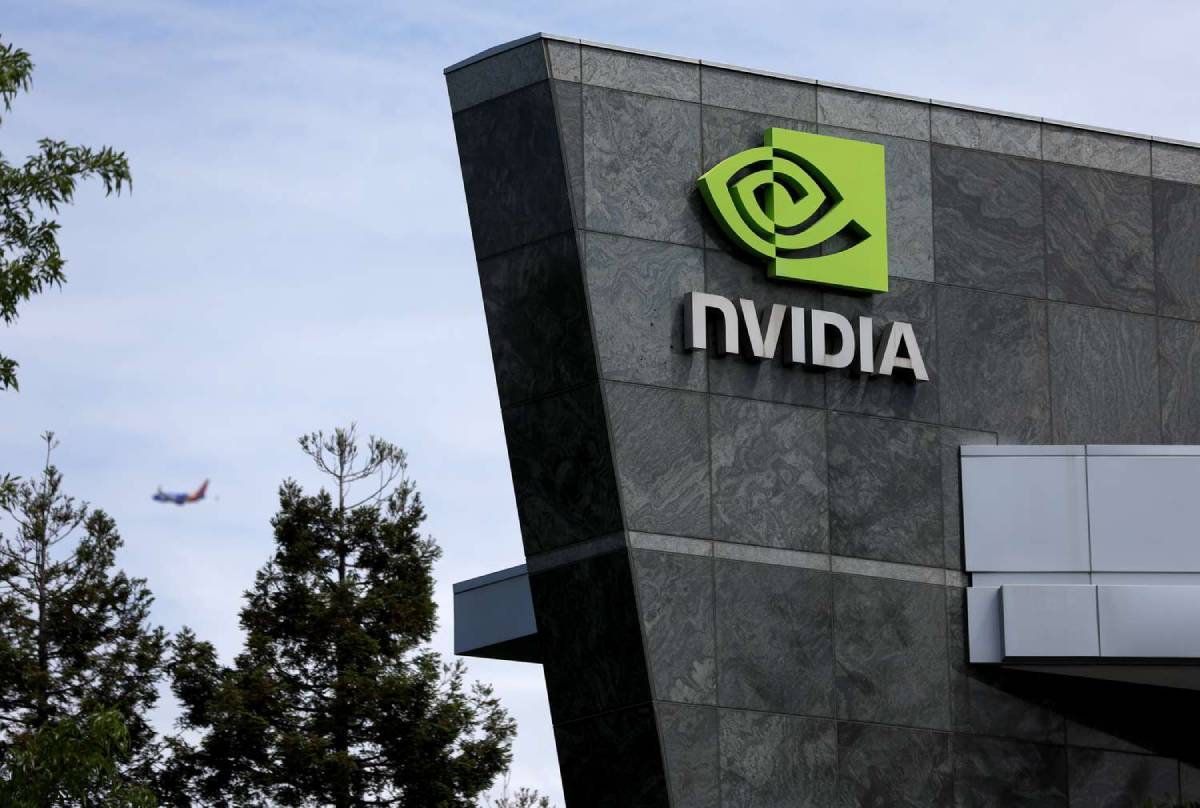
Nvidia’s Meteoric Rise Redefines the Balance of Power in the Global AI Economy

Looking ahead, decision-makers will watch whether Nvidia can sustain its lead as competitors and sovereign-backed chip programs scale up. Key uncertainties include regulatory intervention.

January 19, 2026
|

A major development unfolded as leading technology observers spotlighted Nvidia’s extraordinary rise from graphics specialist to the backbone of the global AI economy. The discussion underscores how Nvidia’s dominance in AI computing is reshaping markets, corporate strategies, and geopolitical competition around artificial intelligence infrastructure.

Nvidia’s transformation has been driven by its near-monopoly in advanced AI chips powering data centers, cloud platforms, and generative AI models. Demand for its GPUs has surged as enterprises, governments, and hyperscalers race to deploy large-scale AI systems. Industry analysts highlight Nvidia’s integrated ecosystem hardware, software, and developer tools as a critical competitive advantage. The company’s valuation surge reflects investor confidence in sustained AI-driven growth, while its supply chain influence has expanded across Asia, the U.S., and Europe. Meanwhile, competitors and policymakers are grappling with the strategic implications of Nvidia’s central role in AI infrastructure.

The development aligns with a broader trend across global markets where artificial intelligence has become a core driver of economic and strategic power. Over the past decade, Nvidia quietly positioned itself at the intersection of gaming, high-performance computing, and machine learning. As generative AI exploded into the mainstream, Nvidia’s GPUs emerged as the default engine for training and deploying advanced models. This shift has coincided with intensifying U.S.–China technology competition, export controls on advanced chips, and rising concerns about supply chain concentration. Historically, platform-defining companies such as Intel in CPUs or Microsoft in operating systems have shaped entire eras of technology. Nvidia’s rise suggests AI hardware may now represent the most consequential platform of the next economic cycle.

Technology analysts increasingly describe Nvidia as the “infrastructure layer” of the AI revolution. Commentators note that while software breakthroughs often capture headlines, it is Nvidia’s compute power that enables them at scale. Industry experts argue that Nvidia’s CUDA software ecosystem has locked in developers, making switching costs prohibitively high for rivals. Academic and market observers also caution that such dominance could attract regulatory scrutiny over time, particularly as governments assess AI’s societal impact. Corporate leaders emphasize that Nvidia’s roadmap spanning next-generation chips and AI-optimized systems positions it years ahead of competitors. The consensus among experts is that Nvidia’s influence now extends beyond technology into economics, national security, and global industrial policy.

For global executives, Nvidia’s dominance could redefine procurement strategies, capital allocation, and digital transformation timelines. Companies reliant on AI must navigate supply constraints and pricing power concentrated in a single vendor. Investors face both opportunity and risk as AI infrastructure becomes increasingly central to market valuations. Policymakers, meanwhile, must balance innovation with resilience, considering whether overreliance on one company poses strategic vulnerabilities. Governments may accelerate domestic chip initiatives, subsidies, and partnerships to counterbalance Nvidia’s influence. The shift underscores how AI hardware has become a policy issue, not just a commercial one.

Looking ahead, decision-makers will watch whether Nvidia can sustain its lead as competitors and sovereign-backed chip programs scale up. Key uncertainties include regulatory intervention, technological disruption, and geopolitical constraints on chip exports. What remains clear is that Nvidia has moved from industry player to structural pillar of the AI age one whose trajectory will shape markets, policies, and innovation strategies for years to come.

Source & Date

Source: Daily Northwestern
Date: January 15, 2026

  • Featured tools
Murf Ai
Free

Murf AI Review – Advanced AI Voice Generator for Realistic Voiceovers

#
Text to Speech
Learn more
Copy Ai
Free

Copy AI is one of the most popular AI writing tools designed to help professionals create high-quality content quickly. Whether you are a product manager drafting feature descriptions or a marketer creating ad copy, Copy AI can save hours of work while maintaining creativity and tone.

#
Copywriting
Learn more

Learn more about future of AI

Join 80,000+ Ai enthusiast getting weekly updates on exciting AI tools.
Thank you! Your submission has been received!
Oops! Something went wrong while submitting the form.

Nvidia’s Meteoric Rise Redefines the Balance of Power in the Global AI Economy

January 19, 2026

Looking ahead, decision-makers will watch whether Nvidia can sustain its lead as competitors and sovereign-backed chip programs scale up. Key uncertainties include regulatory intervention.

A major development unfolded as leading technology observers spotlighted Nvidia’s extraordinary rise from graphics specialist to the backbone of the global AI economy. The discussion underscores how Nvidia’s dominance in AI computing is reshaping markets, corporate strategies, and geopolitical competition around artificial intelligence infrastructure.

Nvidia’s transformation has been driven by its near-monopoly in advanced AI chips powering data centers, cloud platforms, and generative AI models. Demand for its GPUs has surged as enterprises, governments, and hyperscalers race to deploy large-scale AI systems. Industry analysts highlight Nvidia’s integrated ecosystem hardware, software, and developer tools as a critical competitive advantage. The company’s valuation surge reflects investor confidence in sustained AI-driven growth, while its supply chain influence has expanded across Asia, the U.S., and Europe. Meanwhile, competitors and policymakers are grappling with the strategic implications of Nvidia’s central role in AI infrastructure.

The development aligns with a broader trend across global markets where artificial intelligence has become a core driver of economic and strategic power. Over the past decade, Nvidia quietly positioned itself at the intersection of gaming, high-performance computing, and machine learning. As generative AI exploded into the mainstream, Nvidia’s GPUs emerged as the default engine for training and deploying advanced models. This shift has coincided with intensifying U.S.–China technology competition, export controls on advanced chips, and rising concerns about supply chain concentration. Historically, platform-defining companies such as Intel in CPUs or Microsoft in operating systems have shaped entire eras of technology. Nvidia’s rise suggests AI hardware may now represent the most consequential platform of the next economic cycle.

Technology analysts increasingly describe Nvidia as the “infrastructure layer” of the AI revolution. Commentators note that while software breakthroughs often capture headlines, it is Nvidia’s compute power that enables them at scale. Industry experts argue that Nvidia’s CUDA software ecosystem has locked in developers, making switching costs prohibitively high for rivals. Academic and market observers also caution that such dominance could attract regulatory scrutiny over time, particularly as governments assess AI’s societal impact. Corporate leaders emphasize that Nvidia’s roadmap spanning next-generation chips and AI-optimized systems positions it years ahead of competitors. The consensus among experts is that Nvidia’s influence now extends beyond technology into economics, national security, and global industrial policy.

For global executives, Nvidia’s dominance could redefine procurement strategies, capital allocation, and digital transformation timelines. Companies reliant on AI must navigate supply constraints and pricing power concentrated in a single vendor. Investors face both opportunity and risk as AI infrastructure becomes increasingly central to market valuations. Policymakers, meanwhile, must balance innovation with resilience, considering whether overreliance on one company poses strategic vulnerabilities. Governments may accelerate domestic chip initiatives, subsidies, and partnerships to counterbalance Nvidia’s influence. The shift underscores how AI hardware has become a policy issue, not just a commercial one.

Looking ahead, decision-makers will watch whether Nvidia can sustain its lead as competitors and sovereign-backed chip programs scale up. Key uncertainties include regulatory intervention, technological disruption, and geopolitical constraints on chip exports. What remains clear is that Nvidia has moved from industry player to structural pillar of the AI age one whose trajectory will shape markets, policies, and innovation strategies for years to come.

Source & Date

Source: Daily Northwestern
Date: January 15, 2026

Promote Your Tool

Copy Embed Code

Similar Blogs

January 28, 2026
|

Viral AI Assistant Rebrands as Moltbot, Signaling the Rise of Personal AI Agents

Clawdbot, now renamed Moltbot, gained rapid traction through social media-driven adoption, positioning itself as an always-on personal AI assistant capable of managing tasks, context, and long-term memory.
Read more
January 28, 2026
|

Pinterest Reshapes Workforce Amid AI Transformation, Cuts 700–800 Roles

The layoffs, affecting roughly 10–15% of Pinterest’s workforce, are part of a broader plan to integrate AI tools into content moderation, recommendation engines, and operational functions.
Read more
January 28, 2026
|

Markets Brace as China Prepares Next Generation AI Amid DeepSeek Fallout

Chinese tech firms are reportedly advancing AI models with capabilities that could rival or surpass previous industry benchmarks, drawing scrutiny from international regulators and market analysts.
Read more
January 28, 2026
|

Anthropic CEO Warns of Imminent AI Risks, Urges Global Action

The Anthropic CEO stressed that emerging AI technologies are approaching thresholds where misaligned behavior could have significant societal and economic consequences. The warning comes amid rapid expansion of generative AI.
Read more
January 28, 2026
|

AI Boom to Create Winners, Disruptors, CEO Warns Market Turbulence

A major development unfolded today as a leading technology executive cautioned that the accelerating AI boom will simultaneously create significant winners and widespread disruption across industries.
Read more
January 28, 2026
|

AI Pioneer Geoffrey Hinton Warns of Risks, Urges Deployment Caution

A major development unfolded today as Geoffrey Hinton, widely regarded as the “Godfather of AI,” publicly expressed deep concerns over the technology he helped pioneer, warning that advanced AI systems.
Read more