
Office Space Software Reshapes Workplace Strategy

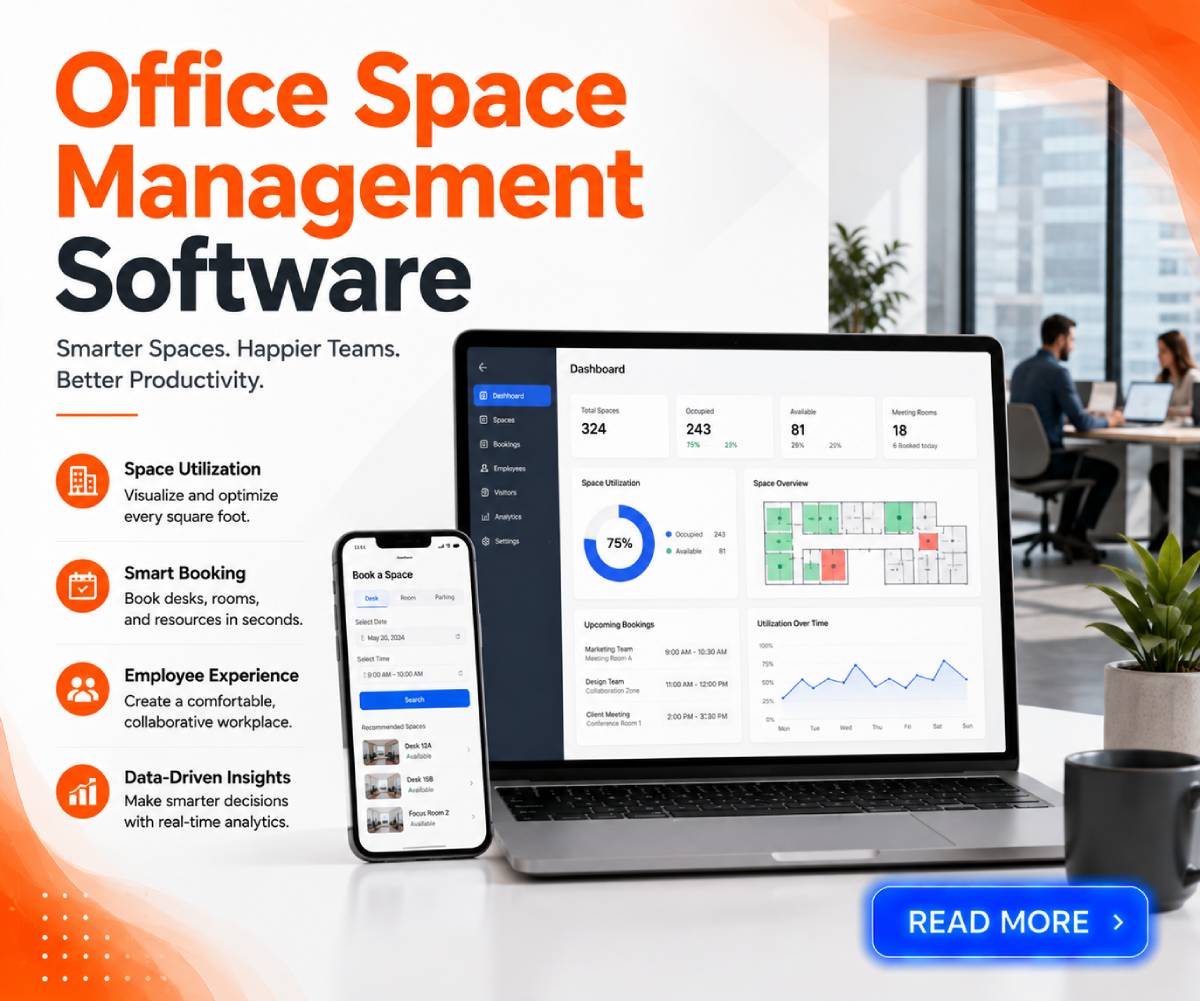
Modern office space management platforms bring together tools for desk booking, meeting-room scheduling, workplace reservations, occupancy monitoring and facility coordination.

August 12, 2026
|

Office space management software is becoming an increasingly important tool for organizations adapting to hybrid work, flexible schedules and changing workplace requirements. By helping companies manage desks, rooms, facilities and workplace utilization, these platforms are supporting a broader shift toward data-driven real estate and workplace strategies.

Modern office space management platforms bring together tools for desk booking, meeting-room scheduling, workplace reservations, occupancy monitoring and facility coordination. These capabilities allow employees to reserve workplace resources while giving organizations greater visibility into how offices are being used.

The category is particularly relevant to companies operating hybrid or flexible work models, where employee attendance can vary significantly from day to day. Digital scheduling can help reduce conflicts and improve access to shared resources.

For facilities and real-estate teams, utilization data can also support decisions involving office layouts, space allocation and operational planning. The growing emphasis on workplace analytics is transforming office management from an administrative function into a more strategic component of corporate operations.

The workplace has undergone significant structural change as companies adopt hybrid and flexible working arrangements. Offices that were once designed around predictable daily attendance must now accommodate fluctuating employee populations, shared desks, flexible teams and increasingly collaborative work patterns.

This has created a new challenge for corporate real-estate leaders: maintaining effective workplaces without paying for large amounts of underutilized space. Office space management technology provides a way to address that challenge through digital scheduling and utilization insights.

The category also reflects the growing convergence between workplace technology and corporate real-estate management. Instead of relying exclusively on spreadsheets, manual reservations and static floor plans, organizations can use centralized systems to coordinate workplace resources.

For executives, the strategic value extends beyond convenience. Better space utilization can potentially influence real-estate costs, employee experience, workplace planning and long-term decisions about office footprints.

The increasing adoption of office space management technology reflects a broader shift toward measurable workplace operations. For facilities managers, having centralized information about desk availability, meeting-room demand and occupancy patterns can make daily planning more predictable.

From an employee perspective, reservation technology can provide greater flexibility by allowing workers to identify available desks or meeting spaces before arriving at the office. This becomes particularly valuable when organizations do not maintain permanently assigned seating.

For corporate real-estate leaders, utilization analytics may provide a more detailed understanding of how physical space supports business activity. This information can help inform decisions about redesigning floors, consolidating unused areas or expanding collaborative spaces.

However, executives must also consider employee privacy, data governance and workplace culture. Excessive monitoring of occupancy or employee movements could create concerns if data is collected without clear policies and appropriate safeguards.

For businesses, office space management software can improve coordination of shared workplace resources while potentially reducing inefficient use of physical space. Real-estate teams can use utilization information to support more informed decisions about office capacity and future investments.

For employees, easier access to desks, meeting rooms and workplace services can improve the experience of hybrid work. Organizations may also benefit from greater visibility into workplace demand during peak periods.

For policymakers and corporate leaders, workplace data governance is becoming increasingly relevant. Companies need clear policies governing what information is collected, how long it is retained and who can access it.

The strategic priority should therefore be balancing operational efficiency with employee trust, privacy and flexibility. Office space management technology is likely to become increasingly connected with broader workplace, facilities and corporate real-estate systems. Future platforms may place greater emphasis on predictive analytics, automated space planning and intelligent resource allocation. As hybrid work continues evolving, organizations will need better ways to match physical office capacity with actual employee demand, making workplace data an increasingly valuable strategic asset.

Source: Crozdesk
Date: August 12, 2026

  • Featured tools
Scalenut AI
Free

Scalenut AI is an all-in-one SEO content platform that combines AI-driven writing, keyword research, competitor insights, and optimization tools to help you plan, create, and rank content.

#
SEO
Learn more
Beautiful AI
Free

Beautiful AI is an AI-powered presentation platform that automates slide design and formatting, enabling users to create polished, on-brand presentations quickly.

#
Presentation
Learn more

Learn more about future of AI

Join 80,000+ Ai enthusiast getting weekly updates on exciting AI tools.
Thank you! Your submission has been received!
Oops! Something went wrong while submitting the form.

Office Space Software Reshapes Workplace Strategy

August 12, 2026

Modern office space management platforms bring together tools for desk booking, meeting-room scheduling, workplace reservations, occupancy monitoring and facility coordination.

Office space management software is becoming an increasingly important tool for organizations adapting to hybrid work, flexible schedules and changing workplace requirements. By helping companies manage desks, rooms, facilities and workplace utilization, these platforms are supporting a broader shift toward data-driven real estate and workplace strategies.

Modern office space management platforms bring together tools for desk booking, meeting-room scheduling, workplace reservations, occupancy monitoring and facility coordination. These capabilities allow employees to reserve workplace resources while giving organizations greater visibility into how offices are being used.

The category is particularly relevant to companies operating hybrid or flexible work models, where employee attendance can vary significantly from day to day. Digital scheduling can help reduce conflicts and improve access to shared resources.

For facilities and real-estate teams, utilization data can also support decisions involving office layouts, space allocation and operational planning. The growing emphasis on workplace analytics is transforming office management from an administrative function into a more strategic component of corporate operations.

The workplace has undergone significant structural change as companies adopt hybrid and flexible working arrangements. Offices that were once designed around predictable daily attendance must now accommodate fluctuating employee populations, shared desks, flexible teams and increasingly collaborative work patterns.

This has created a new challenge for corporate real-estate leaders: maintaining effective workplaces without paying for large amounts of underutilized space. Office space management technology provides a way to address that challenge through digital scheduling and utilization insights.

The category also reflects the growing convergence between workplace technology and corporate real-estate management. Instead of relying exclusively on spreadsheets, manual reservations and static floor plans, organizations can use centralized systems to coordinate workplace resources.

For executives, the strategic value extends beyond convenience. Better space utilization can potentially influence real-estate costs, employee experience, workplace planning and long-term decisions about office footprints.

The increasing adoption of office space management technology reflects a broader shift toward measurable workplace operations. For facilities managers, having centralized information about desk availability, meeting-room demand and occupancy patterns can make daily planning more predictable.

From an employee perspective, reservation technology can provide greater flexibility by allowing workers to identify available desks or meeting spaces before arriving at the office. This becomes particularly valuable when organizations do not maintain permanently assigned seating.

For corporate real-estate leaders, utilization analytics may provide a more detailed understanding of how physical space supports business activity. This information can help inform decisions about redesigning floors, consolidating unused areas or expanding collaborative spaces.

However, executives must also consider employee privacy, data governance and workplace culture. Excessive monitoring of occupancy or employee movements could create concerns if data is collected without clear policies and appropriate safeguards.

For businesses, office space management software can improve coordination of shared workplace resources while potentially reducing inefficient use of physical space. Real-estate teams can use utilization information to support more informed decisions about office capacity and future investments.

For employees, easier access to desks, meeting rooms and workplace services can improve the experience of hybrid work. Organizations may also benefit from greater visibility into workplace demand during peak periods.

For policymakers and corporate leaders, workplace data governance is becoming increasingly relevant. Companies need clear policies governing what information is collected, how long it is retained and who can access it.

The strategic priority should therefore be balancing operational efficiency with employee trust, privacy and flexibility. Office space management technology is likely to become increasingly connected with broader workplace, facilities and corporate real-estate systems. Future platforms may place greater emphasis on predictive analytics, automated space planning and intelligent resource allocation. As hybrid work continues evolving, organizations will need better ways to match physical office capacity with actual employee demand, making workplace data an increasingly valuable strategic asset.

Source: Crozdesk
Date: August 12, 2026

Promote Your Tool

Copy Embed Code

Similar Blogs

August 12, 2026
|

Arting AI Advances Generative Visual Creation

Arting AI brings several creative capabilities into a unified environment, including text-to-image and image-to-image generation, image enhancement.
Read more
August 12, 2026
|

Loomly Strengthens Social Media Management Tools

Loomly brings core social media activities into a unified workspace, covering content calendars, post creation, scheduling, collaboration and publishing.
Read more
August 12, 2026
|

Omada Health Expands Digital Care Solutions

Omada reported first-quarter 2026 revenue of $78 million, representing 42% year-over-year growth. Total members reached 1.02 million, up 51%, while its net loss narrowed to $3 million from $9 million a year earlier. Adjusted EBITDA improved to $1 million from a $4 million loss.
Read more
August 12, 2026
|

SentinelOne Strengthens AI Enterprise Cybersecurity

SentinelOne's Singularity Platform brings together endpoint security, cloud security, identity protection, security operations and AI security within a unified architecture.
Read more
August 12, 2026
|

Easelly Strengthens Visual Team Communication

Easelly provides a drag-and-drop editor supported by templates, icons, illustrations, images, charts and other visual assets. Users can create infographics, presentations, reports, timelines, posters and educational materials through a browser-based workflow.
Read more
August 12, 2026
|

ManageEngine Strengthens Enterprise IT Management

ManageEngine Endpoint Central operates within the unified endpoint management and enterprise IT operations market, supporting organizations responsible for managing computers, mobile devices, applications, and other endpoints.
Read more