
Portable $104 Second-Screen Boost for Remote Work

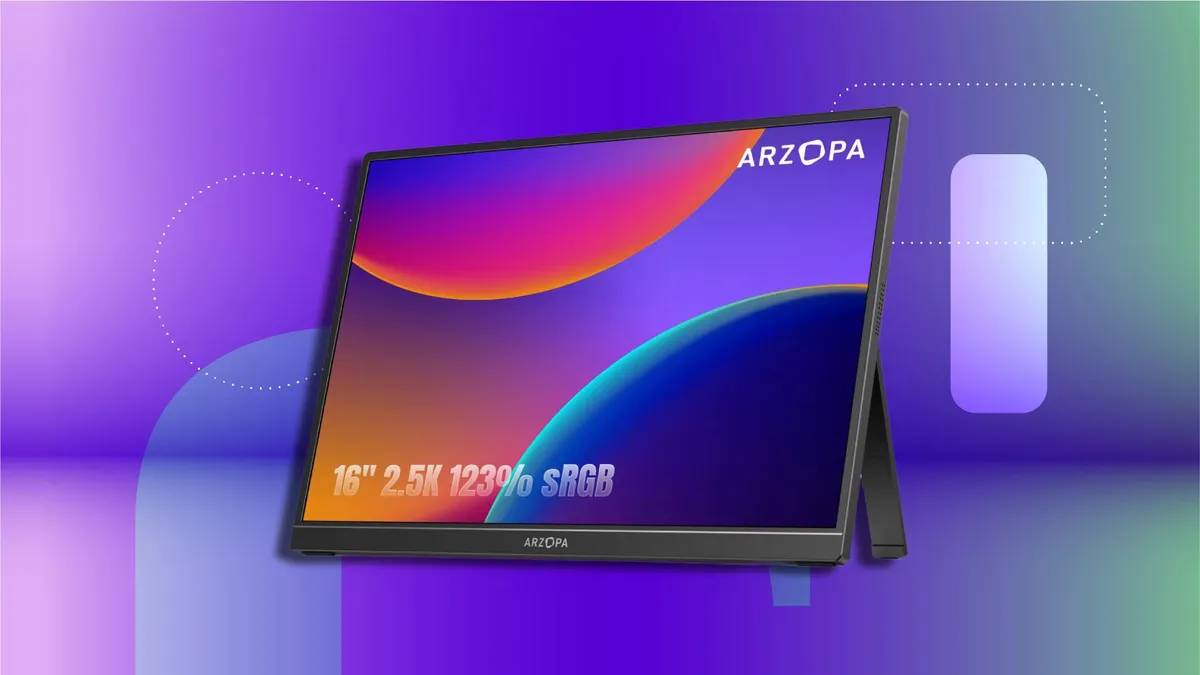
The deal features a portable second-screen monitor priced at $104, aimed at users who require additional display capacity for laptops, tablets, or mobile setups. The product is positioned for plug-and-play usability, supporting professionals working across multiple applications simultaneously.

April 23, 2026
|
Image Source: CNET

A discounted $104 portable monitor deal is drawing attention among remote workers and mobile professionals seeking expanded screen real estate. The offering reflects rising demand for flexible productivity tools in hybrid work environments, where portability and multi-screen setups are increasingly essential for efficiency, digital workflows, and on-the-go computing.

The deal features a portable second-screen monitor priced at $104, aimed at users who require additional display capacity for laptops, tablets, or mobile setups. The product is positioned for plug-and-play usability, supporting professionals working across multiple applications simultaneously.

Retail discounting highlights competitive pricing in the consumer electronics segment, where portable displays have become more accessible. The offering targets freelancers, students, and remote employees who rely on multitasking across spreadsheets, video conferencing, and creative tools. The timing aligns with ongoing seasonal promotions in global electronics retail markets, driving short-term demand spikes in productivity hardware categories.

The growing popularity of portable monitors reflects a broader transformation in work culture driven by hybrid and remote work models. Over the past few years, demand for flexible workspace solutions has surged as professionals seek to replicate multi-screen office setups outside traditional environments.

Portable displays have evolved from niche accessories into mainstream productivity tools, enabled by improvements in display technology, reduced power consumption, and USB-C connectivity standards. This shift is also tied to the expansion of the gig economy and digital-first workflows, where multitasking efficiency directly impacts output.

Globally, hardware manufacturers are competing in a saturated consumer electronics market, using aggressive pricing strategies and promotional deals to capture attention. The $104 price point reflects a broader trend of democratizing productivity technology, making multi-display setups accessible beyond enterprise users to individual consumers and students.

Industry analysts suggest that portable monitors are becoming a key growth segment within the broader personal computing accessories market. As hybrid work stabilizes globally, demand is shifting from basic laptop upgrades to workflow-enhancing peripherals that improve productivity without requiring full desktop setups.

Technology observers note that affordability is a major driver of adoption, with sub-$150 pricing opening the category to mass-market consumers. Retail analysts also highlight that promotional deals play a critical role in accelerating product visibility in highly competitive electronics segments.

Manufacturers and retailers emphasize plug-and-play compatibility, lightweight design, and cross-device functionality as key selling points. While no official corporate statements are associated with the specific deal, industry commentary consistently frames portable monitors as part of a broader ecosystem of remote productivity tools, alongside docking stations, wireless peripherals, and cloud-based collaboration platforms.

For businesses, the increasing affordability of portable monitors supports greater workforce flexibility, particularly in remote and hybrid environments. Companies may see improved productivity as employees adopt multi-screen workflows without requiring permanent office infrastructure.

For consumers, lower pricing reduces barriers to entry for productivity-enhancing tools, potentially reshaping expectations around digital work efficiency. Retailers benefit from rising demand in accessory categories that complement laptop and mobile ecosystems.

From a broader market perspective, the trend reinforces ongoing commoditization in consumer electronics, where value is increasingly driven by usability and ecosystem compatibility rather than standalone hardware innovation. This may pressure manufacturers to differentiate through software integration and bundled productivity solutions.

Looking ahead, portable monitor adoption is expected to expand further as hybrid work remains entrenched across global industries. Future competition will likely focus on higher resolution, improved portability, and seamless multi-device integration. Pricing pressure may continue as more brands enter the segment. The key question for the market is whether productivity peripherals become standard workplace equipment rather than optional accessories.

Source: CNET
Date: April 23, 2026

  • Featured tools
Upscayl AI
Free

Upscayl AI is a free, open-source AI-powered tool that enhances and upscales images to higher resolutions. It transforms blurry or low-quality visuals into sharp, detailed versions with ease.

#
Productivity
Learn more
Figstack AI
Free

Figstack AI is an intelligent assistant for developers that explains code, generates docstrings, converts code between languages, and analyzes time complexity helping you work smarter, not harder.

#
Coding
Learn more

Learn more about future of AI

Join 80,000+ Ai enthusiast getting weekly updates on exciting AI tools.
Thank you! Your submission has been received!
Oops! Something went wrong while submitting the form.

Portable $104 Second-Screen Boost for Remote Work

April 23, 2026

The deal features a portable second-screen monitor priced at $104, aimed at users who require additional display capacity for laptops, tablets, or mobile setups. The product is positioned for plug-and-play usability, supporting professionals working across multiple applications simultaneously.

Image Source: CNET

A discounted $104 portable monitor deal is drawing attention among remote workers and mobile professionals seeking expanded screen real estate. The offering reflects rising demand for flexible productivity tools in hybrid work environments, where portability and multi-screen setups are increasingly essential for efficiency, digital workflows, and on-the-go computing.

The deal features a portable second-screen monitor priced at $104, aimed at users who require additional display capacity for laptops, tablets, or mobile setups. The product is positioned for plug-and-play usability, supporting professionals working across multiple applications simultaneously.

Retail discounting highlights competitive pricing in the consumer electronics segment, where portable displays have become more accessible. The offering targets freelancers, students, and remote employees who rely on multitasking across spreadsheets, video conferencing, and creative tools. The timing aligns with ongoing seasonal promotions in global electronics retail markets, driving short-term demand spikes in productivity hardware categories.

The growing popularity of portable monitors reflects a broader transformation in work culture driven by hybrid and remote work models. Over the past few years, demand for flexible workspace solutions has surged as professionals seek to replicate multi-screen office setups outside traditional environments.

Portable displays have evolved from niche accessories into mainstream productivity tools, enabled by improvements in display technology, reduced power consumption, and USB-C connectivity standards. This shift is also tied to the expansion of the gig economy and digital-first workflows, where multitasking efficiency directly impacts output.

Globally, hardware manufacturers are competing in a saturated consumer electronics market, using aggressive pricing strategies and promotional deals to capture attention. The $104 price point reflects a broader trend of democratizing productivity technology, making multi-display setups accessible beyond enterprise users to individual consumers and students.

Industry analysts suggest that portable monitors are becoming a key growth segment within the broader personal computing accessories market. As hybrid work stabilizes globally, demand is shifting from basic laptop upgrades to workflow-enhancing peripherals that improve productivity without requiring full desktop setups.

Technology observers note that affordability is a major driver of adoption, with sub-$150 pricing opening the category to mass-market consumers. Retail analysts also highlight that promotional deals play a critical role in accelerating product visibility in highly competitive electronics segments.

Manufacturers and retailers emphasize plug-and-play compatibility, lightweight design, and cross-device functionality as key selling points. While no official corporate statements are associated with the specific deal, industry commentary consistently frames portable monitors as part of a broader ecosystem of remote productivity tools, alongside docking stations, wireless peripherals, and cloud-based collaboration platforms.

For businesses, the increasing affordability of portable monitors supports greater workforce flexibility, particularly in remote and hybrid environments. Companies may see improved productivity as employees adopt multi-screen workflows without requiring permanent office infrastructure.

For consumers, lower pricing reduces barriers to entry for productivity-enhancing tools, potentially reshaping expectations around digital work efficiency. Retailers benefit from rising demand in accessory categories that complement laptop and mobile ecosystems.

From a broader market perspective, the trend reinforces ongoing commoditization in consumer electronics, where value is increasingly driven by usability and ecosystem compatibility rather than standalone hardware innovation. This may pressure manufacturers to differentiate through software integration and bundled productivity solutions.

Looking ahead, portable monitor adoption is expected to expand further as hybrid work remains entrenched across global industries. Future competition will likely focus on higher resolution, improved portability, and seamless multi-device integration. Pricing pressure may continue as more brands enter the segment. The key question for the market is whether productivity peripherals become standard workplace equipment rather than optional accessories.

Source: CNET
Date: April 23, 2026

Promote Your Tool

Copy Embed Code

Similar Blogs

April 23, 2026
|

OpenAI Lets Enterprises Deploy Custom AI Agents

OpenAI has expanded its enterprise capabilities by enabling organizations to create custom AI agents designed to perform tasks autonomously within team environments.
Read more
April 23, 2026
|

X Integrates Grok AI for Personalized Timelines

X will reportedly enable Grok to assist in curating user timelines, blending traditional ranking algorithms with generative AI-based recommendations.
Read more
April 23, 2026
|

Portable $104 Second-Screen Boost for Remote Work

The deal features a portable second-screen monitor priced at $104, aimed at users who require additional display capacity for laptops, tablets, or mobile setups. The product is positioned for plug-and-play usability, supporting professionals working across multiple applications simultaneously.
Read more
April 23, 2026
|

Tesla Revenue Grows on AI, Robotics Push

Tesla posted stronger revenue growth in its latest quarterly results, supported by steady vehicle deliveries, expansion in energy storage, and early progress in AI-driven initiatives.
Read more
April 23, 2026
|

Dreame Expands From Vacuums to Hypercars Ambition

Dreame, originally known for AI-powered vacuum cleaners and smart home devices, is positioning itself for expansion into high-end engineering domains, including electric vehicles and potentially hypercars.
Read more
April 23, 2026
|

Google Adds AI Overviews to Gmail Communication

Google is rolling out AI-powered summaries in Gmail for business users, enabling automatic overviews of long email threads and complex conversations.
Read more