
Samsung Accelerates AI Smart TV Hardware Push

Samsung showcased its upcoming AI-enabled TV lineup featuring advanced personalization, real-time content optimization, and enhanced voice and visual recognition capabilities.

April 27, 2026
|
Image Source: Samsung Newsroom (Malaysia)

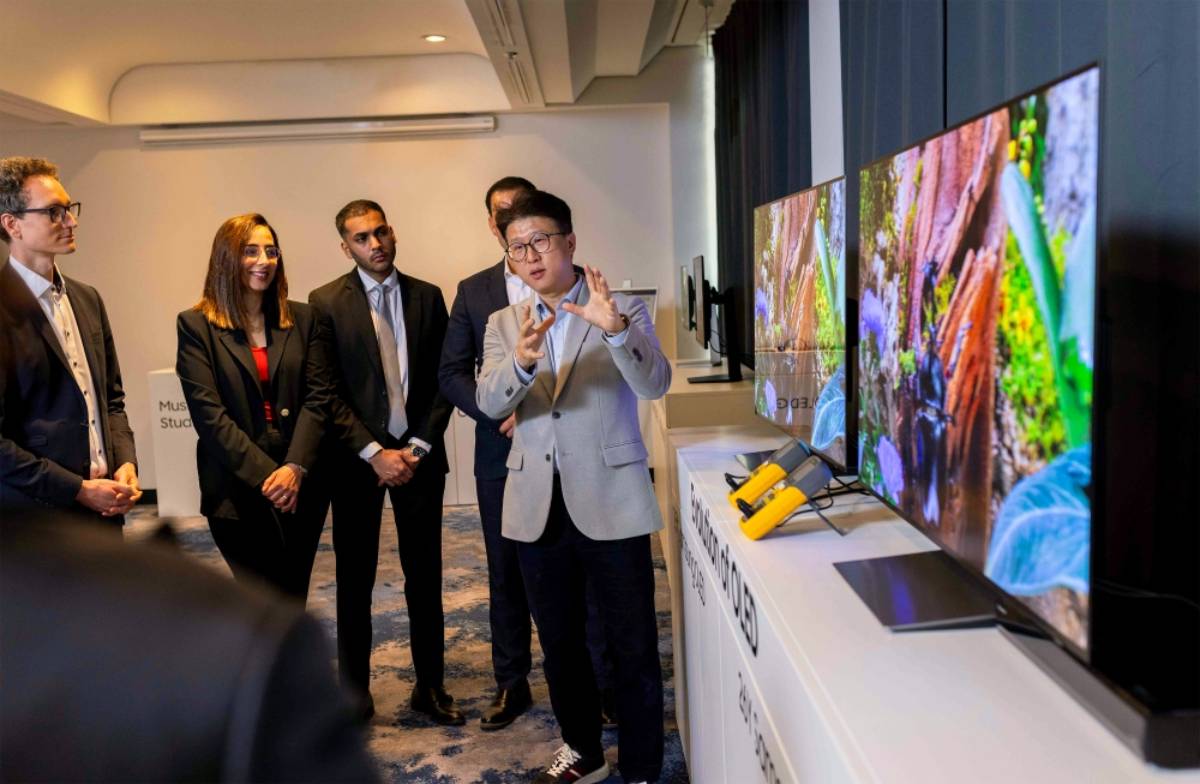
A major development unfolded as Samsung Electronics unveiled its 2026 AI-powered television innovations at a European technology seminar, signalling a strategic shift toward deeply integrated AI consumer electronics. The move underscores intensifying competition in smart home ecosystems, with implications for global display markets, AI-driven content delivery, and next-generation connected living platforms.

Samsung showcased its upcoming AI-enabled TV lineup featuring advanced personalization, real-time content optimization, and enhanced voice and visual recognition capabilities. The demonstration highlighted how AI models embedded directly into devices will redefine user interaction and home entertainment experiences.

The rollout is expected to begin in 2026 across select global markets, targeting premium and mid-tier segments. The initiative strengthens Samsung’s position against rivals such as LG Electronics and emerging AI-driven smart device ecosystems.

The company emphasized tighter integration between hardware, software, and cloud-based AI services, aiming to build a unified smart home platform centered on intelligent displays.

The development aligns with a broader trend across global markets where consumer electronics companies are embedding artificial intelligence directly into core hardware products. Smart TVs have evolved from passive display systems into interactive computing hubs, increasingly serving as control points for connected home ecosystems.

Over the past decade, Samsung has consistently invested in display innovation, semiconductor integration, and smart platform development. The latest AI push reflects a strategic shift from feature-based upgrades to intelligence-driven user experiences.

Geopolitically, the expansion of AI-enabled consumer devices is also tied to supply chain resilience and semiconductor leadership, particularly in Asia’s electronics manufacturing hubs. As competition intensifies, companies are racing to define standards for AI-native home environments, where devices anticipate user needs rather than respond to commands.

Industry analysts suggest that Samsung’s AI TV strategy reflects a broader convergence between entertainment, computing, and ambient intelligence. Experts note that AI-driven personalization could significantly increase user engagement, advertising precision, and subscription-based content monetization.

Technology strategists highlight that embedding AI at the device level reduces dependency on cloud latency, improving responsiveness and enabling real-time contextual adaptation. This could become a key differentiator in premium consumer electronics markets.

Market observers also point out that the smart TV segment is becoming a critical battleground for ecosystem control, as companies compete to anchor the “digital living room.” However, analysts caution that data privacy regulations and AI transparency requirements may shape deployment strategies, particularly in European markets where regulatory scrutiny remains high.

For global executives, Samsung’s move signals a shift toward AI-native consumer ecosystems where hardware becomes a gateway to recurring digital services. This could reshape revenue models across the consumer electronics industry, particularly in advertising, subscriptions, and smart home integration.

Investors may view the development as a long-term growth driver, but also as a capital-intensive transition requiring sustained R&D and supply chain coordination. From a policy perspective, AI-enabled televisions raise questions around data collection, user profiling, and algorithmic transparency. Regulators may increasingly examine how embedded AI systems process behavioral data within domestic environments, potentially influencing future compliance frameworks for smart devices.

Looking ahead, the key focus will be Samsung’s ability to scale AI TV adoption across price segments while maintaining performance differentiation. Competitive responses from LG and Chinese manufacturers are expected to intensify the smart display race.

Uncertainties remain around consumer adoption speed and evolving privacy regulations. However, the trajectory is clear: televisions are evolving into AI-powered interaction hubs at the center of connected living ecosystems.

Source: Samsung Newsroom (Malaysia)
Date: April 2026

  • Featured tools
WellSaid Ai
Free

WellSaid AI is an advanced text-to-speech platform that transforms written text into lifelike, human-quality voiceovers.

#
Text to Speech
Learn more
Outplay AI
Free

Outplay AI is a dynamic sales engagement platform combining AI-powered outreach, multi-channel automation, and performance tracking to help teams optimize conversion and pipeline generation.

#
Sales
Learn more

Learn more about future of AI

Join 80,000+ Ai enthusiast getting weekly updates on exciting AI tools.
Thank you! Your submission has been received!
Oops! Something went wrong while submitting the form.

Samsung Accelerates AI Smart TV Hardware Push

April 27, 2026

Samsung showcased its upcoming AI-enabled TV lineup featuring advanced personalization, real-time content optimization, and enhanced voice and visual recognition capabilities.

Image Source: Samsung Newsroom (Malaysia)

A major development unfolded as Samsung Electronics unveiled its 2026 AI-powered television innovations at a European technology seminar, signalling a strategic shift toward deeply integrated AI consumer electronics. The move underscores intensifying competition in smart home ecosystems, with implications for global display markets, AI-driven content delivery, and next-generation connected living platforms.

Samsung showcased its upcoming AI-enabled TV lineup featuring advanced personalization, real-time content optimization, and enhanced voice and visual recognition capabilities. The demonstration highlighted how AI models embedded directly into devices will redefine user interaction and home entertainment experiences.

The rollout is expected to begin in 2026 across select global markets, targeting premium and mid-tier segments. The initiative strengthens Samsung’s position against rivals such as LG Electronics and emerging AI-driven smart device ecosystems.

The company emphasized tighter integration between hardware, software, and cloud-based AI services, aiming to build a unified smart home platform centered on intelligent displays.

The development aligns with a broader trend across global markets where consumer electronics companies are embedding artificial intelligence directly into core hardware products. Smart TVs have evolved from passive display systems into interactive computing hubs, increasingly serving as control points for connected home ecosystems.

Over the past decade, Samsung has consistently invested in display innovation, semiconductor integration, and smart platform development. The latest AI push reflects a strategic shift from feature-based upgrades to intelligence-driven user experiences.

Geopolitically, the expansion of AI-enabled consumer devices is also tied to supply chain resilience and semiconductor leadership, particularly in Asia’s electronics manufacturing hubs. As competition intensifies, companies are racing to define standards for AI-native home environments, where devices anticipate user needs rather than respond to commands.

Industry analysts suggest that Samsung’s AI TV strategy reflects a broader convergence between entertainment, computing, and ambient intelligence. Experts note that AI-driven personalization could significantly increase user engagement, advertising precision, and subscription-based content monetization.

Technology strategists highlight that embedding AI at the device level reduces dependency on cloud latency, improving responsiveness and enabling real-time contextual adaptation. This could become a key differentiator in premium consumer electronics markets.

Market observers also point out that the smart TV segment is becoming a critical battleground for ecosystem control, as companies compete to anchor the “digital living room.” However, analysts caution that data privacy regulations and AI transparency requirements may shape deployment strategies, particularly in European markets where regulatory scrutiny remains high.

For global executives, Samsung’s move signals a shift toward AI-native consumer ecosystems where hardware becomes a gateway to recurring digital services. This could reshape revenue models across the consumer electronics industry, particularly in advertising, subscriptions, and smart home integration.

Investors may view the development as a long-term growth driver, but also as a capital-intensive transition requiring sustained R&D and supply chain coordination. From a policy perspective, AI-enabled televisions raise questions around data collection, user profiling, and algorithmic transparency. Regulators may increasingly examine how embedded AI systems process behavioral data within domestic environments, potentially influencing future compliance frameworks for smart devices.

Looking ahead, the key focus will be Samsung’s ability to scale AI TV adoption across price segments while maintaining performance differentiation. Competitive responses from LG and Chinese manufacturers are expected to intensify the smart display race.

Uncertainties remain around consumer adoption speed and evolving privacy regulations. However, the trajectory is clear: televisions are evolving into AI-powered interaction hubs at the center of connected living ecosystems.

Source: Samsung Newsroom (Malaysia)
Date: April 2026

Promote Your Tool

Copy Embed Code

Similar Blogs

April 27, 2026
|

Global AI Race Intensifies With New Model Releases

Multiple frontier AI companies are accelerating the release of next-generation models aimed at improving reasoning, multimodal capabilities, and enterprise integration.
Read more
April 27, 2026
|

Budget Tablet Competition Intensifies as TCL Hits $150 Price Point

A TCL tablet is currently available on Amazon for as low as $150 as part of a limited-time promotional discount. The deal positions the device within the highly competitive entry-level tablet category, targeting students, casual users, and cost-conscious consumers.
Read more
April 27, 2026
|

Apple Enables Default iPhone Security in iOS 26.4.1

The iOS 26.4.1 update includes a bug fix that results in an important iPhone security feature being automatically enabled for users. This adjustment reduces the need for manual activation and ensures broader baseline protection across supported devices.
Read more
April 27, 2026
|

Microsoft Adds 35-Day Windows Update Pause Option

Microsoft has introduced an expanded update control feature allowing Windows users to pause system updates for up to 35 days, according to The Verge.
Read more
April 27, 2026
|

Linux Gains Ground as Users Rethink Windows Dependence

A user experience transition after three months of daily Linux usage, with no perceived loss in productivity or functionality compared to Windows.
Read more
April 27, 2026
|

Project Maven and the Militarization of AI Strategy

Project Maven was launched as a U.S. Department of Defense initiative to deploy AI for analyzing vast amounts of drone and surveillance imagery.
Read more