
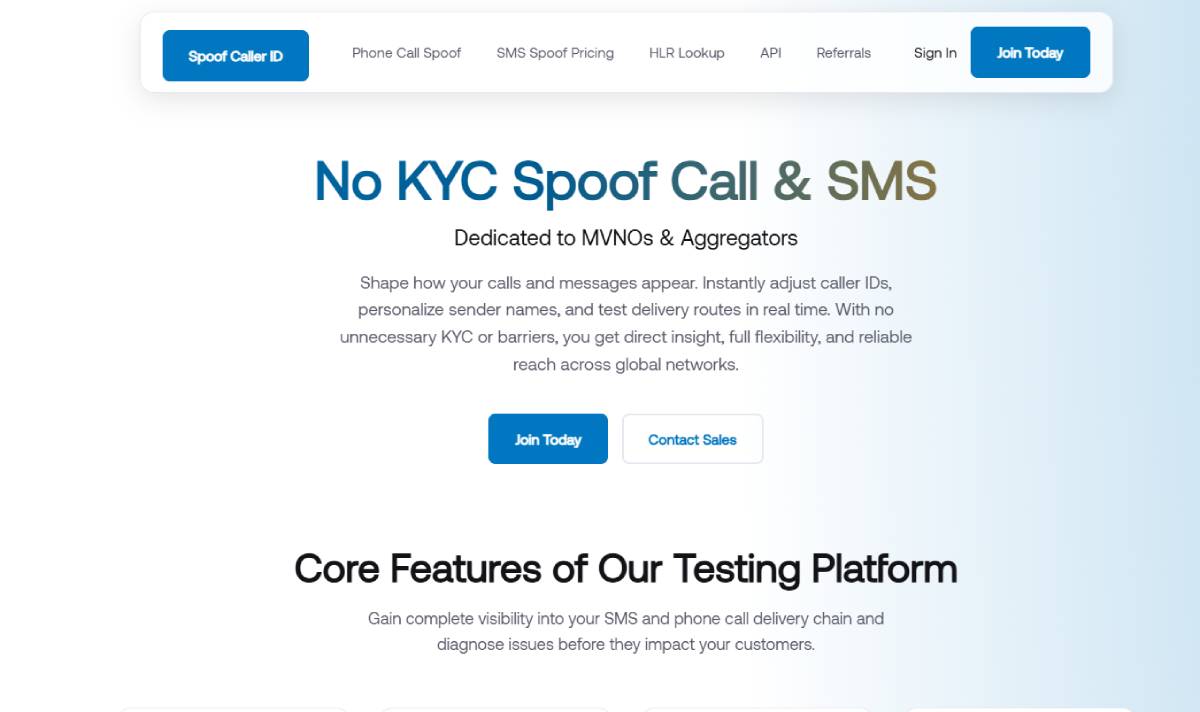
Spoof Caller ID Enhances Communication Security

Spoof Caller ID technology enables users to modify or manage displayed caller information during phone communications.

August 6, 2026
|

Spoof Caller ID represents a growing category of communication technology focused on managing caller identity and digital voice interactions. As businesses and consumers face increasing concerns around fraud, privacy, and trust in telecommunications, solutions in this space highlight the evolving challenges of verifying identities and securing modern communication channels.

Spoof Caller ID technology enables users to modify or manage displayed caller information during phone communications. While such capabilities have legitimate applications, including privacy protection, business communication testing, and controlled identity management, they have also increased attention around preventing misuse.

The rise of caller ID manipulation has pushed telecommunications companies, regulators, and cybersecurity organizations to develop stronger authentication methods. Businesses are increasingly evaluating communication security tools to reduce fraud risks, protect customers, and maintain trust. The technology reflects broader changes in the digital communication landscape, where identity verification and secure interactions have become essential priorities.

The rapid expansion of digital communication has created new opportunities and challenges for organizations managing voice-based interactions. Caller ID systems were originally designed to improve transparency by allowing recipients to identify incoming calls, but advances in technology have made identity manipulation easier.

The growth of robocalls, phishing attempts, and voice-based fraud has increased global demand for stronger telecommunications security measures. Governments, carriers, and technology providers are exploring authentication frameworks to improve caller verification and reduce fraudulent activities.

This development aligns with a broader industry trend where digital trust, cybersecurity, and identity protection are becoming critical components of modern business operations. Organizations across financial services, healthcare, customer support, and enterprise communications are increasingly prioritizing secure communication systems to protect users and maintain confidence in digital interactions.

Cybersecurity analysts emphasize that caller identity verification is becoming increasingly important as attackers use sophisticated social engineering techniques to target individuals and organizations. Experts note that communication security requires a combination of technology, regulation, and user awareness.

Industry professionals highlight the need for stronger authentication standards that allow legitimate businesses to communicate effectively while reducing opportunities for fraudulent activity. Telecommunications providers are investing in advanced verification systems and monitoring tools to improve trust across voice networks.

While no official executive statement accompanies this platform overview, the discussion around Spoof Caller ID reflects wider concerns about digital identity management, cybersecurity risks, and responsible technology usage. Analysts expect communication providers and regulators to continue developing solutions that balance innovation, privacy, and protection against misuse.

For businesses, communication identity management has become an important factor in maintaining customer trust and protecting brand reputation. Companies must ensure their calling systems support secure verification practices while reducing exposure to fraud and impersonation risks.

Investors continue watching cybersecurity and communication technology sectors as demand grows for digital trust solutions. Policymakers are increasingly focused on telecommunications security, fraud prevention standards, and consumer protection frameworks.

Organizations using voice communication strategies will need to adopt stronger authentication measures, educate users, and align with evolving regulations to maintain secure and reliable customer interactions.

The future of caller identity technology will likely focus on stronger verification systems, artificial intelligence-powered fraud detection, and improved telecommunications security standards. As digital communication continues expanding, businesses and consumers will demand greater transparency and protection against identity-based threats. Decision-makers should monitor regulatory updates, cybersecurity innovations, and authentication technologies shaping the next generation of trusted communication networks.

Source: Crozdesk
Date: August 6, 2026

  • Featured tools
Hostinger Horizons
Freemium

Hostinger Horizons is an AI-powered platform that allows users to build and deploy custom web applications without writing code. It packs hosting, domain management and backend integration into a unified tool for rapid app creation.

#
Startup Tools
#
Coding
#
Project Management
Learn more
Figstack AI
Free

Figstack AI is an intelligent assistant for developers that explains code, generates docstrings, converts code between languages, and analyzes time complexity helping you work smarter, not harder.

#
Coding
Learn more

Learn more about future of AI

Join 80,000+ Ai enthusiast getting weekly updates on exciting AI tools.
Thank you! Your submission has been received!
Oops! Something went wrong while submitting the form.

Spoof Caller ID Enhances Communication Security

August 6, 2026

Spoof Caller ID technology enables users to modify or manage displayed caller information during phone communications.

Spoof Caller ID represents a growing category of communication technology focused on managing caller identity and digital voice interactions. As businesses and consumers face increasing concerns around fraud, privacy, and trust in telecommunications, solutions in this space highlight the evolving challenges of verifying identities and securing modern communication channels.

Spoof Caller ID technology enables users to modify or manage displayed caller information during phone communications. While such capabilities have legitimate applications, including privacy protection, business communication testing, and controlled identity management, they have also increased attention around preventing misuse.

The rise of caller ID manipulation has pushed telecommunications companies, regulators, and cybersecurity organizations to develop stronger authentication methods. Businesses are increasingly evaluating communication security tools to reduce fraud risks, protect customers, and maintain trust. The technology reflects broader changes in the digital communication landscape, where identity verification and secure interactions have become essential priorities.

The rapid expansion of digital communication has created new opportunities and challenges for organizations managing voice-based interactions. Caller ID systems were originally designed to improve transparency by allowing recipients to identify incoming calls, but advances in technology have made identity manipulation easier.

The growth of robocalls, phishing attempts, and voice-based fraud has increased global demand for stronger telecommunications security measures. Governments, carriers, and technology providers are exploring authentication frameworks to improve caller verification and reduce fraudulent activities.

This development aligns with a broader industry trend where digital trust, cybersecurity, and identity protection are becoming critical components of modern business operations. Organizations across financial services, healthcare, customer support, and enterprise communications are increasingly prioritizing secure communication systems to protect users and maintain confidence in digital interactions.

Cybersecurity analysts emphasize that caller identity verification is becoming increasingly important as attackers use sophisticated social engineering techniques to target individuals and organizations. Experts note that communication security requires a combination of technology, regulation, and user awareness.

Industry professionals highlight the need for stronger authentication standards that allow legitimate businesses to communicate effectively while reducing opportunities for fraudulent activity. Telecommunications providers are investing in advanced verification systems and monitoring tools to improve trust across voice networks.

While no official executive statement accompanies this platform overview, the discussion around Spoof Caller ID reflects wider concerns about digital identity management, cybersecurity risks, and responsible technology usage. Analysts expect communication providers and regulators to continue developing solutions that balance innovation, privacy, and protection against misuse.

For businesses, communication identity management has become an important factor in maintaining customer trust and protecting brand reputation. Companies must ensure their calling systems support secure verification practices while reducing exposure to fraud and impersonation risks.

Investors continue watching cybersecurity and communication technology sectors as demand grows for digital trust solutions. Policymakers are increasingly focused on telecommunications security, fraud prevention standards, and consumer protection frameworks.

Organizations using voice communication strategies will need to adopt stronger authentication measures, educate users, and align with evolving regulations to maintain secure and reliable customer interactions.

The future of caller identity technology will likely focus on stronger verification systems, artificial intelligence-powered fraud detection, and improved telecommunications security standards. As digital communication continues expanding, businesses and consumers will demand greater transparency and protection against identity-based threats. Decision-makers should monitor regulatory updates, cybersecurity innovations, and authentication technologies shaping the next generation of trusted communication networks.

Source: Crozdesk
Date: August 6, 2026

Promote Your Tool

Copy Embed Code

Similar Blogs

August 6, 2026
|

FireMon Strengthens Firewall Policy Management

FireMon provides cybersecurity solutions focused on firewall policy management, network security visibility, and risk reduction.
Read more
August 6, 2026
|

Govenda Advances Board Governance Technology Solutions

Govenda provides a board management platform that enables organizations to organize meeting materials, distribute confidential information, collaborate with directors, and maintain governance workflows digitally.
Read more
August 6, 2026
|

Spoof Caller ID Enhances Communication Security

Spoof Caller ID technology enables users to modify or manage displayed caller information during phone communications.
Read more
August 6, 2026
|

Decodo Advances Proxy Data Intelligence Solutions

Decodo provides proxy network solutions that allow businesses to collect web data, manage online operations, and conduct digital intelligence activities through secure and scalable infrastructure.
Read more
August 6, 2026
|

Flowla Advances Digital Sales Enablement Workflows

Flowla provides a digital sales enablement solution that helps organizations create personalized buyer journeys, interactive sales materials, and collaborative customer experiences.
Read more
August 6, 2026
|

AdpexAI Advances AI Content Automation

AdpexAI provides AI-driven solutions focused on content creation, automation, and digital marketing optimization. The platform enables users to generate creative materials, streamline production workflows, and enhance online campaigns through artificial intelligence capabilities.
Read more