
Switzerland Expands F-35 Defence Partnerships

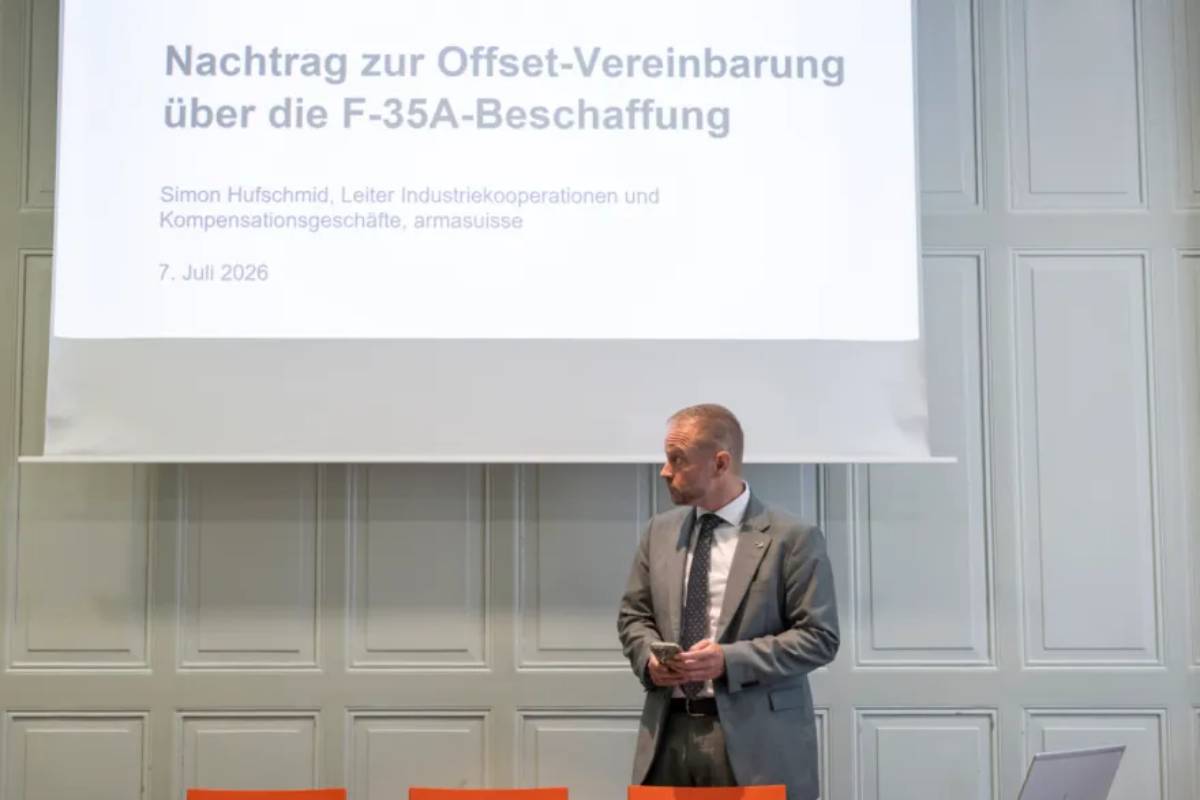
Switzerland’s Federal Office for Defence Procurement, armasuisse, and the F-35 supplier have detailed further offset opportunities connected to the country’s fighter jet programme.

July 9, 2026
|
Image Source: Swissinfo

A major development unfolded in Switzerland’s defence sector as authorities outlined additional industrial offset projects linked to the acquisition of F-35 fighter jets. The initiative aims to strengthen domestic manufacturing capabilities, create economic opportunities, and deepen cooperation between Swiss companies and the global aerospace industry while supporting national security objectives.

Switzerland’s Federal Office for Defence Procurement, armasuisse, and the F-35 supplier have detailed further offset opportunities connected to the country’s fighter jet programme. The projects are designed to involve Swiss businesses in aerospace, technology, and advanced manufacturing supply chains.

The offset agreements are expected to generate economic benefits by encouraging cooperation between local companies and international defence contractors. Switzerland’s F-35 acquisition is part of a broader effort to modernise its air defence capabilities while ensuring domestic industry participation.

The projects highlight the economic dimension of major defence procurement programmes, where governments increasingly seek technology transfer, innovation partnerships, and industrial returns.

The development aligns with a broader global trend where defence procurement is increasingly viewed not only as a security investment but also as an opportunity for industrial development. Countries purchasing advanced military platforms often negotiate offset agreements to ensure domestic companies benefit through contracts, technology partnerships, and knowledge exchange.

Switzerland selected the F-35A fighter jet to replace its ageing aircraft fleet and strengthen its defence capabilities amid changing European security conditions. The programme has generated significant attention due to its financial scale and long-term impact on the country’s defence strategy.

For Swiss industry, participation in aerospace supply chains could create opportunities in engineering, precision manufacturing, cybersecurity, and advanced technologies. Such partnerships can strengthen competitiveness beyond the immediate defence sector.

Defence analysts suggest that industrial participation is becoming a key factor in evaluating major military acquisitions. Beyond operational capability, governments increasingly assess how defence investments contribute to innovation, employment, and national industrial resilience.

Experts note that successful offset programmes require clear implementation plans and strong coordination between government agencies, defence suppliers, and local companies. Without effective execution, promised economic benefits can be difficult to achieve.

Swiss officials have emphasised the importance of ensuring that domestic businesses gain meaningful opportunities from the F-35 programme. Industry observers believe the initiative could strengthen Switzerland’s position within international aerospace networks while supporting specialised manufacturing expertise.

The programme also reflects Europe’s wider focus on improving defence readiness and developing stronger industrial ecosystems. For Swiss companies, the F-35 offset projects could create new opportunities in aerospace engineering, electronics, software development, and advanced manufacturing. Small and medium-sized enterprises may benefit from access to international supply chains and long-term defence contracts.

For policymakers, the initiative demonstrates how defence spending can support broader economic goals while addressing national security priorities. Governments are increasingly seeking procurement strategies that deliver both military capability and industrial value.

Investors and business leaders will monitor whether these partnerships generate sustainable commercial opportunities beyond the initial defence contracts. The success of Switzerland’s approach could influence future defence procurement strategies across Europe.

The next stage will focus on translating offset commitments into concrete industrial projects and long-term partnerships. Swiss authorities will likely monitor economic returns, technology transfers, and participation levels among domestic companies. As defence modernisation accelerates across Europe, programmes that combine security objectives with industrial growth are expected to become increasingly important for governments and businesses.

Source: Swissinfo
Date: July 2026

  • Featured tools
Hostinger Website Builder
Paid

Hostinger Website Builder is a drag-and-drop website creator bundled with hosting and AI-powered tools, designed for businesses, blogs and small shops with minimal technical effort.It makes launching a site fast and affordable, with templates, responsive design and built-in hosting all in one.

#
Productivity
#
Startup Tools
#
Ecommerce
Learn more
Copy Ai
Free

Copy AI is one of the most popular AI writing tools designed to help professionals create high-quality content quickly. Whether you are a product manager drafting feature descriptions or a marketer creating ad copy, Copy AI can save hours of work while maintaining creativity and tone.

#
Copywriting
Learn more

Learn more about future of AI

Join 80,000+ Ai enthusiast getting weekly updates on exciting AI tools.
Thank you! Your submission has been received!
Oops! Something went wrong while submitting the form.

Switzerland Expands F-35 Defence Partnerships

July 9, 2026

Switzerland’s Federal Office for Defence Procurement, armasuisse, and the F-35 supplier have detailed further offset opportunities connected to the country’s fighter jet programme.

Image Source: Swissinfo

A major development unfolded in Switzerland’s defence sector as authorities outlined additional industrial offset projects linked to the acquisition of F-35 fighter jets. The initiative aims to strengthen domestic manufacturing capabilities, create economic opportunities, and deepen cooperation between Swiss companies and the global aerospace industry while supporting national security objectives.

Switzerland’s Federal Office for Defence Procurement, armasuisse, and the F-35 supplier have detailed further offset opportunities connected to the country’s fighter jet programme. The projects are designed to involve Swiss businesses in aerospace, technology, and advanced manufacturing supply chains.

The offset agreements are expected to generate economic benefits by encouraging cooperation between local companies and international defence contractors. Switzerland’s F-35 acquisition is part of a broader effort to modernise its air defence capabilities while ensuring domestic industry participation.

The projects highlight the economic dimension of major defence procurement programmes, where governments increasingly seek technology transfer, innovation partnerships, and industrial returns.

The development aligns with a broader global trend where defence procurement is increasingly viewed not only as a security investment but also as an opportunity for industrial development. Countries purchasing advanced military platforms often negotiate offset agreements to ensure domestic companies benefit through contracts, technology partnerships, and knowledge exchange.

Switzerland selected the F-35A fighter jet to replace its ageing aircraft fleet and strengthen its defence capabilities amid changing European security conditions. The programme has generated significant attention due to its financial scale and long-term impact on the country’s defence strategy.

For Swiss industry, participation in aerospace supply chains could create opportunities in engineering, precision manufacturing, cybersecurity, and advanced technologies. Such partnerships can strengthen competitiveness beyond the immediate defence sector.

Defence analysts suggest that industrial participation is becoming a key factor in evaluating major military acquisitions. Beyond operational capability, governments increasingly assess how defence investments contribute to innovation, employment, and national industrial resilience.

Experts note that successful offset programmes require clear implementation plans and strong coordination between government agencies, defence suppliers, and local companies. Without effective execution, promised economic benefits can be difficult to achieve.

Swiss officials have emphasised the importance of ensuring that domestic businesses gain meaningful opportunities from the F-35 programme. Industry observers believe the initiative could strengthen Switzerland’s position within international aerospace networks while supporting specialised manufacturing expertise.

The programme also reflects Europe’s wider focus on improving defence readiness and developing stronger industrial ecosystems. For Swiss companies, the F-35 offset projects could create new opportunities in aerospace engineering, electronics, software development, and advanced manufacturing. Small and medium-sized enterprises may benefit from access to international supply chains and long-term defence contracts.

For policymakers, the initiative demonstrates how defence spending can support broader economic goals while addressing national security priorities. Governments are increasingly seeking procurement strategies that deliver both military capability and industrial value.

Investors and business leaders will monitor whether these partnerships generate sustainable commercial opportunities beyond the initial defence contracts. The success of Switzerland’s approach could influence future defence procurement strategies across Europe.

The next stage will focus on translating offset commitments into concrete industrial projects and long-term partnerships. Swiss authorities will likely monitor economic returns, technology transfers, and participation levels among domestic companies. As defence modernisation accelerates across Europe, programmes that combine security objectives with industrial growth are expected to become increasingly important for governments and businesses.

Source: Swissinfo
Date: July 2026

Promote Your Tool

Copy Embed Code

Similar Blogs

July 22, 2026
|

VSCO Downloader Expands Media Access Solutions

VSCO Downloader is a tool designed around accessing and managing publicly available visual content from the VSCO platform.
Read more
July 22, 2026
|

BFLIX Expands Digital Viewing Platforms

BFLIX is associated with an online entertainment platform focused on providing users with access to digital video content.
Read more
July 22, 2026
|

Hoodmaps Improves Urban Navigation Tools

Hoodmaps is a collaborative mapping platform that allows users to add local perspectives and cultural observations to city maps.
Read more
July 22, 2026
|

Linkello Supports Digital Team Connectivity

Linkello is an online communication platform designed to enable secure voice, video, and messaging interactions through internet-based technology.
Read more
July 22, 2026
|

MovieHub Evolves Modern Streaming Experiences

MovieHub is a digital entertainment platform associated with online movie discovery and viewing experiences.
Read more
July 22, 2026
|

EasyChair Powers Global Academic Collaboration

EasyChair is an online conference management system designed to streamline academic event organization, including paper submissions, peer reviews, scheduling, and communication between researchers and conference organizers.
Read more