



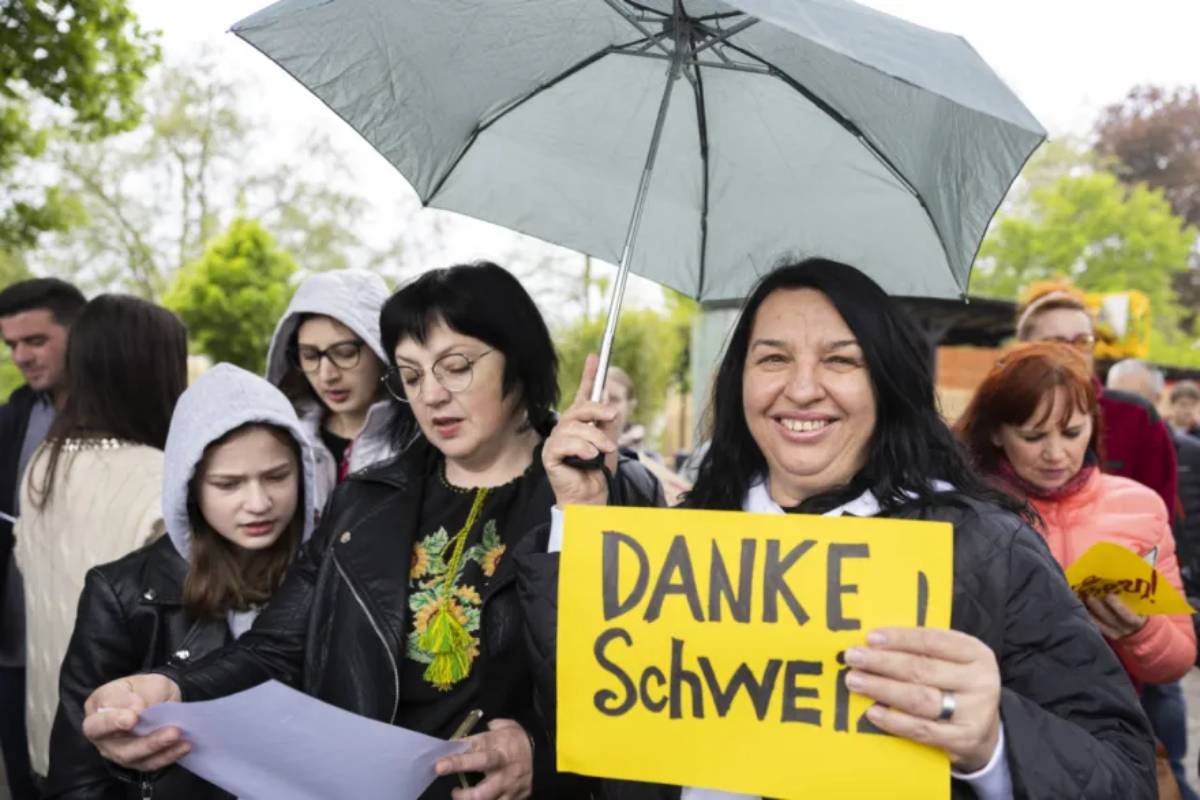
The Swiss government is considering extending S protection status for Ukrainian refugees, signaling continued humanitarian commitment amid the ongoing Russia–Ukraine conflict. The potential extension highlights Switzerland’s evolving migration policy stance and carries implications for social integration frameworks, labor markets, and long-term refugee settlement planning across Europe.
Swiss federal authorities are reviewing the possibility of extending S protection status, which grants temporary residence rights and access to essential services for Ukrainian nationals fleeing the war. The status was originally introduced as an emergency measure following the escalation of the Russia–Ukraine conflict.
The proposed extension reflects the continued instability in the region and the absence of a near-term resolution to the conflict. It also addresses administrative and humanitarian considerations regarding long-term residency, education, and labor market participation for displaced individuals. Swiss policymakers are balancing humanitarian obligations with domestic capacity constraints, including housing, integration services, and labor market absorption.
The S protection status was introduced by Switzerland as part of a broader European response to the mass displacement caused by the Russia–Ukraine war. It allows beneficiaries to reside in Switzerland without undergoing the standard asylum process, enabling faster access to housing, healthcare, and employment.
Across Europe, governments have adopted similar temporary protection frameworks to manage large-scale displacement while avoiding overburdening asylum systems. However, as the conflict continues without a clear resolution, many countries are reassessing the duration and structure of these policies.
Switzerland’s consideration reflects both humanitarian responsibility and long-term planning challenges. The country has historically maintained a structured but cautious approach to migration policy, balancing international obligations with domestic socioeconomic stability.
Migration policy analysts suggest that extending temporary protection status is increasingly becoming a long-term policy reality rather than a short-term emergency response. Experts note that prolonged conflicts often force host countries to transition from crisis management to structured integration frameworks.
Social policy researchers highlight that access to labor markets for Ukrainian refugees has had mixed economic impacts, depending on sectoral demand and regional labor shortages. However, they also emphasize the importance of stability and predictability in legal status for effective integration.
While formal statements from Swiss officials indicate ongoing review rather than final decision-making, policy observers interpret the move as aligned with broader European trends toward extending temporary protection schemes. The emphasis remains on maintaining humanitarian support while ensuring administrative sustainability.
For labor markets, extending S status could support workforce stability in sectors experiencing shortages, including healthcare, hospitality, and skilled trades. Employers may benefit from a more predictable legal framework for hiring Ukrainian nationals.
From a policy perspective, the extension raises long-term questions about integration capacity, housing supply, and public service allocation. Governments across Europe may face similar decisions as displacement persists.
For businesses and policymakers, the development underscores the intersection of humanitarian policy and economic planning. Long-term refugee integration is increasingly becoming a structural component of labor market strategy in several European economies.
The Swiss government is expected to continue reviewing the status extension in line with developments in the Ukraine conflict and broader European policy alignment. Future decisions will depend on geopolitical conditions, domestic capacity, and EU-wide coordination. Key uncertainties include duration of protection, integration funding, and labor market absorption capacity. The policy direction suggests a shift from emergency response toward long-term structured humanitarian management.
Source: Swissinfo
Date: June 23, 2026


