



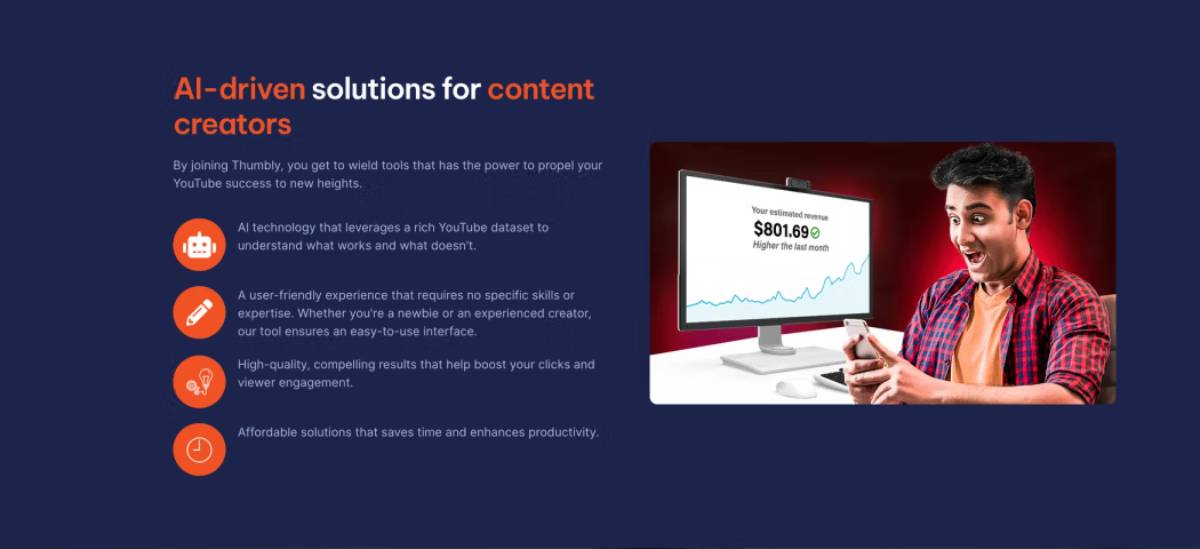
The creator economy’s AI arms race intensified as Thumbly unveiled an automated thumbnail generator designed to optimize YouTube engagement. By leveraging AI to design click-driven visuals, the platform aims to help content creators and digital brands maximize reach, conversions, and algorithmic visibility.
Thumbly AI offers AI-powered tools that generate optimized YouTube thumbnails tailored for higher click-through rates. The platform analyzes visual patterns, color contrasts, text placement, and emotional triggers commonly associated with viral content.
Its target audience includes independent creators, marketing agencies, and brands operating across video-first platforms. The tool seeks to reduce the time and cost required to design performance-oriented thumbnails manually. With YouTube’s algorithm heavily influenced by click-through rate and viewer retention, thumbnail optimization has become a competitive differentiator.
Thumbly positions itself as a performance-focused AI solution within the rapidly expanding creator tools ecosystem. The launch reflects a broader transformation in the digital content economy, where AI tools are increasingly embedded into creative workflows.
Platforms such as YouTube reward high engagement metrics, pushing creators to continuously refine visual strategies. Thumbnails serve as the primary decision trigger for viewers, directly influencing algorithmic recommendations.
As competition intensifies, creators are turning to automation to sustain growth and monetization. AI-generated copy, editing tools, and analytics dashboards are already commonplace. Thumbnail optimization represents the next frontier in performance-driven creative automation.
At a macro level, the global creator economy is now valued in the hundreds of billions, attracting venture investment and enterprise-grade solutions. For executives, AI-powered micro-optimization tools highlight how even granular aspects of content production are becoming data-driven.
Digital marketing analysts note that thumbnail performance can significantly impact revenue, particularly for creators monetizing through ads and brand partnerships. Growth strategists emphasize that AI-generated designs reduce creative bottlenecks while enabling A/B testing at scale.
However, branding experts caution that over-optimization may risk homogenization, where content visuals begin to look algorithmically similar. Technology observers argue that AI platforms offering analytics-backed customization will outperform generic design tools. Industry leaders in the creator economy suggest that automation is shifting creators’ focus from manual production to strategic storytelling and community building.
Thumbly’s positioning reflects an emerging market where AI not only assists creativity but actively engineers audience engagement outcomes. For digital-first brands, AI thumbnail tools could materially improve campaign ROI and audience acquisition metrics.
Agencies may integrate such platforms into broader performance marketing strategies, enhancing measurable outcomes. Investors tracking creator-economy startups may view niche AI optimization tools as scalable SaaS opportunities.
From a policy perspective, increasing automation in digital influence raises questions about transparency and algorithmic fairness. For C-suite executives overseeing media operations, integrating AI into content pipelines requires balancing performance gains with brand authenticity and long-term audience trust. Decision-makers should monitor adoption trends, platform integration capabilities, and measurable performance improvements among creators using AI-generated thumbnails.
As competition intensifies across digital platforms, micro-optimizations powered by AI may define the next phase of content monetization.
Thumbly’s emergence signals that in the AI era, even a single image can become a strategic growth lever.
Source: Thumbly Official Website
Date: February 27, 2026


