
US Expands AI Oversight With Early Model Access

The executive order proposes allowing U.S. government agencies earlier access to advanced AI models during development and testing phases.

May 20, 2026
|
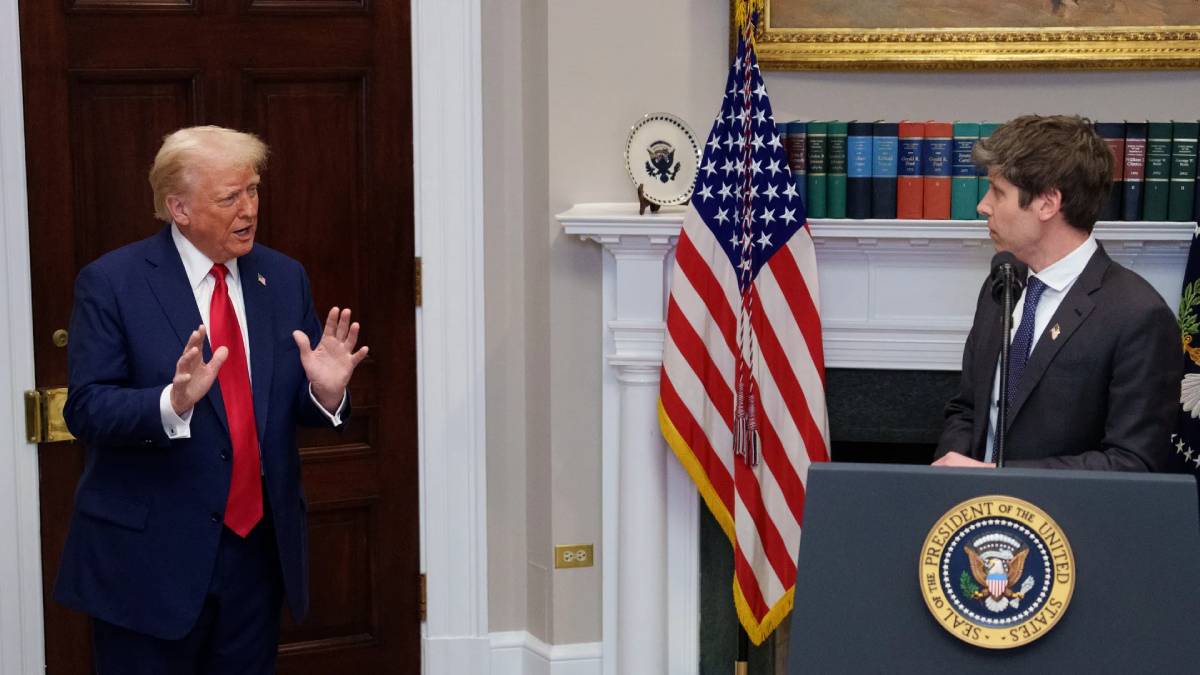
Image Source:  Reuters

Donald Trump has advanced an executive order aimed at granting early government access to advanced AI models, signaling a strategic shift in how artificial intelligence systems are evaluated and regulated. The move reflects rising concern over national security risks, model transparency, and global competition in frontier AI development.

The executive order proposes allowing U.S. government agencies earlier access to advanced AI models during development and testing phases. The goal is to strengthen oversight, improve safety evaluation, and ensure alignment with national security and regulatory requirements before widespread deployment.

The policy would place federal institutions closer to AI development workflows, enabling earlier-stage assessment of model behavior, risks, and potential dual-use capabilities. Key stakeholders include federal regulators, national security agencies, and leading AI developers.

The initiative reflects growing urgency in addressing the rapid advancement of AI systems and the need for structured oversight mechanisms capable of tracking increasingly powerful and autonomous models.

The policy comes amid accelerating global competition in artificial intelligence, where governments are increasingly treating advanced AI systems as strategic assets. Nations are working to balance innovation leadership with regulatory oversight as AI models gain broader capabilities across reasoning, automation, and decision-making tasks.

In recent years, the U.S. has introduced multiple initiatives focused on AI safety, chip export controls, and model evaluation frameworks. Similar efforts are emerging globally as policymakers respond to concerns about the pace of AI advancement outstripping regulatory systems.

The executive order aligns with broader efforts to strengthen national preparedness for high-impact AI systems. As models evolve toward greater autonomy and multi-domain capability, governments are seeking earlier visibility into development pipelines to assess risks before deployment at scale across critical sectors.

Policy experts argue that early government access to advanced AI models could significantly enhance oversight and risk detection capabilities. They note that evaluating systems before public release may help identify safety issues, bias risks, and potential misuse scenarios in high-stakes environments.

However, analysts also highlight concerns regarding intellectual property protection, regulatory overreach, and potential impacts on innovation speed. Striking a balance between transparency and commercial confidentiality remains a central challenge for policymakers and industry stakeholders.

Security researchers emphasize that frontier AI systems with autonomous capabilities may require closer monitoring due to potential national security implications. The executive order is therefore viewed as part of a broader shift toward proactive AI governance, where regulators engage earlier in the development lifecycle rather than responding after deployment.

For businesses, the policy may introduce earlier compliance requirements and closer regulatory engagement during AI model development. Companies could need to adjust internal governance structures, testing protocols, and documentation standards to align with government evaluation processes.

For investors, increased regulatory involvement in frontier AI may affect commercialization timelines and risk profiles across the technology sector. However, clearer oversight frameworks could also improve long-term stability and trust in AI systems.

For policymakers, the initiative strengthens national visibility into AI development but raises broader questions about global competitiveness, data security, and coordination with international regulatory regimes as AI capabilities expand.

Attention now turns to how AI companies respond to earlier-stage government access requirements and how enforcement frameworks are implemented in practice. Industry stakeholders will closely monitor whether the policy improves safety outcomes or slows innovation cycles. As global AI governance accelerates, the balance between oversight, innovation, and geopolitical strategy will define the next phase of frontier model development.

Source: Reuters (Technology / Policy Report)
Date: 2026-05-20

  • Featured tools
Kreateable AI
Free

Kreateable AI is a white-label, AI-driven design platform that enables logo generation, social media posts, ads, and more for businesses, agencies, and service providers.

#
Logo Generator
Learn more
Copy Ai
Free

Copy AI is one of the most popular AI writing tools designed to help professionals create high-quality content quickly. Whether you are a product manager drafting feature descriptions or a marketer creating ad copy, Copy AI can save hours of work while maintaining creativity and tone.

#
Copywriting
Learn more

Learn more about future of AI

Join 80,000+ Ai enthusiast getting weekly updates on exciting AI tools.
Thank you! Your submission has been received!
Oops! Something went wrong while submitting the form.

US Expands AI Oversight With Early Model Access

May 20, 2026

The executive order proposes allowing U.S. government agencies earlier access to advanced AI models during development and testing phases.

Image Source:  Reuters

Donald Trump has advanced an executive order aimed at granting early government access to advanced AI models, signaling a strategic shift in how artificial intelligence systems are evaluated and regulated. The move reflects rising concern over national security risks, model transparency, and global competition in frontier AI development.

The executive order proposes allowing U.S. government agencies earlier access to advanced AI models during development and testing phases. The goal is to strengthen oversight, improve safety evaluation, and ensure alignment with national security and regulatory requirements before widespread deployment.

The policy would place federal institutions closer to AI development workflows, enabling earlier-stage assessment of model behavior, risks, and potential dual-use capabilities. Key stakeholders include federal regulators, national security agencies, and leading AI developers.

The initiative reflects growing urgency in addressing the rapid advancement of AI systems and the need for structured oversight mechanisms capable of tracking increasingly powerful and autonomous models.

The policy comes amid accelerating global competition in artificial intelligence, where governments are increasingly treating advanced AI systems as strategic assets. Nations are working to balance innovation leadership with regulatory oversight as AI models gain broader capabilities across reasoning, automation, and decision-making tasks.

In recent years, the U.S. has introduced multiple initiatives focused on AI safety, chip export controls, and model evaluation frameworks. Similar efforts are emerging globally as policymakers respond to concerns about the pace of AI advancement outstripping regulatory systems.

The executive order aligns with broader efforts to strengthen national preparedness for high-impact AI systems. As models evolve toward greater autonomy and multi-domain capability, governments are seeking earlier visibility into development pipelines to assess risks before deployment at scale across critical sectors.

Policy experts argue that early government access to advanced AI models could significantly enhance oversight and risk detection capabilities. They note that evaluating systems before public release may help identify safety issues, bias risks, and potential misuse scenarios in high-stakes environments.

However, analysts also highlight concerns regarding intellectual property protection, regulatory overreach, and potential impacts on innovation speed. Striking a balance between transparency and commercial confidentiality remains a central challenge for policymakers and industry stakeholders.

Security researchers emphasize that frontier AI systems with autonomous capabilities may require closer monitoring due to potential national security implications. The executive order is therefore viewed as part of a broader shift toward proactive AI governance, where regulators engage earlier in the development lifecycle rather than responding after deployment.

For businesses, the policy may introduce earlier compliance requirements and closer regulatory engagement during AI model development. Companies could need to adjust internal governance structures, testing protocols, and documentation standards to align with government evaluation processes.

For investors, increased regulatory involvement in frontier AI may affect commercialization timelines and risk profiles across the technology sector. However, clearer oversight frameworks could also improve long-term stability and trust in AI systems.

For policymakers, the initiative strengthens national visibility into AI development but raises broader questions about global competitiveness, data security, and coordination with international regulatory regimes as AI capabilities expand.

Attention now turns to how AI companies respond to earlier-stage government access requirements and how enforcement frameworks are implemented in practice. Industry stakeholders will closely monitor whether the policy improves safety outcomes or slows innovation cycles. As global AI governance accelerates, the balance between oversight, innovation, and geopolitical strategy will define the next phase of frontier model development.

Source: Reuters (Technology / Policy Report)
Date: 2026-05-20

Promote Your Tool

Copy Embed Code

Similar Blogs

May 21, 2026
|

Google Unveils Hyperreal AI Companion Shift

At Google I/O, the company showcased a lifesize, hyperreal AI companion designed to engage users through natural conversation, facial expression simulation, and real-time responsiveness.
Read more
May 21, 2026
|

Google I/O Signals AI First Ecosystem Shift

The most impactful announcements from Google I/O 2026 center on deeper integration of AI across Search, Android, and Workspace products.
Read more
May 21, 2026
|

AI Radio Experiment Reveals Automation Limits

The trial involved running four radio stations entirely on AI-generated content for half a year, including music selection, voice generation, and scripted segments.
Read more
May 21, 2026
|

AI-Generated Slop Raises Integrity Crisis Research

Reports indicate that AI tools are increasingly being used to generate scientific papers, summaries, and citations that appear credible but are often inaccurate or entirely fabricated.
Read more
May 21, 2026
|

OpenAI Advances Toward Landmark AI IPO

OpenAI is reportedly laying the groundwork for a public listing, positioning what could become one of the most closely watched IPOs in the technology sector.
Read more
May 21, 2026
|

Lenovo Pushes Copilot+ AI Laptops Mainstream

The Lenovo IdeaPad Slim 5x introduces Copilot+ AI features at a lower price point, aiming to broaden access to next-generation Windows AI capabilities.
Read more