



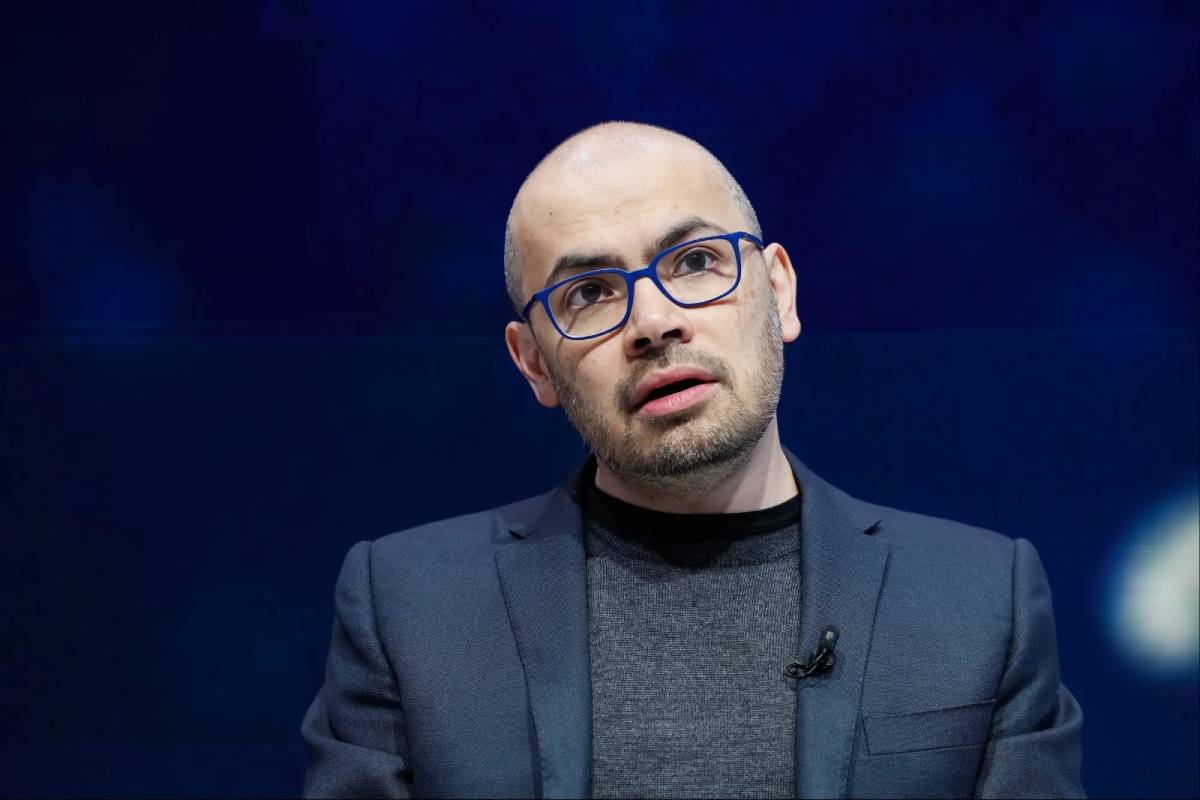
A notable reality check emerged from Google DeepMind as CEO Demis Hassabis warned that today’s leading AI models still lack critical capabilities. His remarks signal a strategic recalibration in the AI race, with implications for global tech leaders, investors, and policymakers betting on near-term artificial general intelligence.
Speaking on the current state of artificial intelligence, Demis Hassabis highlighted that despite rapid advances, existing AI systems remain fundamentally limited in reasoning, planning, and real-world understanding. He stressed that large language models, while impressive, are not yet capable of robust long-term reasoning or autonomous decision-making.
Hassabis pointed to the need for new architectures and training approaches that move beyond pattern recognition toward deeper cognitive capabilities. As the head of Google DeepMind, his comments carry weight across the AI ecosystem, influencing research priorities, capital allocation, and expectations around deployment timelines for advanced AI systems in enterprise and public-sector use.
The development aligns with a broader trend across global markets where AI optimism is increasingly tempered by technical and operational realities. Over the past two years, generative AI has delivered breakthroughs in language, image, and code generation, fuelling massive investment and public excitement. However, researchers have consistently warned that scaling models alone may not achieve human-level intelligence.
DeepMind, long positioned at the frontier of foundational AI research, has historically taken a more cautious stance than some competitors. From AlphaGo to AlphaFold, its successes have relied on specialised systems rather than general-purpose intelligence. Hassabis’s remarks reflect growing consensus among top scientists that the next leap in AI will require fundamental innovation, not just larger datasets and more compute.
AI researchers interpret Hassabis’s comments as both a technical critique and a strategic signal. Analysts note that by openly acknowledging limitations, DeepMind is managing expectations while justifying sustained AI investment in long-horizon research.
Industry experts argue that gaps in reasoning, memory, and causal understanding remain the biggest barriers to deploying AI in mission-critical environments such as healthcare, defense, and infrastructure. Some see Hassabis’s stance as a counterbalance to more aggressive narratives around near-term AGI.
From a market perspective, the comments reinforce the view that AI progress will be uneven, with breakthroughs emerging in targeted domains rather than across general intelligence. This framing may influence how governments and enterprises structure AI adoption roadmaps.
For businesses, the message is clear: AI remains a powerful tool, but not a universal solution. Executives may need to recalibrate deployment strategies, focusing on augmentation rather than full automation of complex roles.
For investors, Hassabis’s warning introduces a note of caution amid soaring AI valuations, underscoring the long timelines required for foundational breakthroughs. Policymakers, meanwhile, may interpret the remarks as justification for balanced regulation encouraging innovation while avoiding assumptions that current AI systems can safely operate without human oversight in high-stakes contexts.
Looking ahead, decision-makers should watch for shifts in research funding toward hybrid models, reasoning-centric architectures, and embodied AI systems. The next phase of the AI race may be defined less by scale and more by scientific innovation. As expectations reset, leaders who align strategy with realistic capabilities are likely to gain long-term advantage.
Source & Date
Source: The Indian Express
Date: January 2026


