
Work Order Software Reshapes Field Operations

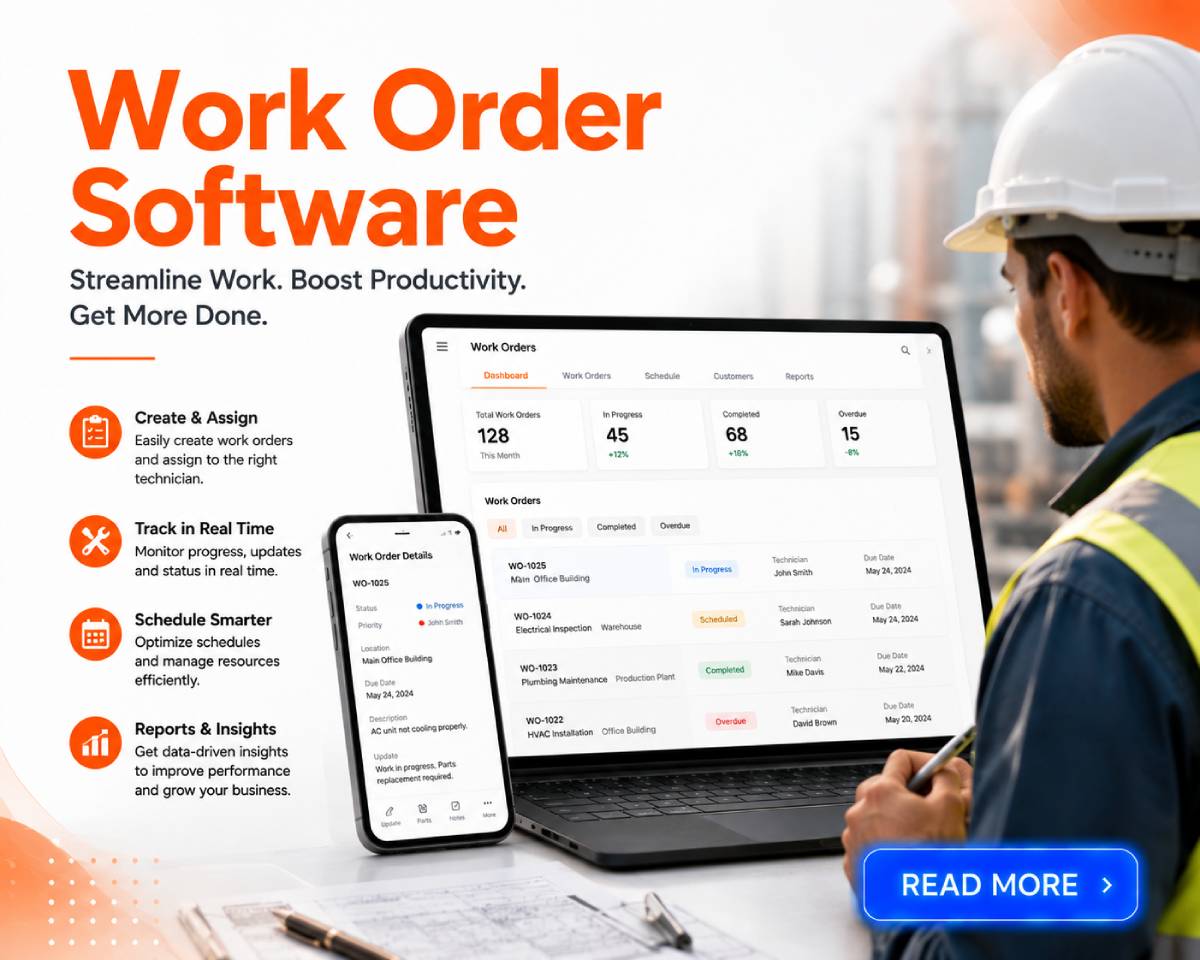
Modern work order platforms typically combine work-order creation, scheduling, dispatching, technician management, asset tracking, inventory control and reporting.

August 11, 2026
|

Work order software is becoming a critical digital tool for organizations managing maintenance, repairs and field-service operations. The technology helps businesses centralize service requests, assign tasks, track job progress and manage resources, reflecting a broader shift toward connected operational systems designed to improve efficiency, accountability and workforce productivity.

Modern work order platforms typically combine work-order creation, scheduling, dispatching, technician management, asset tracking, inventory control and reporting. Businesses can use these capabilities to organize service requests and monitor jobs from initiation through completion.

Mobile access has become increasingly important, allowing field technicians to receive assignments, update job status, record information and communicate with supervisors while working remotely. Integration with customer relationship management, accounting, inventory and asset-management systems can further connect operational data.

The technology is relevant across facilities management, manufacturing, property management, utilities, construction, healthcare and field services. For executives, centralized work-order management can provide greater visibility into operational performance and maintenance costs.

The development aligns with a wider digital transformation across maintenance and field-service operations. Historically, organizations frequently relied on phone calls, emails, spreadsheets and paper forms to manage service requests. These processes can create delays, limited visibility and inconsistent documentation as operational complexity increases.

Modern businesses increasingly require real-time information about assets, technicians, inventory and outstanding work. Work order platforms address this challenge by creating a centralized system where managers can monitor service activities and allocate resources more efficiently.

The rise of mobile workforces has further accelerated adoption. Technicians operating across multiple locations need access to job details without returning to a central office. Cloud-based platforms can provide that connectivity while allowing management teams to monitor progress remotely.

For CXOs, the strategic value extends beyond task management. Faster repairs, better preventive maintenance and improved resource utilization can reduce downtime and directly influence customer satisfaction and operating costs.

Industry specialists increasingly view work order management as an operational intelligence function rather than simply a ticketing system. Centralized data can help organizations identify recurring maintenance issues, measure technician performance and understand where resources are being consumed.

Automation is also changing the category. Systems can automatically assign or prioritize work based on factors such as urgency, location, technician availability or asset condition. This can reduce manual coordination and allow managers to focus on higher-value operational decisions.

However, technology alone cannot solve poorly defined maintenance processes. Successful implementation requires standardized workflows, accurate asset information and employee adoption. Field technicians must also find mobile tools practical enough to use during real-world service activities.

Experts therefore emphasize usability, integration and data quality alongside automation. Organizations that successfully combine these factors can gain greater control over operational workflows while building a stronger foundation for predictive maintenance and long-term asset management.

For businesses, work order software can improve response times, reduce administrative effort and provide clearer visibility into maintenance activities. Organizations may also gain better control over labor, inventory and equipment costs.

For executives, the financial impact can extend to reduced downtime and improved asset utilization. More reliable maintenance records can help leadership identify recurring problems and make better decisions about repairs, replacements and capital investment.

Customers can benefit from faster service and greater transparency around job status. Employees may also benefit from clearer assignments and easier access to relevant work information.

From a policy perspective, organizations operating critical infrastructure or regulated facilities may need to maintain accurate maintenance records and demonstrate compliance with operational standards. Digital work-order systems can support documentation, auditability and accountability when configured appropriately.

Work order software is likely to evolve toward artificial intelligence, predictive maintenance, IoT connectivity and automated scheduling. Future platforms may use real-time equipment data to identify potential failures before they become costly operational disruptions.

Decision-makers should watch how effectively these systems integrate field operations with asset, financial and customer data. The strongest platforms will help organizations move from reactive service management toward predictive, data-driven operations with measurable improvements in efficiency and reliability.

Source: Crozdesk
Date: August 11, 2026

  • Featured tools
Upscayl AI
Free

Upscayl AI is a free, open-source AI-powered tool that enhances and upscales images to higher resolutions. It transforms blurry or low-quality visuals into sharp, detailed versions with ease.

#
Productivity
Learn more
Tome AI
Free

Tome AI is an AI-powered storytelling and presentation tool designed to help users create compelling narratives and presentations quickly and efficiently. It leverages advanced AI technologies to generate content, images, and animations based on user input.

#
Presentation
#
Startup Tools
Learn more

Learn more about future of AI

Join 80,000+ Ai enthusiast getting weekly updates on exciting AI tools.
Thank you! Your submission has been received!
Oops! Something went wrong while submitting the form.

Work Order Software Reshapes Field Operations

August 11, 2026

Modern work order platforms typically combine work-order creation, scheduling, dispatching, technician management, asset tracking, inventory control and reporting.

Work order software is becoming a critical digital tool for organizations managing maintenance, repairs and field-service operations. The technology helps businesses centralize service requests, assign tasks, track job progress and manage resources, reflecting a broader shift toward connected operational systems designed to improve efficiency, accountability and workforce productivity.

Modern work order platforms typically combine work-order creation, scheduling, dispatching, technician management, asset tracking, inventory control and reporting. Businesses can use these capabilities to organize service requests and monitor jobs from initiation through completion.

Mobile access has become increasingly important, allowing field technicians to receive assignments, update job status, record information and communicate with supervisors while working remotely. Integration with customer relationship management, accounting, inventory and asset-management systems can further connect operational data.

The technology is relevant across facilities management, manufacturing, property management, utilities, construction, healthcare and field services. For executives, centralized work-order management can provide greater visibility into operational performance and maintenance costs.

The development aligns with a wider digital transformation across maintenance and field-service operations. Historically, organizations frequently relied on phone calls, emails, spreadsheets and paper forms to manage service requests. These processes can create delays, limited visibility and inconsistent documentation as operational complexity increases.

Modern businesses increasingly require real-time information about assets, technicians, inventory and outstanding work. Work order platforms address this challenge by creating a centralized system where managers can monitor service activities and allocate resources more efficiently.

The rise of mobile workforces has further accelerated adoption. Technicians operating across multiple locations need access to job details without returning to a central office. Cloud-based platforms can provide that connectivity while allowing management teams to monitor progress remotely.

For CXOs, the strategic value extends beyond task management. Faster repairs, better preventive maintenance and improved resource utilization can reduce downtime and directly influence customer satisfaction and operating costs.

Industry specialists increasingly view work order management as an operational intelligence function rather than simply a ticketing system. Centralized data can help organizations identify recurring maintenance issues, measure technician performance and understand where resources are being consumed.

Automation is also changing the category. Systems can automatically assign or prioritize work based on factors such as urgency, location, technician availability or asset condition. This can reduce manual coordination and allow managers to focus on higher-value operational decisions.

However, technology alone cannot solve poorly defined maintenance processes. Successful implementation requires standardized workflows, accurate asset information and employee adoption. Field technicians must also find mobile tools practical enough to use during real-world service activities.

Experts therefore emphasize usability, integration and data quality alongside automation. Organizations that successfully combine these factors can gain greater control over operational workflows while building a stronger foundation for predictive maintenance and long-term asset management.

For businesses, work order software can improve response times, reduce administrative effort and provide clearer visibility into maintenance activities. Organizations may also gain better control over labor, inventory and equipment costs.

For executives, the financial impact can extend to reduced downtime and improved asset utilization. More reliable maintenance records can help leadership identify recurring problems and make better decisions about repairs, replacements and capital investment.

Customers can benefit from faster service and greater transparency around job status. Employees may also benefit from clearer assignments and easier access to relevant work information.

From a policy perspective, organizations operating critical infrastructure or regulated facilities may need to maintain accurate maintenance records and demonstrate compliance with operational standards. Digital work-order systems can support documentation, auditability and accountability when configured appropriately.

Work order software is likely to evolve toward artificial intelligence, predictive maintenance, IoT connectivity and automated scheduling. Future platforms may use real-time equipment data to identify potential failures before they become costly operational disruptions.

Decision-makers should watch how effectively these systems integrate field operations with asset, financial and customer data. The strongest platforms will help organizations move from reactive service management toward predictive, data-driven operations with measurable improvements in efficiency and reliability.

Source: Crozdesk
Date: August 11, 2026

Promote Your Tool

Copy Embed Code

Similar Blogs

August 11, 2026
|

uBrand Advances Digital Asset Management

uBrand provides a digital platform designed to help organizations manage brand-related content and assets within a centralized environment.
Read more
August 11, 2026
|

Jamf Now Simplifies Apple Device Management

Jamf Now is designed to simplify mobile device management for organizations using Apple hardware.
Read more
August 11, 2026
|

Connecteam Advances Digital Workforce Management

Connecteam provides a workforce-management platform designed to support businesses with employees who spend much of their working time away from traditional desks.
Read more
August 11, 2026
|

ADP Vantage Advances Enterprise Workforce Management

ADP Vantage HCM is positioned as an enterprise human capital management solution designed to support organizations with complex workforce requirements.
Read more
August 11, 2026
|

OnceHub Advances Automated Business Scheduling

OnceHub provides scheduling and appointment-management capabilities designed to help organizations automate the process of arranging meetings and customer appointments.
Read more
August 11, 2026
|

BlueConic Advances Customer Data Management

BlueConic provides a customer data platform designed to help organizations collect, unify and activate customer information from multiple sources.
Read more