



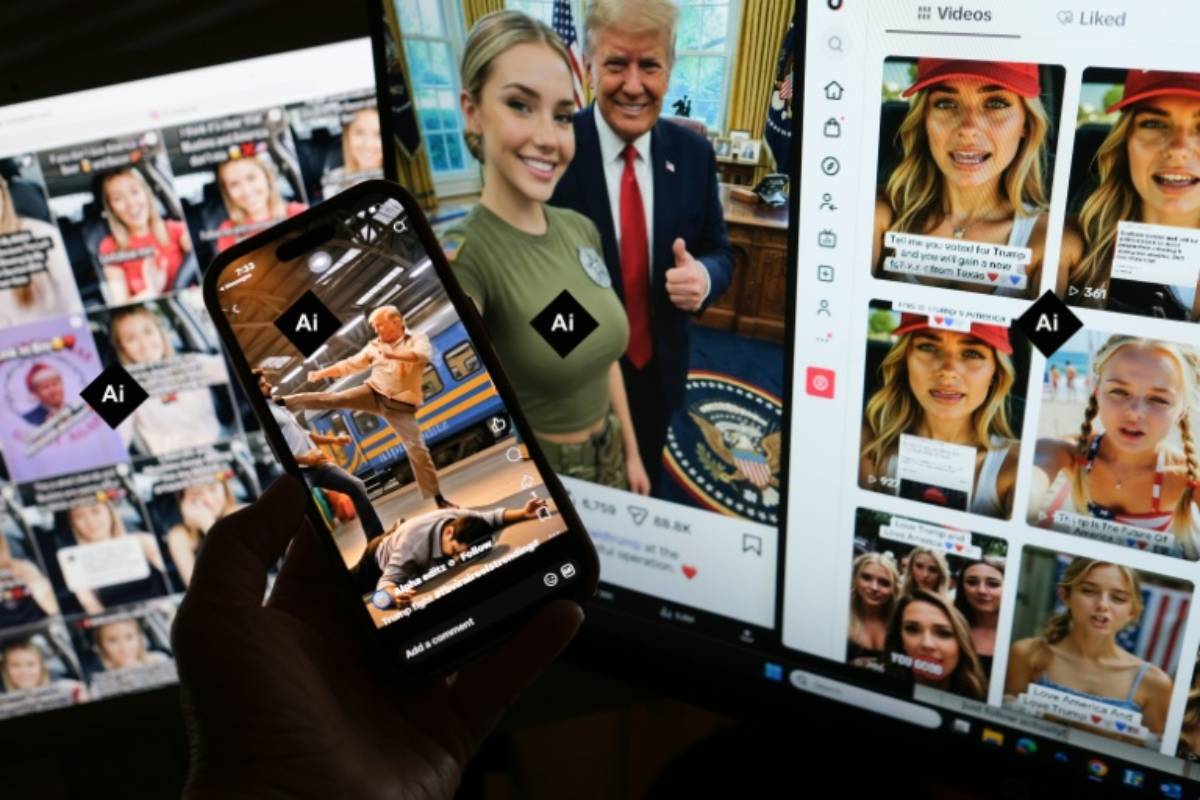
A new phase of digital political campaigning is emerging as AI-generated avatars and synthetic influencers increasingly shape online narratives ahead of U.S. midterm elections. The trend highlights the growing role of artificial intelligence in political communication, raising concerns over misinformation, voter influence, and the evolving economics of digital media engagement.
AI-generated avatars promoting pro-Trump messaging have reportedly gained traction across social media platforms ahead of the U.S. midterm elections. These digitally created personalities use highly polished visuals, emotionally driven content, and algorithmically optimized engagement strategies to amplify political narratives online.
The phenomenon reflects a broader adoption of generative AI tools in political campaigning, where synthetic media can rapidly produce scalable and targeted messaging at lower operational costs. Analysts warn that such AI-generated content may blur the distinction between authentic grassroots support and coordinated digital influence operations.
The development also intensifies scrutiny over platform moderation policies and election-related misinformation safeguards. The emergence of AI-generated political influencers represents a significant evolution in digital campaigning and information warfare. Over the past decade, political communication has shifted from traditional media advertising toward algorithm-driven social media ecosystems. Generative AI now accelerates this transition by enabling campaigns and affiliated networks to create persuasive multimedia content at scale.
The development aligns with a broader global trend where synthetic media technologies are increasingly used in politics, marketing, and online influence campaigns. Governments and regulators worldwide have expressed growing concern over deepfakes, AI-generated propaganda, and digitally manipulated narratives capable of shaping public opinion.
Historically, election cycles have already been vulnerable to misinformation campaigns, but AI-generated avatars introduce a new layer of sophistication by combining personalization, emotional branding, and automated content production into highly scalable influence operations.
Political analysts suggest that AI-generated influencers could fundamentally alter campaign economics by lowering the cost and speed of digital outreach. Experts note that synthetic personas can maintain continuous audience engagement while adapting messaging dynamically based on user behavior and platform algorithms.
Cybersecurity and media integrity specialists warn that the growing sophistication of AI-generated content may make it increasingly difficult for voters to distinguish authentic communication from fabricated influence campaigns. Some experts argue that current social media moderation frameworks remain poorly equipped to handle large-scale synthetic political content.
Industry observers also emphasize that AI-driven campaign strategies are likely to become bipartisan and global, extending beyond U.S. politics into broader geopolitical influence operations and election ecosystems worldwide.
For social media companies, the rise of AI-generated political influencers increases pressure to strengthen content authentication, moderation systems, and transparency mechanisms. Technology platforms may face heightened regulatory scrutiny over their handling of synthetic political media.
For advertisers and digital media firms, the trend demonstrates the expanding commercial viability of AI-generated personas and automated engagement models. However, it also raises reputational and legal risks tied to misinformation and manipulated narratives.
For policymakers, the development intensifies debates around election integrity, AI disclosure requirements, and platform accountability in democratic processes increasingly shaped by synthetic media ecosystems.
AI-generated political content is expected to become more sophisticated and widespread as election cycles intensify globally. Regulators, platforms, and campaign organizations will likely face mounting pressure to establish verification standards and disclosure protocols for synthetic media. Key uncertainties remain around enforcement capabilities, voter awareness, and whether existing democratic institutions can adapt quickly enough to the accelerating influence of AI-driven political communication.
Source: Barron’s
Date: May 2026


