
Apple Expands iPadOS AI Productivity Ecosystem

Apple’s iPadOS 27 introduces a new layer of system-wide intelligence designed to improve multitasking, content generation, and contextual assistance across iPad devices.

June 9, 2026
|
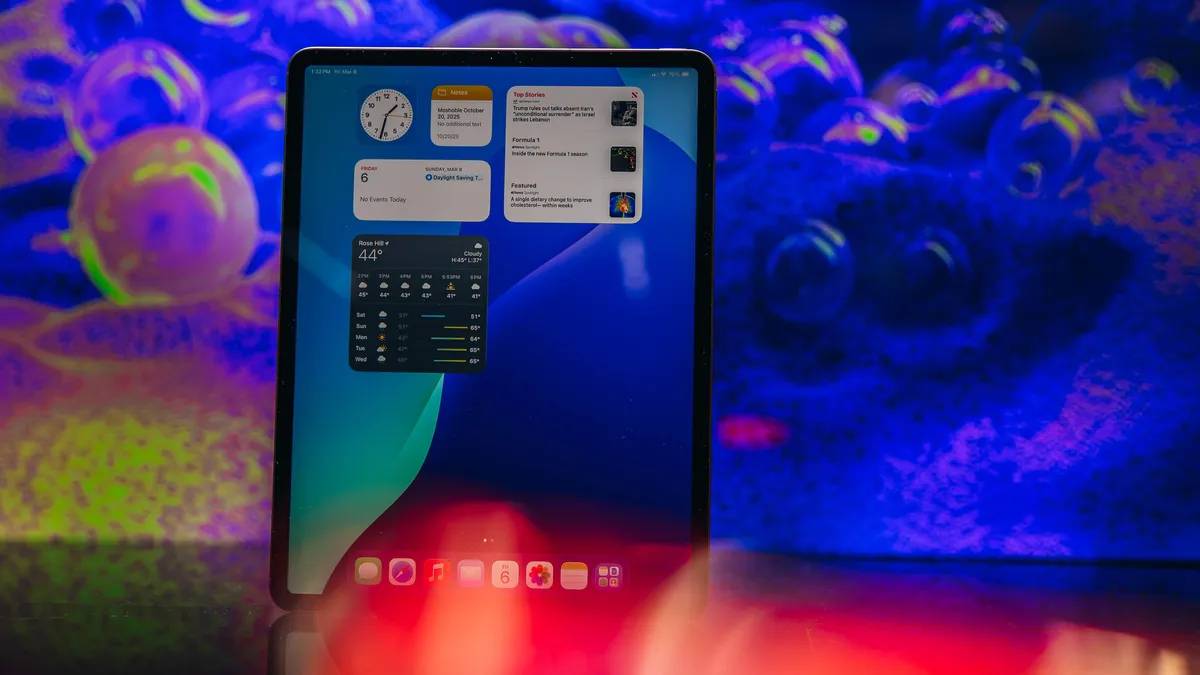
Image Source: CNET

A major development unfolded in the global tablet computing market as Apple introduced enhanced artificial intelligence capabilities within iPadOS 27. The update signals a strategic shift toward embedding deeper intelligence across its iPad lineup, with implications for productivity computing, enterprise workflows, and the broader competition in AI-powered personal devices.

Apple’s iPadOS 27 introduces a new layer of system-wide intelligence designed to improve multitasking, content generation, and contextual assistance across iPad devices. The update integrates AI-driven tools that enhance writing, image editing, and workflow automation, aiming to position the iPad as a more capable productivity device.

The rollout is expected to target both consumer and enterprise users, particularly professionals in creative industries, education, and business environments. The system leverages on-device and hybrid AI processing to improve responsiveness while maintaining Apple’s focus on privacy-centric computing.

Key stakeholders include Apple’s software engineering teams, enterprise application developers, educators, and professional users who rely on iPads for mobile productivity. The update reflects Apple’s broader strategy of integrating artificial intelligence across its entire ecosystem, including iPhone, Vision Pro, and Mac devices.

The development aligns with a broader industry trend where artificial intelligence is becoming a foundational layer across consumer and enterprise computing platforms. Tablets, once primarily consumption devices, are increasingly being repositioned as productivity tools capable of handling complex workflows traditionally reserved for laptops.

Apple has steadily expanded iPad capabilities over the past several years, introducing features such as advanced multitasking, external display support, and professional-grade applications. iPadOS 27 represents a continuation of this evolution, with AI serving as a key differentiator in user experience and functionality.

Globally, competition in the productivity device market is intensifying, particularly as Microsoft, Google, and other ecosystem players integrate AI assistants into operating systems and office tools. This convergence of AI and productivity software is reshaping how users interact with digital environments.

Historically, Apple’s ecosystem strategy has relied on tight integration between hardware and software. The addition of AI-driven intelligence further strengthens this model by enhancing device capabilities without requiring significant hardware changes.

Technology analysts suggest that Apple’s integration of AI into iPadOS represents a significant step toward redefining the tablet as a primary computing device rather than a secondary screen. AI-assisted workflows are expected to improve efficiency in content creation, document management, and multitasking.

Industry observers note that Apple’s emphasis on on-device intelligence may offer advantages in speed, privacy, and offline functionality compared to cloud-dependent AI systems. This approach aligns with growing consumer concerns around data security and digital privacy.

Experts also highlight that the success of iPadOS 27 will depend on developer adoption and the availability of AI-optimized applications that fully leverage the new system capabilities.

However, some analysts caution that while AI features enhance usability, they may not be sufficient on their own to significantly shift user behavior without corresponding hardware or application ecosystem expansion.

For businesses, the update positions the iPad as a more competitive enterprise productivity tool, particularly in industries requiring mobile creativity, documentation, and field-based workflows. Organizations may increasingly integrate AI-enabled iPads into operational environments.

For investors, Apple’s continued AI integration across devices reinforces the strength of its ecosystem strategy. While iPad sales growth has been cyclical, AI enhancements may help stabilize demand and increase device utility.

For policymakers, the expansion of AI capabilities into mainstream consumer devices raises questions about data handling, algorithmic transparency, and cross-device information flow within closed ecosystems.

Analysts suggest that AI-driven operating systems may become a key battleground for platform dominance in the next phase of personal computing evolution. Apple is expected to continue expanding AI functionality across iPadOS in future updates, with deeper integration into enterprise workflows and creative tools. Decision-makers should monitor developer ecosystem growth, enterprise adoption rates, and competitive responses from rival platforms.

While iPadOS 27 strengthens Apple’s position in AI-enhanced computing, long-term success will depend on how effectively users integrate these capabilities into daily workflows. The next phase will determine whether AI transforms the iPad into a primary productivity device or remains an incremental enhancement.

Source: CNET
Date: June 2026

  • Featured tools
Writesonic AI
Free

Writesonic AI is a versatile AI writing platform designed for marketers, entrepreneurs, and content creators. It helps users create blog posts, ad copies, product descriptions, social media posts, and more with ease. With advanced AI models and user-friendly tools, Writesonic streamlines content production and saves time for busy professionals.

#
Copywriting
Learn more
Upscayl AI
Free

Upscayl AI is a free, open-source AI-powered tool that enhances and upscales images to higher resolutions. It transforms blurry or low-quality visuals into sharp, detailed versions with ease.

#
Productivity
Learn more

Learn more about future of AI

Join 80,000+ Ai enthusiast getting weekly updates on exciting AI tools.
Thank you! Your submission has been received!
Oops! Something went wrong while submitting the form.

Apple Expands iPadOS AI Productivity Ecosystem

June 9, 2026

Apple’s iPadOS 27 introduces a new layer of system-wide intelligence designed to improve multitasking, content generation, and contextual assistance across iPad devices.

Image Source: CNET

A major development unfolded in the global tablet computing market as Apple introduced enhanced artificial intelligence capabilities within iPadOS 27. The update signals a strategic shift toward embedding deeper intelligence across its iPad lineup, with implications for productivity computing, enterprise workflows, and the broader competition in AI-powered personal devices.

Apple’s iPadOS 27 introduces a new layer of system-wide intelligence designed to improve multitasking, content generation, and contextual assistance across iPad devices. The update integrates AI-driven tools that enhance writing, image editing, and workflow automation, aiming to position the iPad as a more capable productivity device.

The rollout is expected to target both consumer and enterprise users, particularly professionals in creative industries, education, and business environments. The system leverages on-device and hybrid AI processing to improve responsiveness while maintaining Apple’s focus on privacy-centric computing.

Key stakeholders include Apple’s software engineering teams, enterprise application developers, educators, and professional users who rely on iPads for mobile productivity. The update reflects Apple’s broader strategy of integrating artificial intelligence across its entire ecosystem, including iPhone, Vision Pro, and Mac devices.

The development aligns with a broader industry trend where artificial intelligence is becoming a foundational layer across consumer and enterprise computing platforms. Tablets, once primarily consumption devices, are increasingly being repositioned as productivity tools capable of handling complex workflows traditionally reserved for laptops.

Apple has steadily expanded iPad capabilities over the past several years, introducing features such as advanced multitasking, external display support, and professional-grade applications. iPadOS 27 represents a continuation of this evolution, with AI serving as a key differentiator in user experience and functionality.

Globally, competition in the productivity device market is intensifying, particularly as Microsoft, Google, and other ecosystem players integrate AI assistants into operating systems and office tools. This convergence of AI and productivity software is reshaping how users interact with digital environments.

Historically, Apple’s ecosystem strategy has relied on tight integration between hardware and software. The addition of AI-driven intelligence further strengthens this model by enhancing device capabilities without requiring significant hardware changes.

Technology analysts suggest that Apple’s integration of AI into iPadOS represents a significant step toward redefining the tablet as a primary computing device rather than a secondary screen. AI-assisted workflows are expected to improve efficiency in content creation, document management, and multitasking.

Industry observers note that Apple’s emphasis on on-device intelligence may offer advantages in speed, privacy, and offline functionality compared to cloud-dependent AI systems. This approach aligns with growing consumer concerns around data security and digital privacy.

Experts also highlight that the success of iPadOS 27 will depend on developer adoption and the availability of AI-optimized applications that fully leverage the new system capabilities.

However, some analysts caution that while AI features enhance usability, they may not be sufficient on their own to significantly shift user behavior without corresponding hardware or application ecosystem expansion.

For businesses, the update positions the iPad as a more competitive enterprise productivity tool, particularly in industries requiring mobile creativity, documentation, and field-based workflows. Organizations may increasingly integrate AI-enabled iPads into operational environments.

For investors, Apple’s continued AI integration across devices reinforces the strength of its ecosystem strategy. While iPad sales growth has been cyclical, AI enhancements may help stabilize demand and increase device utility.

For policymakers, the expansion of AI capabilities into mainstream consumer devices raises questions about data handling, algorithmic transparency, and cross-device information flow within closed ecosystems.

Analysts suggest that AI-driven operating systems may become a key battleground for platform dominance in the next phase of personal computing evolution. Apple is expected to continue expanding AI functionality across iPadOS in future updates, with deeper integration into enterprise workflows and creative tools. Decision-makers should monitor developer ecosystem growth, enterprise adoption rates, and competitive responses from rival platforms.

While iPadOS 27 strengthens Apple’s position in AI-enhanced computing, long-term success will depend on how effectively users integrate these capabilities into daily workflows. The next phase will determine whether AI transforms the iPad into a primary productivity device or remains an incremental enhancement.

Source: CNET
Date: June 2026

Promote Your Tool

Copy Embed Code

Similar Blogs

June 9, 2026
|

Apple Hybrid AI Strategy Privacy Focus

Apple’s latest AI framework, revealed at WWDC 2026, incorporates advanced model capabilities influenced by Google’s Gemini ecosystem while adapting them for Apple’s proprietary infrastructure.
Read more
June 9, 2026
|

Apple Fitness Plus AI Coaching Expansion

Apple’s latest Fitness+ update brings Spanish language support to its AI-driven Workout Buddy feature, which provides real-time coaching and motivational guidance during workouts.
Read more
June 9, 2026
|

Apple Overhauls AI Strategy WWDC2026 Ecosystem

Apple introduced a broad expansion of its “Apple Intelligence” framework, embedding AI more deeply into iOS, iPadOS, macOS, and visionOS.
Read more
June 9, 2026
|

Apple Expands iPadOS AI Productivity Ecosystem

Apple’s iPadOS 27 introduces a new layer of system-wide intelligence designed to improve multitasking, content generation, and contextual assistance across iPad devices.
Read more
June 9, 2026
|

Apple Upgrades Vision Pro AI Spatial Intelligence

Apple’s Vision Pro will soon receive AI-powered enhancements that allow the device to better interpret and interact with real-world environments.
Read more
June 9, 2026
|

Instagram Expands Profile Grid Customization Feature

Instagram’s new feature enables users to manually rearrange the order of posts displayed on their profile grid, moving away from the traditional chronological layout.
Read more