
Apple Leadership Shift Faces Pressure in AI Race

Apple’s leadership succession narrative is increasingly intersecting with its AI strategy, particularly around the performance and evolution of its virtual assistant ecosystem.

April 22, 2026
|

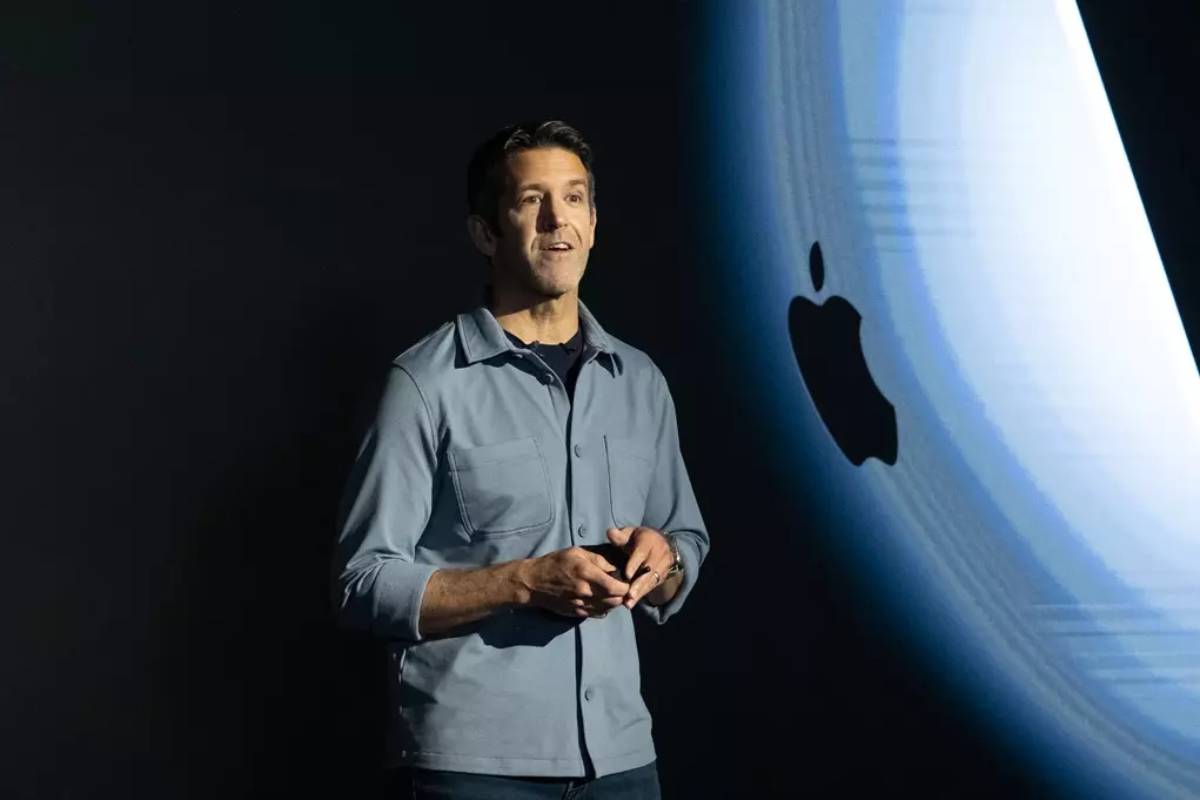
The anticipated leadership transition at Apple is already being shaped by a critical challenge: artificial intelligence. As internal expectations grow around future leadership under hardware chief John Ternus, AI capabilities particularly in voice assistants and ecosystem intelligence are emerging as a defining pressure point for strategic continuity and competitiveness.

Apple’s leadership succession narrative is increasingly intersecting with its AI strategy, particularly around the performance and evolution of its virtual assistant ecosystem. Internal debates highlight concerns about lagging capabilities compared to competitors in generative AI and conversational intelligence.

Key stakeholders include Apple’s senior leadership team, software engineering divisions, and AI research groups. The timeline reflects accelerating pressure as global competitors advance rapidly in large language model integration.

Economically, AI performance is becoming a core differentiator in consumer technology markets, influencing device ecosystems, services revenue, and long-term platform loyalty. This positions AI not just as a feature layer, but as a strategic infrastructure challenge.

The situation reflects a broader industry shift where artificial intelligence is becoming the central competitive axis for major technology firms. Historically, Apple’s strength has been its vertically integrated ecosystem spanning hardware, software, and services. However, the rise of generative AI has introduced a new layer of competition that challenges traditional product cycles.

Competitors such as Google and Microsoft have aggressively integrated AI into search, productivity, and cloud ecosystems, raising user expectations for intelligent, context-aware systems.

Within this landscape, Apple’s voice assistant platform has faced scrutiny for slower evolution relative to industry benchmarks. The leadership transition discussion involving John Ternus highlights the importance of aligning hardware excellence with AI-driven software innovation in a rapidly evolving digital ecosystem.

Industry analysts suggest that AI will define the next era of consumer technology leadership, making it a critical challenge for Apple’s future executive structure. Experts argue that success will depend on how effectively the company integrates large-scale AI capabilities into its tightly controlled ecosystem.

Technology observers note that Apple’s advantage lies in its hardware-software integration, but caution that AI leadership requires rapid iteration cycles and extensive data-driven model training areas where competitors currently appear more aggressive.

Market analysts emphasize that investor expectations are increasingly tied to AI capability demonstrations rather than incremental hardware improvements. While Apple has historically succeeded through ecosystem optimization, experts warn that failure to accelerate AI development could create strategic gaps in user engagement and long-term platform relevance.

For global executives, Apple’s AI challenge underscores a broader industry shift where leadership transitions are no longer purely operational but deeply tied to technological capability evolution. Companies must align succession planning with long-term AI strategy execution.

Investors are likely to scrutinize Apple’s AI roadmap as a key determinant of future growth in services and device ecosystems. From a policy perspective, intensified AI competition among major technology firms could accelerate regulatory discussions around data governance, platform dominance, and algorithmic transparency. The competitive AI landscape is increasingly shaping global technology power structures.

Looking ahead, Apple’s ability to close its AI capability gap will be a defining factor in its next leadership phase. Decision-makers should monitor advancements in its assistant technologies and ecosystem-wide AI integration strategy. The transition period will test whether Apple can maintain its historical strength in user experience while rapidly adapting to AI-first computing paradigms.

Source: The Verge
Date: April 2026

  • Featured tools
Upscayl AI
Free

Upscayl AI is a free, open-source AI-powered tool that enhances and upscales images to higher resolutions. It transforms blurry or low-quality visuals into sharp, detailed versions with ease.

#
Productivity
Learn more
Murf Ai
Free

Murf AI Review – Advanced AI Voice Generator for Realistic Voiceovers

#
Text to Speech
Learn more

Learn more about future of AI

Join 80,000+ Ai enthusiast getting weekly updates on exciting AI tools.
Thank you! Your submission has been received!
Oops! Something went wrong while submitting the form.

Apple Leadership Shift Faces Pressure in AI Race

April 22, 2026

Apple’s leadership succession narrative is increasingly intersecting with its AI strategy, particularly around the performance and evolution of its virtual assistant ecosystem.

The anticipated leadership transition at Apple is already being shaped by a critical challenge: artificial intelligence. As internal expectations grow around future leadership under hardware chief John Ternus, AI capabilities particularly in voice assistants and ecosystem intelligence are emerging as a defining pressure point for strategic continuity and competitiveness.

Apple’s leadership succession narrative is increasingly intersecting with its AI strategy, particularly around the performance and evolution of its virtual assistant ecosystem. Internal debates highlight concerns about lagging capabilities compared to competitors in generative AI and conversational intelligence.

Key stakeholders include Apple’s senior leadership team, software engineering divisions, and AI research groups. The timeline reflects accelerating pressure as global competitors advance rapidly in large language model integration.

Economically, AI performance is becoming a core differentiator in consumer technology markets, influencing device ecosystems, services revenue, and long-term platform loyalty. This positions AI not just as a feature layer, but as a strategic infrastructure challenge.

The situation reflects a broader industry shift where artificial intelligence is becoming the central competitive axis for major technology firms. Historically, Apple’s strength has been its vertically integrated ecosystem spanning hardware, software, and services. However, the rise of generative AI has introduced a new layer of competition that challenges traditional product cycles.

Competitors such as Google and Microsoft have aggressively integrated AI into search, productivity, and cloud ecosystems, raising user expectations for intelligent, context-aware systems.

Within this landscape, Apple’s voice assistant platform has faced scrutiny for slower evolution relative to industry benchmarks. The leadership transition discussion involving John Ternus highlights the importance of aligning hardware excellence with AI-driven software innovation in a rapidly evolving digital ecosystem.

Industry analysts suggest that AI will define the next era of consumer technology leadership, making it a critical challenge for Apple’s future executive structure. Experts argue that success will depend on how effectively the company integrates large-scale AI capabilities into its tightly controlled ecosystem.

Technology observers note that Apple’s advantage lies in its hardware-software integration, but caution that AI leadership requires rapid iteration cycles and extensive data-driven model training areas where competitors currently appear more aggressive.

Market analysts emphasize that investor expectations are increasingly tied to AI capability demonstrations rather than incremental hardware improvements. While Apple has historically succeeded through ecosystem optimization, experts warn that failure to accelerate AI development could create strategic gaps in user engagement and long-term platform relevance.

For global executives, Apple’s AI challenge underscores a broader industry shift where leadership transitions are no longer purely operational but deeply tied to technological capability evolution. Companies must align succession planning with long-term AI strategy execution.

Investors are likely to scrutinize Apple’s AI roadmap as a key determinant of future growth in services and device ecosystems. From a policy perspective, intensified AI competition among major technology firms could accelerate regulatory discussions around data governance, platform dominance, and algorithmic transparency. The competitive AI landscape is increasingly shaping global technology power structures.

Looking ahead, Apple’s ability to close its AI capability gap will be a defining factor in its next leadership phase. Decision-makers should monitor advancements in its assistant technologies and ecosystem-wide AI integration strategy. The transition period will test whether Apple can maintain its historical strength in user experience while rapidly adapting to AI-first computing paradigms.

Source: The Verge
Date: April 2026

Promote Your Tool

Copy Embed Code

Similar Blogs

April 22, 2026
|

Gaming Display Discounts Signal Monitor Market Competition

Retailers are offering a significant $550 discount on Samsung’s ultra-wide 49-inch curved gaming monitor as part of a time-sensitive promotional campaign.
Read more
April 22, 2026
|

Tablet Pricing Shifts as iPad Market Faces Discounts

Consumers are increasingly able to access discounted pricing on Apple iPad models through seasonal sales, retailer promotions, and structured deal cycles.
Read more
April 22, 2026
|

Apple Leadership Shift Faces Pressure in AI Race

Apple’s leadership succession narrative is increasingly intersecting with its AI strategy, particularly around the performance and evolution of its virtual assistant ecosystem.
Read more
April 22, 2026
|

Framework Launches Modular Laptop 13 Pro for Linux Workstations

The Laptop 13 Pro introduces a refined hardware configuration optimized for Linux-based workflows, targeting developers, engineers, and enterprise users.
Read more
April 22, 2026
|

MacBook Pro Discounts Signal Strong Laptop Demand Trends

Retailers are offering significant price reductions on Apple’s MacBook Pro models featuring the latest M5 Pro and M5 Max processors, with savings amounting to several hundred dollars depending on configuration.
Read more
April 22, 2026
|

Framework Adds External GPU, Blurring Laptop Desktop Line

Framework’s new eGPU solution allows users to connect high-performance graphics units to its laptops, significantly enhancing processing power for gaming, AI workloads, and creative applications.
Read more