
Canva AI Tool Incident Sparks Backlash

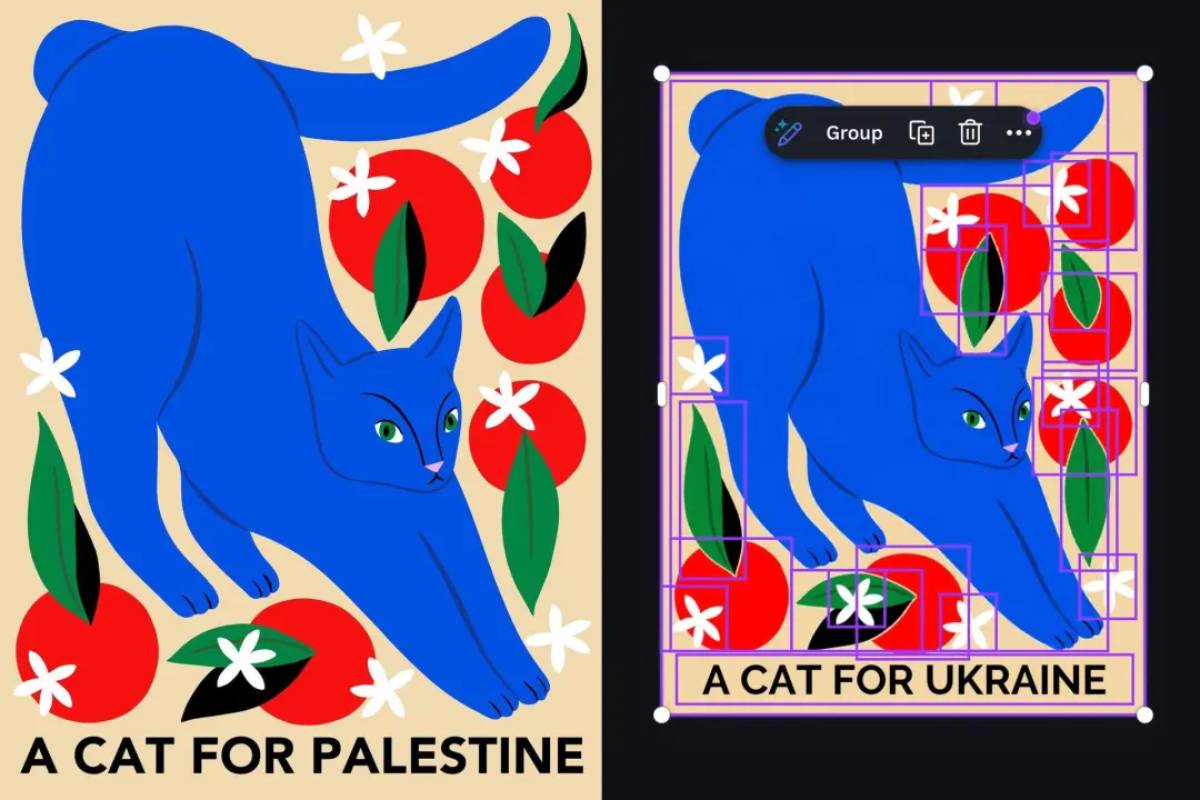
Canva confirmed issues with its AI feature after users reported that the system replaced or altered references to “Palestine” in design outputs.

April 28, 2026
|
Image Source: The Verge

Canva has issued an apology following reports that its AI-powered design tool incorrectly replaced references to “Palestine” in user-generated content. The incident has triggered concerns over AI content reliability, geopolitical sensitivity in automated systems, and the governance of generative AI platforms used by millions globally.

Canva confirmed issues with its AI feature after users reported that the system replaced or altered references to “Palestine” in design outputs. The company acknowledged the error and stated that corrective measures were being implemented to improve accuracy and prevent similar occurrences.

The incident involves Canva’s AI-assisted design tool, which is part of its broader push into generative AI-powered creative workflows. The company has not indicated systemic intent but has emphasized debugging and refinement of model behavior.

The issue has drawn attention due to the sensitivity of geopolitical identifiers in automated content generation systems. The development aligns with a broader trend across global markets where generative AI platforms are increasingly embedded into creative and productivity tools. Companies such as Canva, Adobe, and Microsoft are integrating AI-driven features into content creation workflows.

However, as AI systems become more autonomous in generating and modifying content, concerns have grown around accuracy, bias, and contextual sensitivity. Geopolitical references present particular challenges, as misrepresentation or unintended alteration can lead to public backlash.

Historically, content moderation issues in AI systems have surfaced across text, image, and translation tools, highlighting the complexity of aligning large-scale models with cultural and political nuance. This incident adds to ongoing debates about AI governance and responsible deployment.

Industry analysts suggest that the incident underscores the difficulty of ensuring contextual accuracy in generative AI systems, particularly when handling politically sensitive terms. Experts note that even minor model errors can escalate into reputational and regulatory risks for platform providers.

AI governance specialists emphasize that design tools integrating generative AI must implement stricter safeguards, especially in regions with heightened geopolitical sensitivities. They also highlight the need for transparent model behavior and clearer user controls.

From a technology perspective, analysts argue that AI systems trained on large datasets may inadvertently reflect inconsistencies unless continuously fine-tuned. However, they also note that rapid deployment cycles often outpace governance frameworks, increasing the likelihood of such incidents.

For businesses, the incident highlights the importance of robust AI validation systems before deploying generative tools at scale. Creative and enterprise software providers may need to strengthen oversight mechanisms to maintain user trust.

For investors, AI safety and governance are becoming critical evaluation metrics alongside innovation potential. Policymakers may also intensify scrutiny of AI platforms, particularly around content integrity and geopolitical neutrality. For global executives, the event underscores that AI platforms are not just productivity tools but also information systems that require careful ethical and operational governance.

Looking ahead, Canva’s response and subsequent updates will be closely monitored by users and industry observers. The incident may accelerate improvements in AI content filtering and contextual awareness systems.

Decision-makers should watch for emerging regulatory expectations around generative AI accuracy and bias mitigation. As AI tools become more deeply integrated into creative workflows, governance and trust will remain central to adoption and scalability.

Source: The Verge
Date: April 2026

  • Featured tools
Upscayl AI
Free

Upscayl AI is a free, open-source AI-powered tool that enhances and upscales images to higher resolutions. It transforms blurry or low-quality visuals into sharp, detailed versions with ease.

#
Productivity
Learn more
Scalenut AI
Free

Scalenut AI is an all-in-one SEO content platform that combines AI-driven writing, keyword research, competitor insights, and optimization tools to help you plan, create, and rank content.

#
SEO
Learn more

Learn more about future of AI

Join 80,000+ Ai enthusiast getting weekly updates on exciting AI tools.
Thank you! Your submission has been received!
Oops! Something went wrong while submitting the form.

Canva AI Tool Incident Sparks Backlash

April 28, 2026

Canva confirmed issues with its AI feature after users reported that the system replaced or altered references to “Palestine” in design outputs.

Image Source: The Verge

Canva has issued an apology following reports that its AI-powered design tool incorrectly replaced references to “Palestine” in user-generated content. The incident has triggered concerns over AI content reliability, geopolitical sensitivity in automated systems, and the governance of generative AI platforms used by millions globally.

Canva confirmed issues with its AI feature after users reported that the system replaced or altered references to “Palestine” in design outputs. The company acknowledged the error and stated that corrective measures were being implemented to improve accuracy and prevent similar occurrences.

The incident involves Canva’s AI-assisted design tool, which is part of its broader push into generative AI-powered creative workflows. The company has not indicated systemic intent but has emphasized debugging and refinement of model behavior.

The issue has drawn attention due to the sensitivity of geopolitical identifiers in automated content generation systems. The development aligns with a broader trend across global markets where generative AI platforms are increasingly embedded into creative and productivity tools. Companies such as Canva, Adobe, and Microsoft are integrating AI-driven features into content creation workflows.

However, as AI systems become more autonomous in generating and modifying content, concerns have grown around accuracy, bias, and contextual sensitivity. Geopolitical references present particular challenges, as misrepresentation or unintended alteration can lead to public backlash.

Historically, content moderation issues in AI systems have surfaced across text, image, and translation tools, highlighting the complexity of aligning large-scale models with cultural and political nuance. This incident adds to ongoing debates about AI governance and responsible deployment.

Industry analysts suggest that the incident underscores the difficulty of ensuring contextual accuracy in generative AI systems, particularly when handling politically sensitive terms. Experts note that even minor model errors can escalate into reputational and regulatory risks for platform providers.

AI governance specialists emphasize that design tools integrating generative AI must implement stricter safeguards, especially in regions with heightened geopolitical sensitivities. They also highlight the need for transparent model behavior and clearer user controls.

From a technology perspective, analysts argue that AI systems trained on large datasets may inadvertently reflect inconsistencies unless continuously fine-tuned. However, they also note that rapid deployment cycles often outpace governance frameworks, increasing the likelihood of such incidents.

For businesses, the incident highlights the importance of robust AI validation systems before deploying generative tools at scale. Creative and enterprise software providers may need to strengthen oversight mechanisms to maintain user trust.

For investors, AI safety and governance are becoming critical evaluation metrics alongside innovation potential. Policymakers may also intensify scrutiny of AI platforms, particularly around content integrity and geopolitical neutrality. For global executives, the event underscores that AI platforms are not just productivity tools but also information systems that require careful ethical and operational governance.

Looking ahead, Canva’s response and subsequent updates will be closely monitored by users and industry observers. The incident may accelerate improvements in AI content filtering and contextual awareness systems.

Decision-makers should watch for emerging regulatory expectations around generative AI accuracy and bias mitigation. As AI tools become more deeply integrated into creative workflows, governance and trust will remain central to adoption and scalability.

Source: The Verge
Date: April 2026

Promote Your Tool

Copy Embed Code

Similar Blogs

April 28, 2026
|

iPad Air M3 Gets Clearance Discounts

Amazon and other retailers are actively clearing final units of the M3 iPad Air model through significant price reductions.
Read more
April 28, 2026
|

GM Advances AI-Designed Vehicle Development Strategy

General Motors is reportedly advancing the use of AI systems in vehicle design, leveraging machine learning models to assist in shaping next-generation automotive concepts.
Read more
April 28, 2026
|

Canva AI Tool Incident Sparks Backlash

Canva confirmed issues with its AI feature after users reported that the system replaced or altered references to “Palestine” in design outputs.
Read more
April 28, 2026
|

Amazon Kindle Paperwhite Gets Price Cut Ahead Demand

The latest deal on the Kindle Paperwhite includes a $25 discount, alongside features such as waterproofing and glare-free display technology. The promotion is positioned to capture seasonal demand during the Mother’s Day shopping period.
Read more
April 28, 2026
|

Google I/O 2026 Focuses on AI Platforms

Google I/O 2026 is anticipated to highlight new AI-driven products, updates to developer tools, and expanded capabilities across its AI platforms.
Read more
April 28, 2026
|

Xreal Cuts One Pro Price, Boosting AR Competition

Xreal has permanently reduced the price of its One Pro AR glasses, aiming to improve accessibility and broaden consumer adoption of its augmented reality ecosystem.
Read more