



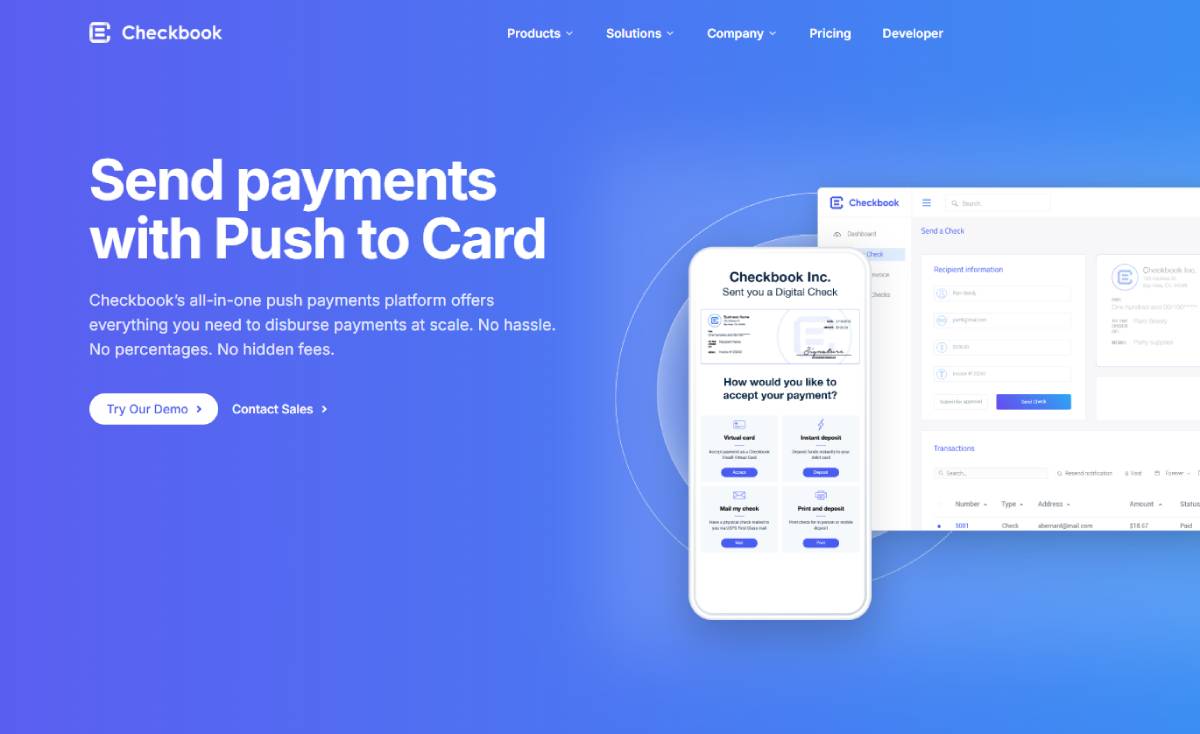
Checkbook is advancing digital payment infrastructure by providing businesses and individuals with streamlined solutions for sending, receiving, and managing payments electronically. The platform reflects a broader transformation in financial technology, where organizations are adopting faster, more efficient payment systems to improve cash flow management, reduce manual processes, and enhance financial operations.
Checkbook offers digital payment solutions designed to simplify transactions through electronic payment workflows. The platform enables businesses to manage payments, automate processes, and improve financial efficiency without relying on traditional payment methods. Key stakeholders include small businesses, enterprises, financial teams, and customers seeking faster transaction experiences.
As digital payments continue expanding globally, solutions like Checkbook support organizations looking to modernize their financial operations. The platform aligns with increasing demand for secure, convenient, and scalable payment technologies that reduce administrative workloads while improving transparency and operational control across business ecosystems.
The financial technology sector is undergoing rapid evolution as businesses worldwide transition from traditional payment methods to digital-first financial solutions. Increasing demand for faster transactions, improved security, and automated financial workflows has accelerated the adoption of online payment platforms.
Businesses, particularly small and medium-sized enterprises, are seeking tools that simplify payment processing while reducing operational complexity. Digital payment platforms have become critical components of modern commerce by enabling faster settlements, better record management, and improved financial visibility.
This shift is supported by broader trends including cloud-based financial services, automation, and the growth of cashless economies. As companies continue digitizing their financial infrastructure, platforms like Checkbook represent the movement toward more flexible and efficient payment ecosystems designed to meet changing business and consumer expectations.
Financial technology analysts highlight that digital payment platforms are becoming increasingly important as businesses prioritize automation and operational efficiency. Experts suggest that solutions offering simplified payment management can help organizations reduce administrative costs while improving transaction accuracy.
Industry observers note that the future of payments will be shaped by enhanced security, faster processing capabilities, and deeper integration with business management systems. While specific executive statements from Checkbook are unavailable, broader market trends indicate strong demand for platforms that provide accessible financial tools for businesses of all sizes.
The growth of digital payment solutions reflects a larger transformation within financial services, where technology providers are helping organizations move toward more connected, transparent, and efficient financial operations.
For businesses, adopting digital payment platforms such as Checkbook could improve payment efficiency, reduce manual financial tasks, and enhance cash flow management. Companies may benefit from faster transaction processing and improved visibility into financial activities.
Investors and market participants view payment technology as a growing sector driven by increased digital commerce and demand for financial automation. Consumers benefit from more convenient and reliable payment experiences.
From a policy perspective, digital payment providers must address cybersecurity, financial compliance, fraud prevention, and data protection requirements. As digital transactions continue expanding, maintaining secure and trusted payment ecosystems will remain a priority for regulators and technology companies.
The future of digital payments will likely focus on automation, artificial intelligence, enhanced security, and seamless integration with business platforms. Checkbook operates within a growing fintech landscape where organizations are seeking smarter ways to manage financial transactions. Decision-makers should monitor developments in payment innovation, regulatory frameworks, and cybersecurity advancements as businesses continue transitioning toward digital financial ecosystems.
Source: Crozdesk
Date: August 5, 2026


