



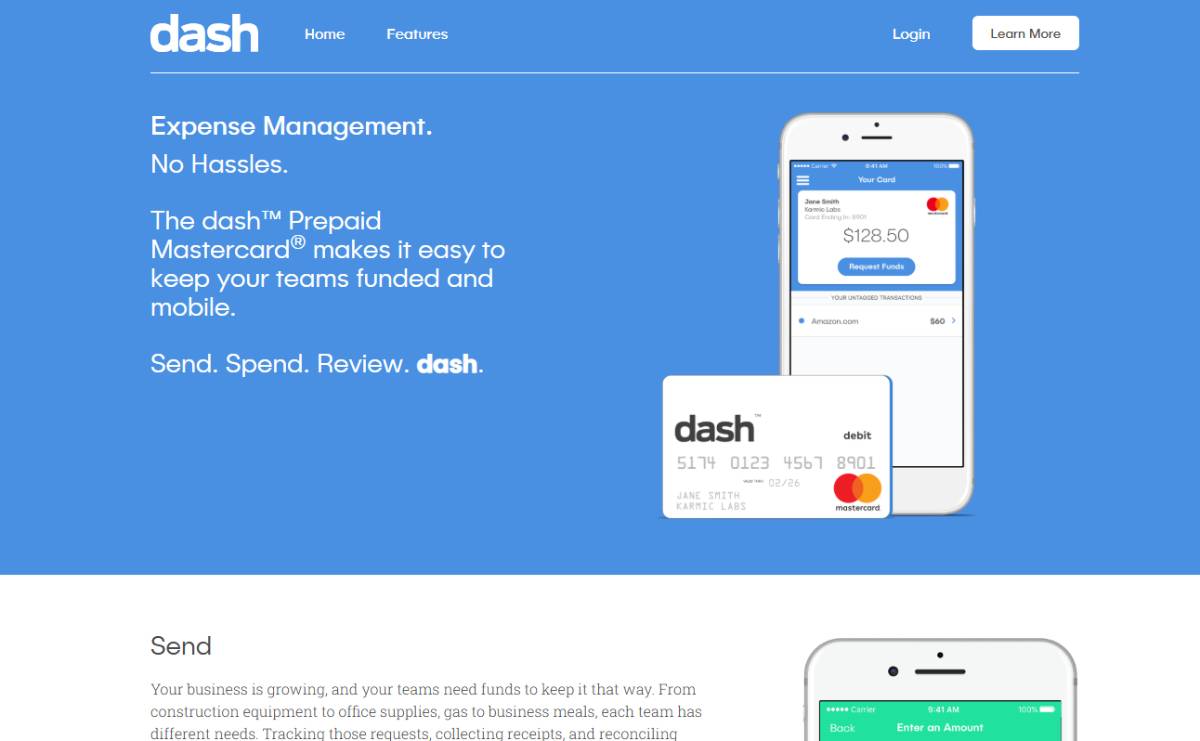
Dash Card App reflects the growing shift toward digital expense and payment management, offering businesses a technology-driven approach to controlling employee spending and simplifying financial administration. Its model aligns with broader corporate efforts to replace manual expense processes with digital tools that provide greater visibility, control and efficiency across organizational spending.
Dash Card App is positioned around digital payment and expense-management capabilities designed to help organizations manage business spending more efficiently. The platform's focus reflects increasing demand for tools that connect employee spending with centralized financial oversight.
Digital card and expense solutions can provide organizations with greater control over how funds are used, while reducing the administrative workload associated with traditional expense reporting. Automated transaction records can also improve visibility for finance teams and simplify reconciliation.
For business leaders, the significance extends beyond payment convenience. Modern expense platforms can support spending policies, improve accountability and provide finance departments with more timely information. These capabilities are particularly relevant to organizations managing distributed teams, recurring expenses and increasingly digital procurement processes.
Corporate finance departments are undergoing a broader digital transformation as businesses move away from paper receipts, manual approvals and fragmented expense systems. The growth of remote and distributed workforces has further increased the need for organizations to monitor spending across locations and teams.
Digital expense-management platforms have emerged as part of this transformation, connecting payment activity with reporting, controls and financial workflows. Businesses increasingly expect these systems to provide real-time visibility while reducing administrative effort.
This shift is also being driven by stronger expectations around financial governance. Executives need clearer oversight of corporate spending, while finance teams require reliable transaction data to support budgeting, reconciliation and reporting.
Dash Card App's positioning fits within this broader movement toward automated financial administration. For organizations, the strategic opportunity lies in using digital spending infrastructure to improve control without creating additional complexity for employees.
Financial technology specialists generally view digital expense management as an important component of modern corporate finance. Centralized spending systems can provide finance teams with better visibility while allowing employees to complete legitimate business purchases without lengthy reimbursement processes.
The value of such platforms depends heavily on controls and usability. Companies need systems that allow administrators to establish appropriate spending rules while ensuring employees can access funds when required.
Security is another critical consideration. Corporate payment platforms must protect financial information and reduce the risk associated with unauthorized transactions, compromised credentials and inappropriate spending.
For Dash Card App and similar providers, competitive differentiation is therefore likely to depend on the combination of payment flexibility, expense visibility, security and integration with existing accounting processes. Businesses will increasingly expect financial technology to deliver both convenience and stronger governance.
For businesses, digital expense platforms can potentially reduce administrative costs, improve transaction visibility and strengthen spending controls. Finance teams may gain more timely access to expenditure information while employees benefit from simpler payment workflows.
For investors and corporate technology leaders, demand for expense-management technology is supported by continued digitization of financial operations. However, organizations must evaluate security, compliance, integration and pricing before adopting new payment infrastructure.
For policymakers, digital corporate payments raise broader questions surrounding financial data protection, cybersecurity, fraud prevention and regulatory compliance.
Executives should therefore assess expense technology as part of their broader financial-control strategy. The strongest solutions will be those capable of combining employee convenience with rigorous corporate oversight.
The digital expense-management market is likely to continue evolving as businesses demand greater automation, real-time financial visibility and stronger spending controls. Future developments could increasingly connect corporate cards with accounting, budgeting, analytics and workflow automation. For Dash Card App, long-term relevance will depend on delivering secure, scalable and user-friendly financial tools that meet the changing requirements of modern businesses.
Source: Serchen
Date: August 14, 2026


